20 Small Apartment Living Room Ideas To Make Your Space Look Bigger
Living in a small apartment doesn’t mean you have to compromise on style or comfort. In fact, with the right design ideas, even the tiniest living room can feel open, functional, and beautifully organized. The key lies in smart furniture choices, clever layouts, and visual tricks that create the illusion of more space.
In this guide, we’ve gathered 20 practical and modern small apartment living room ideas that are not only space-saving but also incredibly stylish.
From multifunctional furniture to strategic lighting and color techniques, each idea is designed to help you maximize every inch of your space without making it feel crowded.
Whether you’re decorating a studio apartment or trying to upgrade a compact living room, these ideas will help you create a space that feels bigger, brighter, and more comfortable—without spending a fortune.
1. Floating Furniture Layout (Zoning)
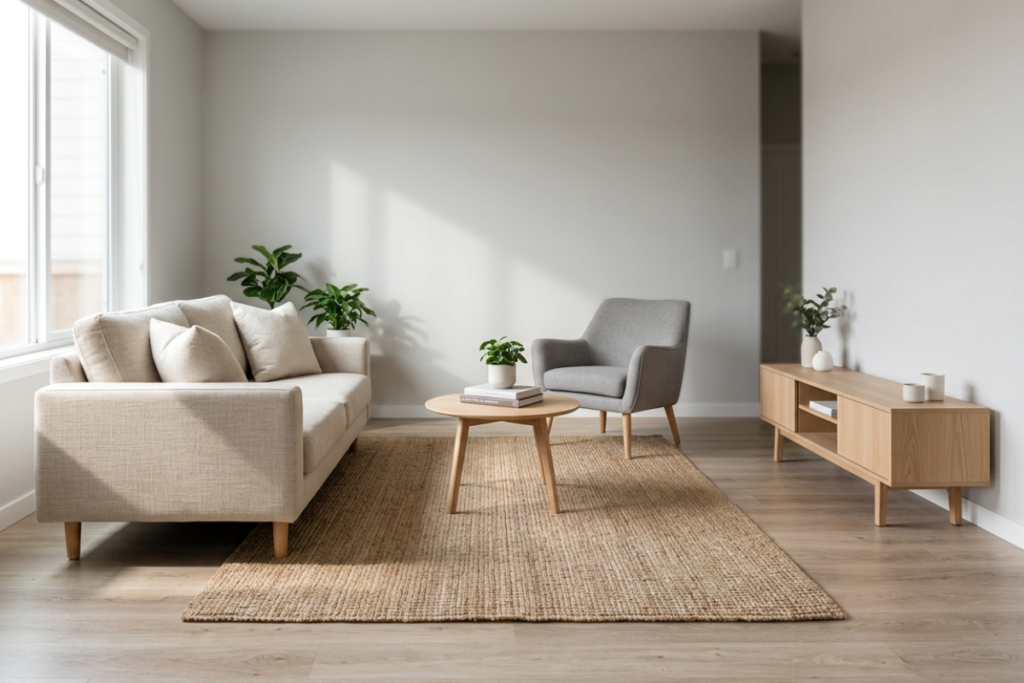
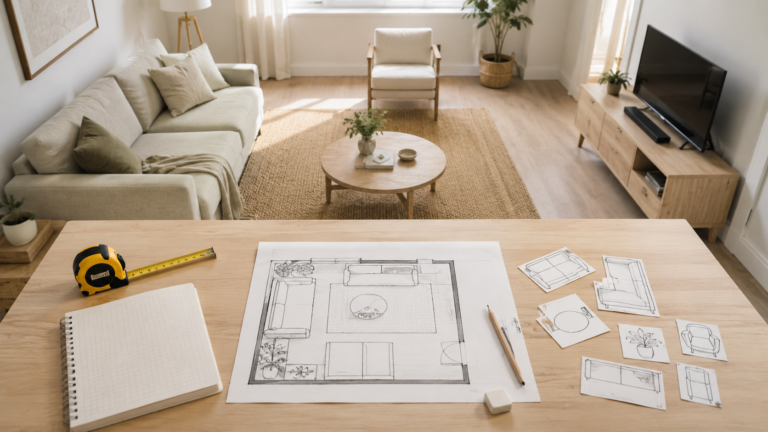
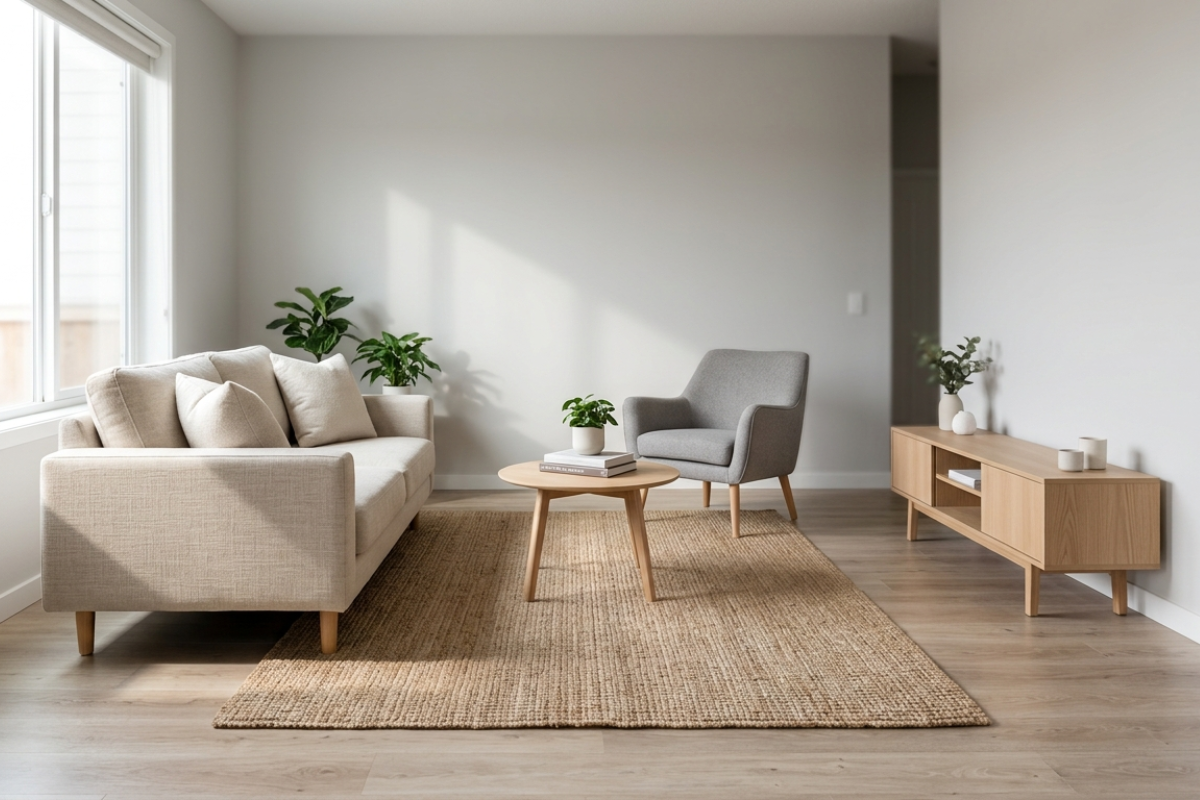
This layout strategy involves pulling sofas and chairs slightly away from the walls to create clear walkways and a sense of openness.
By grouping furniture in the center of the room on an area rug, you define a dedicated conversation zone that feels intentional rather than cramped.
The sources emphasize that even a small 3-4 inch gap can give the illusion that walls are farther away, significantly increasing the sense of depth.
This arrangement prevents a “dead center” and encourages natural flow, giving even a tiny room a designer-style finish.
To ensure comfort, designers recommend leaving approximately 36 inches for primary circulation routes to allow for easy two-way traffic.
Floating furniture also serves to define activity “zones” in open-plan apartments without physical barriers, maintaining sightlines and allowing light to circulate freely across the entire floor plan.
2. Multi-functional Storage Ottomans
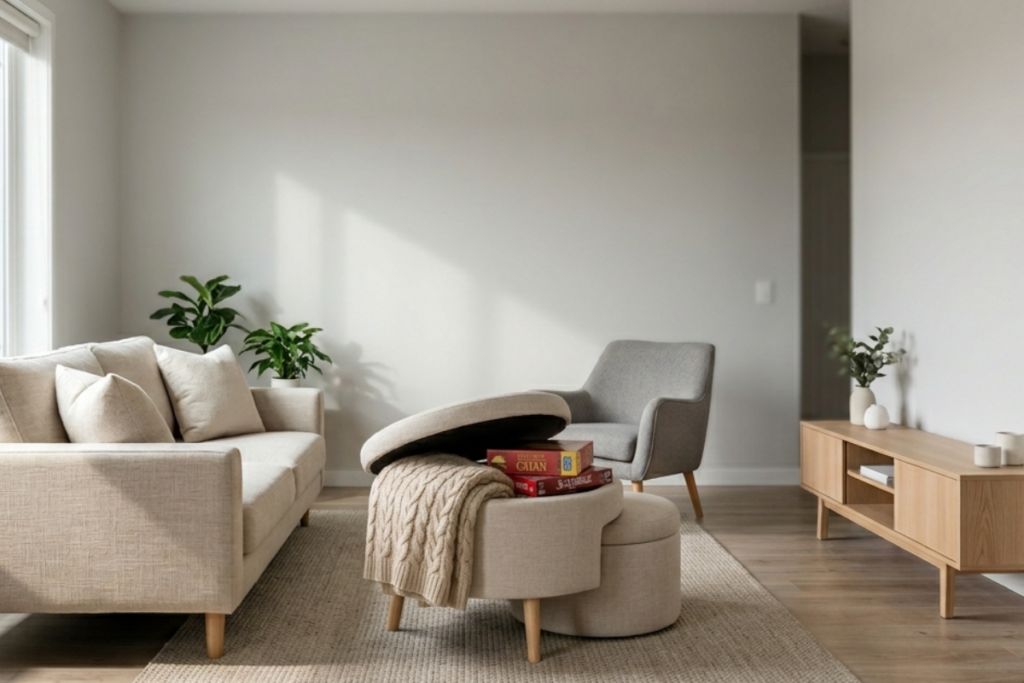
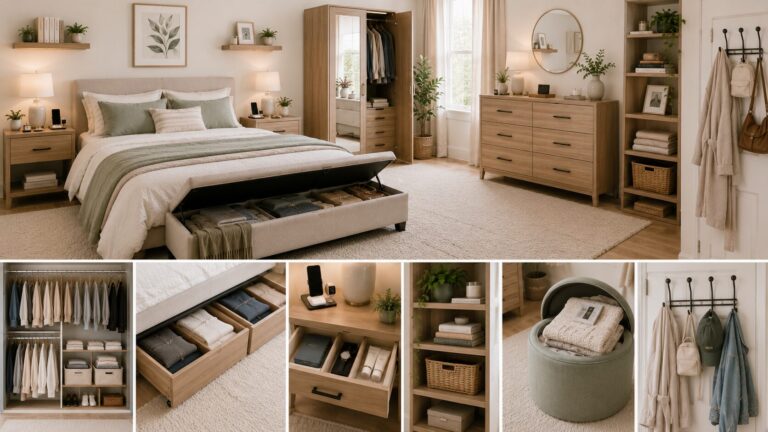
In small apartments, every piece must earn its place, and a storage ottoman is a true small-space hero. These versatile units serve multiple roles: acting as extra seating for guests, a comfortable footrest, or a coffee table when topped with a stable decorative tray.
Beyond surface utility, they provide concealed storage for bulky items such as blankets, games, or media remotes, reducing visible clutter by up to 40%.
The sources suggest that selecting an ottoman with slender legs creates “visual lightness” by keeping the floor visible, a trick that psychologically expands the room’s footprint.
Because they are lightweight, ottomans offer flexibility for rearranging the room during movie nights or social gatherings. For studio living, they can even hide spare bedding, allowing the living area to transform into a guest suite instantly.
3. C-Shaped Side Tables
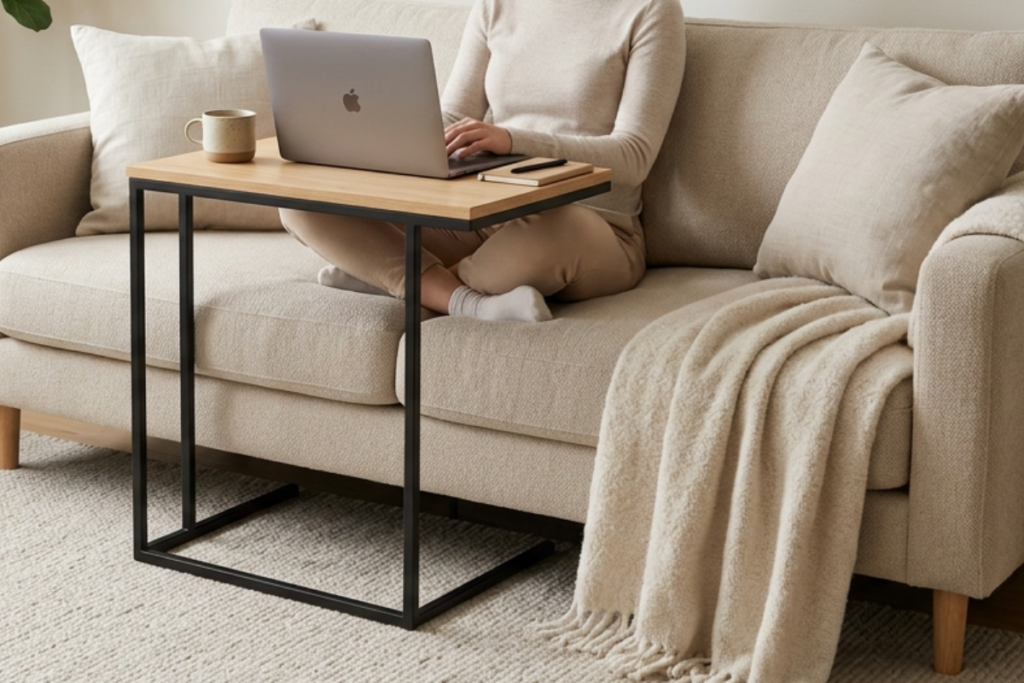
The cantilevered C-shaped side table is a modern spatial hero designed specifically for high-density living.
Unlike traditional bulky end tables, its slim base slides neatly under the frame of a sofa or armchair, allowing the tabletop to hover directly over your lap.
This design creates a movable, functional surface for a laptop or a drink with a zero-footprint requirement on the floor.
Measuring typically 26 to 28 inches high, they align with standard sofa arms for ergonomic comfort, reducing back and neck strain during use.
The sources suggest choosing models with slim metal frames and glass tops to maintain an open, airy vibe.
Adjustable-height versions are particularly valuable for hybrid workers, transitioning from a workspace in the morning to a snack stand in the evening.
By keeping floor-level obstacles to a minimum, these tables ensure walking paths remain clear.
4. Vertical and High-Altitude Storage
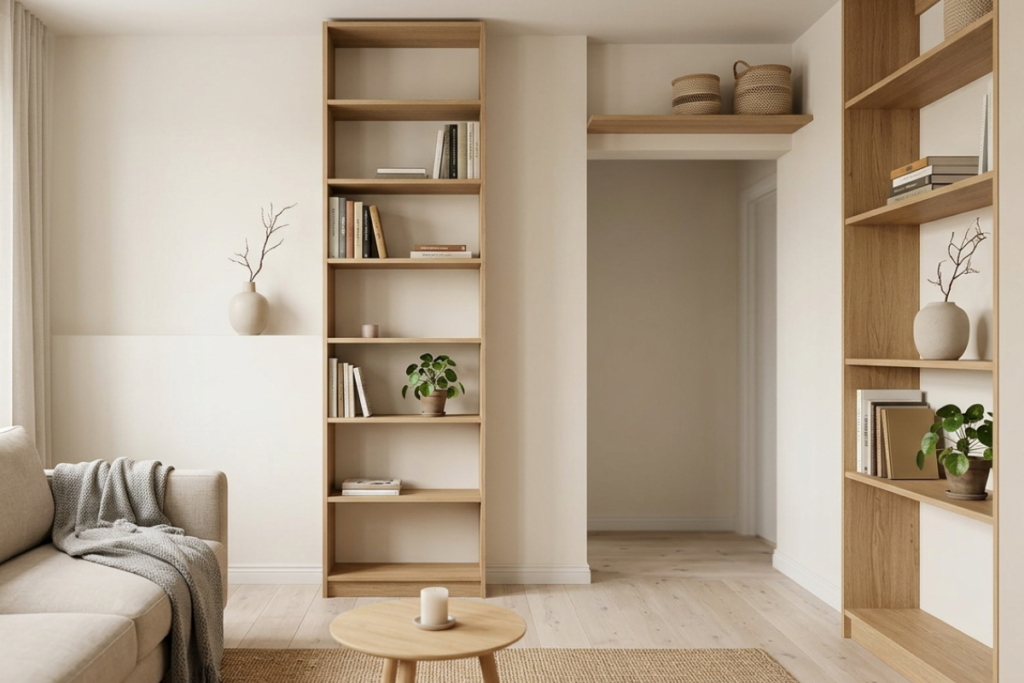
When square footage is restricted, the most effective design strategy is to build upward instead of outward.
Utilizing vertical wall space for tall, narrow bookcases or wall-mounted cabinets can offer up to 40% higher space utilization efficiency than horizontal units.
Floor-to-ceiling shelving systems draw the eye toward the ceiling, emphasizing height and creating a sense of “breathing room”.
For items used infrequently, designers recommend “high-altitude” shelving mounted just below the ceiling or above doorways. This technique keeps the main visual field uncluttered and the floor clear for movement.
To prevent tall units from feeling oppressive, the sources suggest using open-backed designs to reflect light and maintain transparency. These systems transform blank walls into curated focal points for books, plants, and art.
5. Strategic Mirror Placement
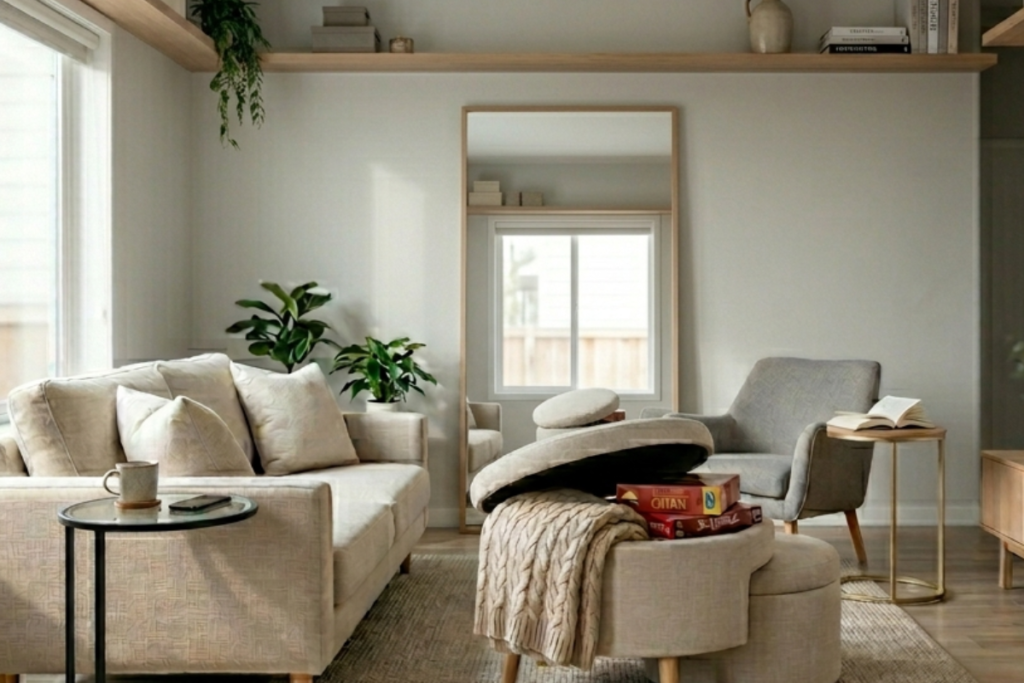
Mirrors are a foundational tool in small-space design, acting as functional architectural elements that create the illusion of more space.
By placing a large mirror directly opposite a window, you reflect natural light and outdoor views, which effectively doubles the room’s perceived depth. This strategic positioning tricks the brain into perceiving that the space extends past the wall.
For windowless rooms, the sources suggest “faking” the look of a window by hanging curtains around a mirror to simulate architectural transparency. Grouping several smaller mirrors in a gallery style can add visual interest, while a single oversized floor-to-ceiling mirror behind furniture makes a room appear palatial.
Mirrors not only brighten a space but also help distribute artificial light from lamps and fixtures throughout the entire living area, amplifying every source of illumination.
6. Legged and Raised Furniture
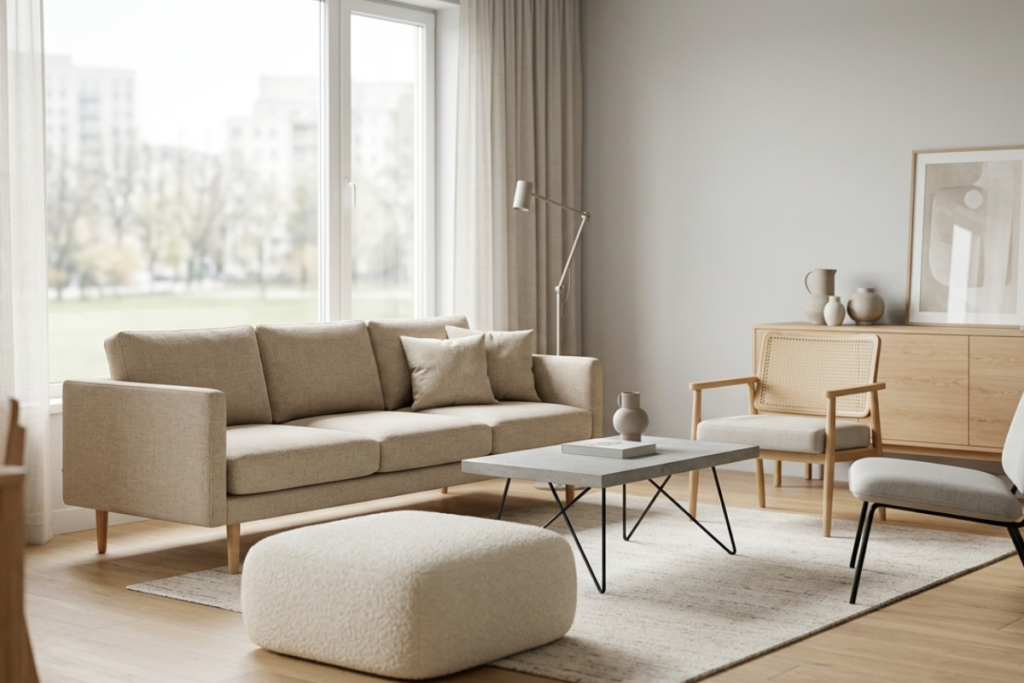
A key principle for making a room feel expansive is to keep as much of the floor visible as possible.
Choosing furniture with slender, exposed legs—rather than bulky pieces that sit flush on the ground—allows light and air to flow freely beneath the seating. This visual trick gives the impression of extra square footage and makes the environment feel airy and less cramped.
The sources state that being able to see the floor extend under a sofa or cabinet creates a “visual lightness” that psychologically expands the room’s footprint. Beyond aesthetics, legged furniture is more practical for maintenance because it is much easier to clean underneath without moving heavy items.
For maximum impact, designers recommend mixing one “chunky” comfortable piece with several “leggy” chairs to achieve a balanced visual weight that feels both composed and architectural.
7. Large Area Rugs to Define Zones
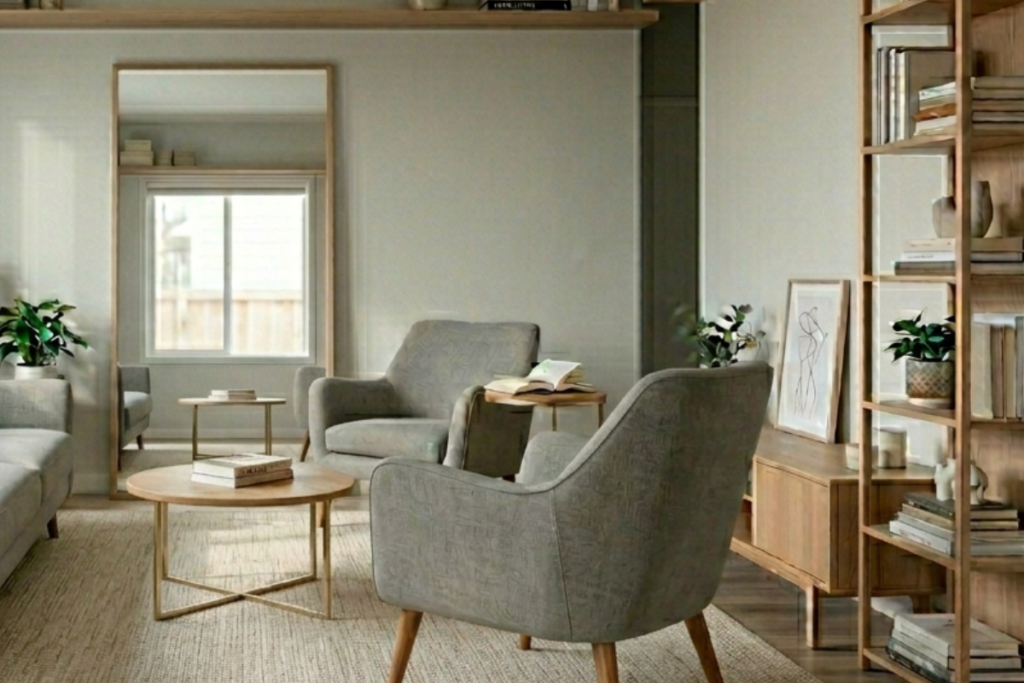
Using the right-sized area rug is critical for anchoring a furniture grouping and creating psychological boundaries in an open floor plan. A common mistake is choosing a rug that is too small, which can make a room feel choppy and disjointed.
Designers follow the “two-thirds rule,” recommending a rug large enough so that at least the front legs of all seating pieces rest on it. This visually “locks” the furniture together into a cohesive conversation area, making the living room feel like a purposeful enclave. Large rugs can also help absorb sound and prevent echoing in apartments with hard surfaces.
Choosing a rug with a subtle pattern or neutral texture adds warmth and depth without overwhelming the space. For a budget-friendly luxury look, layer a smaller patterned rug over a larger, inexpensive neutral rug.
8. Dual-Chair Seating Configurations
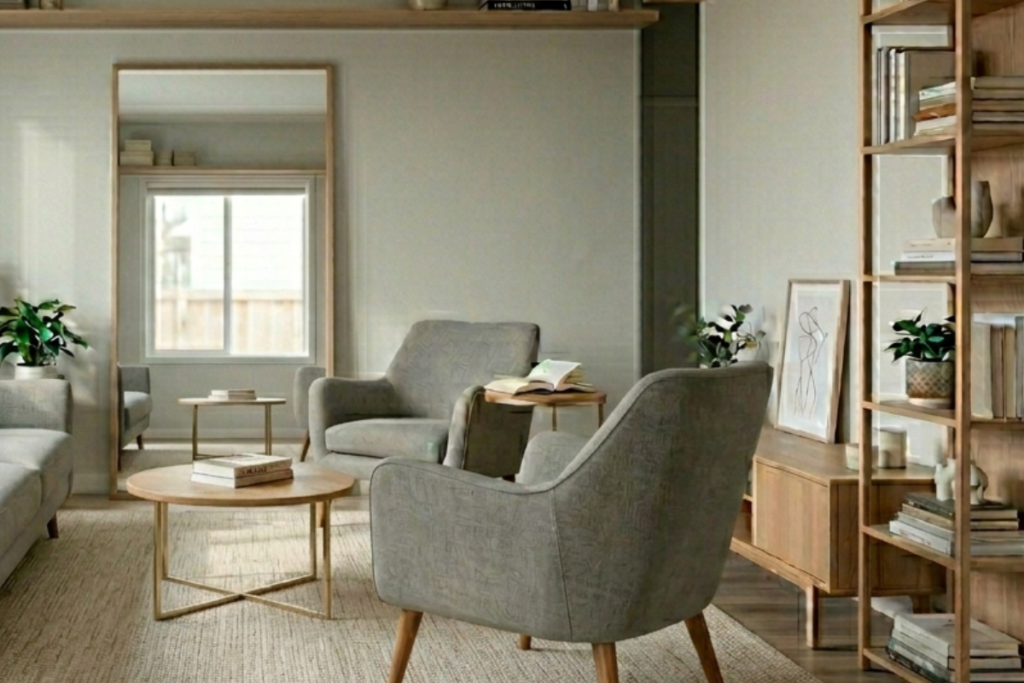
In ultra-compact apartments, a traditional three-seater sofa can act as a spatial monolith that obstructs movement and dominates the floor plan.
A more realistic and flexible alternative is to ditch the bulky sofa in favor of two comfortable, high-design chairs. This “dual-chair” layout breaks up the visual mass of the room, allowing more natural light to permeate the space and providing better “breathing room” around furniture.
Chairs with refined, low-profile silhouettes help maintain clear sightlines, which prevents a tiny living room from feeling “choked”. This intervention is particularly effective for renters as individual chairs are easier to transport and rearrange than large sectionals.
The sources highlight that this setup facilitates intimate conversation zones and allows the floor plan to remain adaptable for other activities, such as home workouts or entertaining.
9. The “Cloffice” (Closet Office)
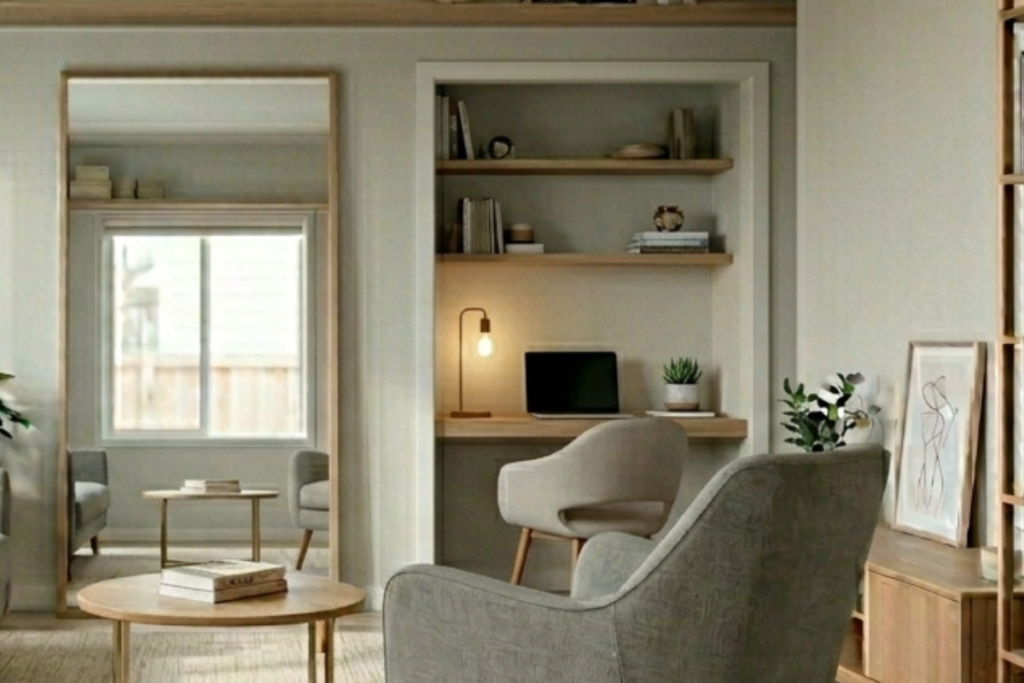
As hybrid work becomes standard, the “cloffice” has emerged as a key multi-use design trend for small apartments in 2026. This involves remodeling a living room closet into a compact, fully functional home office.
By removing the closet doors, adding a built-in desktop at counter height, and installing shelving above, residents create a dedicated workspace with a zero-footprint requirement on the living room floor. This strategy supports mental well-being by creating a psychological “boundary” for professional tasks within a small home.
When the workday is over, the workspace can be closed off, helping the brain transition into “relaxation mode”.
The sources emphasize that this layout is ideal for one-bedroom apartments where the living room must multitask as both a productive environment and a restorative sanctuary. Positioning the desk near a window further boosts mood and productivity.
10. Wall-Mounted Floating Media Consoles
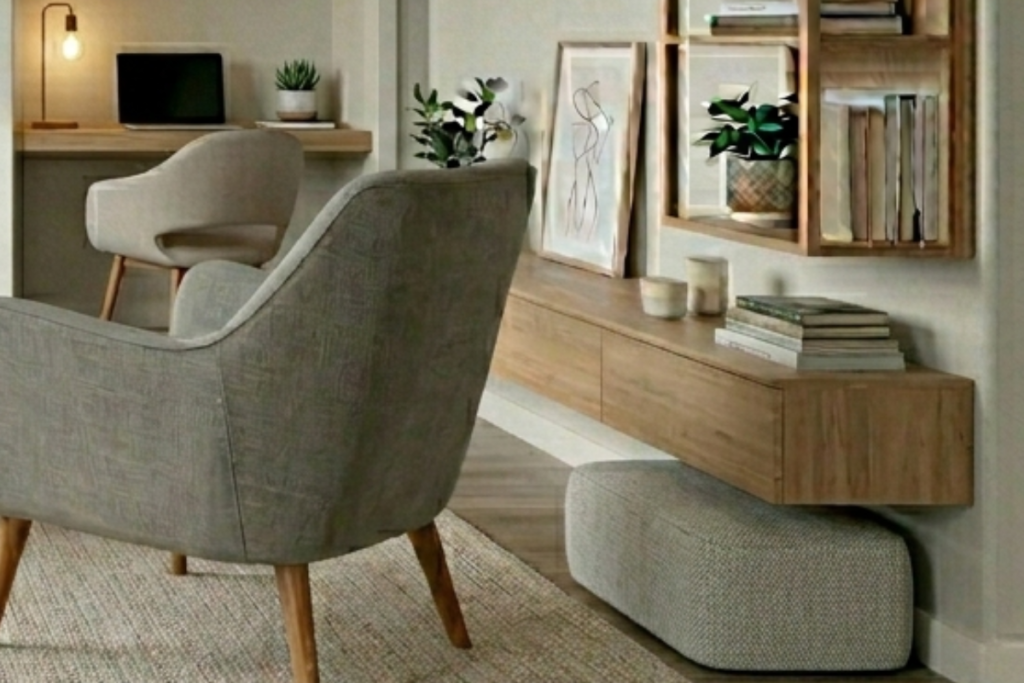
Traditional bulky TV stands often eat up significant floor space and create visual clutter in tight living areas.
A wall-mounted “floating” media console is a sleek, modern alternative that frees up floor space and makes a room feel larger.
By lifting the entire unit off the floor, you expose more horizontal surface, which tricks the eye into perceiving a more expansive footprint. These units often include integrated cable management systems, with pre-drilled holes and hidden channels to route wires directly into the wall, eliminating “cable spaghetti”.
The sources suggest mounting the TV so the center is at eye level—typically around 42 inches from the floor—to prevent ergonomic strain.
Furthermore, the space beneath a floating console can be used for storing low-profile items like ottomans, maximizing every available inch of the room.
11. Boundary Dissolution via Color Drenching
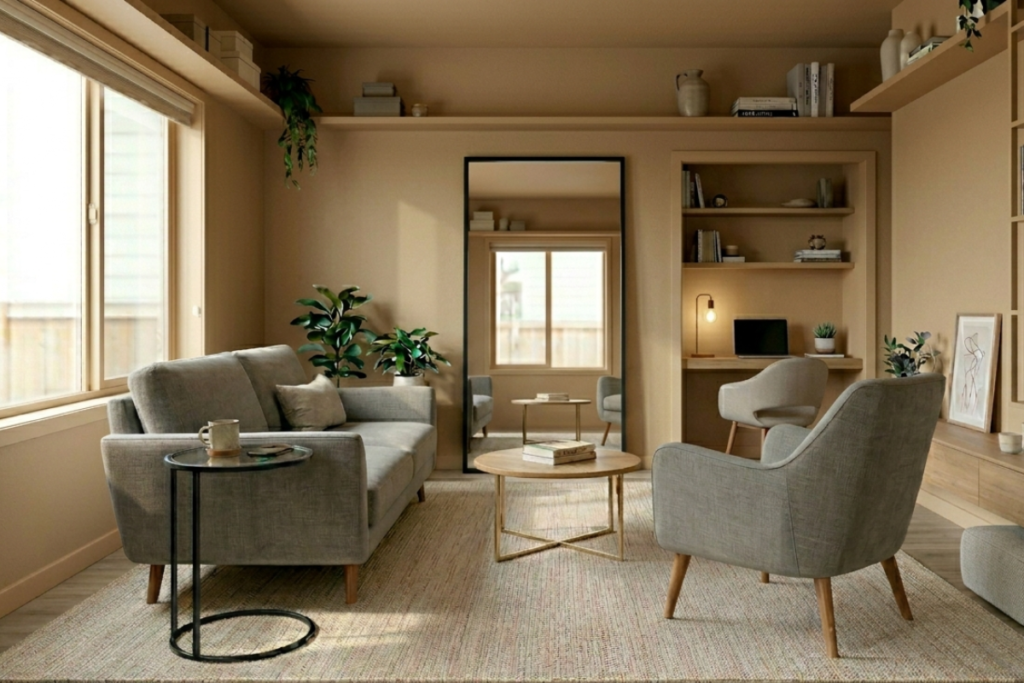
“Color drenching” is a modern optical intervention that involves painting walls, ceilings, window trim, and baseboards in the same saturated hue. This technique effectively erases the visual “edges” of a room, preventing the brain from framing the space as a restrictive box.
By unifying all architectural surfaces, the boundaries between the floor, walls, and ceiling are blurred, which makes the room feel taller and more fluid.
The sources recommend warm earth tones like terracotta, sage green, or sand beige to create a serene atmosphere that fosters mental wellness.
Saturated palettes are particularly powerful in maximalist designs, where they provide a cohesive backdrop that lets curated furniture shine without causing visual fragmentation. This strategy is far more effective for expansion than accent walls, which can “visually stop” the eye and shrink the space.
12. Broken-Plan Dividers
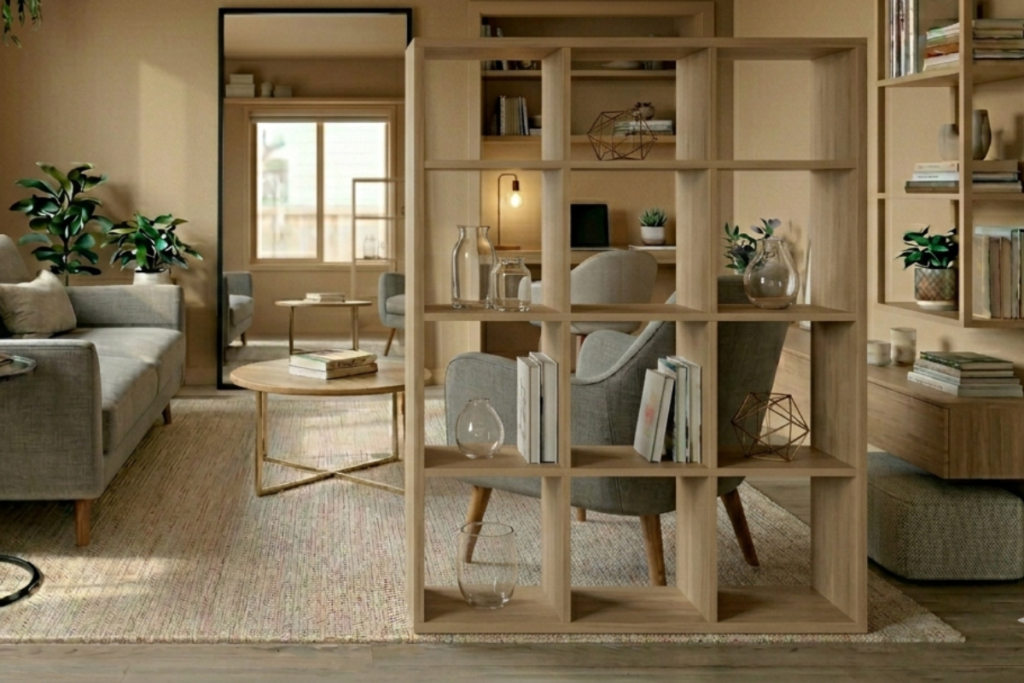
For modern apartments where solid walls are impractical, designers utilize a “broken-plan” strategy to define zones without obstructing light.
Using open-backed shelving units, such as the IKEA KALLAX, acts as a transparent divider that provides storage while maintaining the airy feel of an open floor plan. These units allow natural light from windows to reach the deepest corners of the apartment, improving the mood of occupants.
Slatted wood partitions or decorative screens can also be used to separate living, sleeping, and working areas. This methodology is grounded in environmental psychology, suggesting that humans need clear territorial boundaries to feel comfortable in multi-use environments.
The sources emphasize that such dividers create “islands” of activity, reducing the cognitive load required to switch between daily routines while keeping sightlines open and circulation frictionless.
13. Nested Table Systems
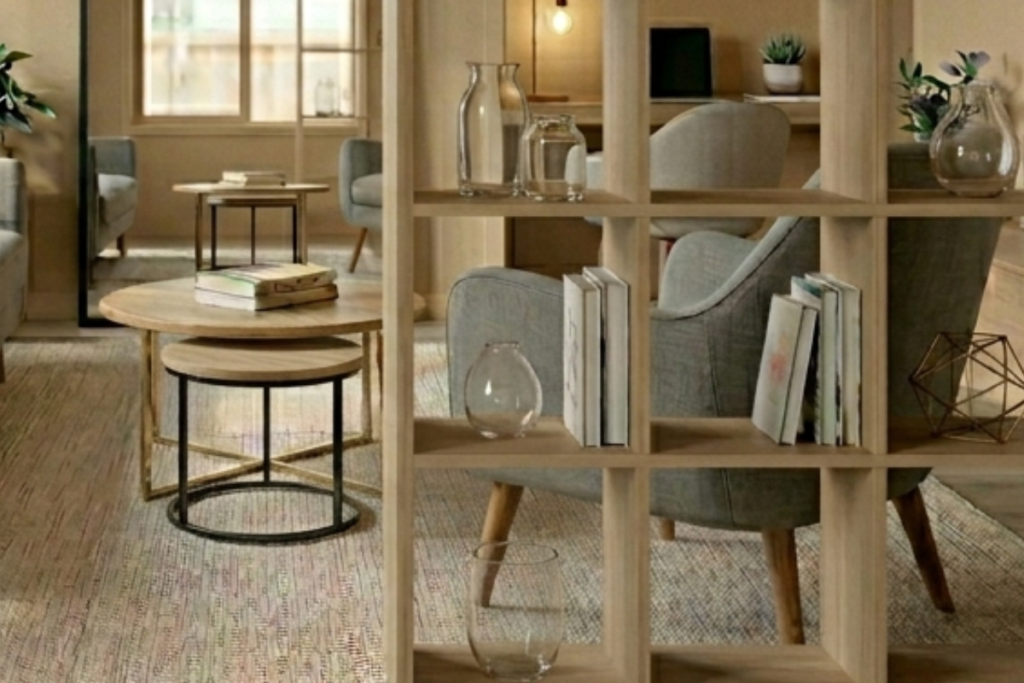
Nesting tables are a set of two or more tables designed to stack neatly beneath one another, offering “surface area on demand” for small living rooms.
When nested, they occupy the footprint of a single small end table, making them perfect for clearing walking paths when not in use.
When guests visit, they can be separated to provide multiple surfaces across the room for drinks, snacks, or laptops. Their differing heights create a “visual rhythm” and depth that adds character to a seating arrangement.
The sources suggest choosing nesting tables with slim legs or glass tops to ensure they don’t visually crowd the space. These systems are highly adaptable, allowing residents to move pieces to different rooms as needs change, making them a budget-friendly way to refresh a room’s function without a major furniture overhaul.
14. Nature-Inspired Light Color Palettes
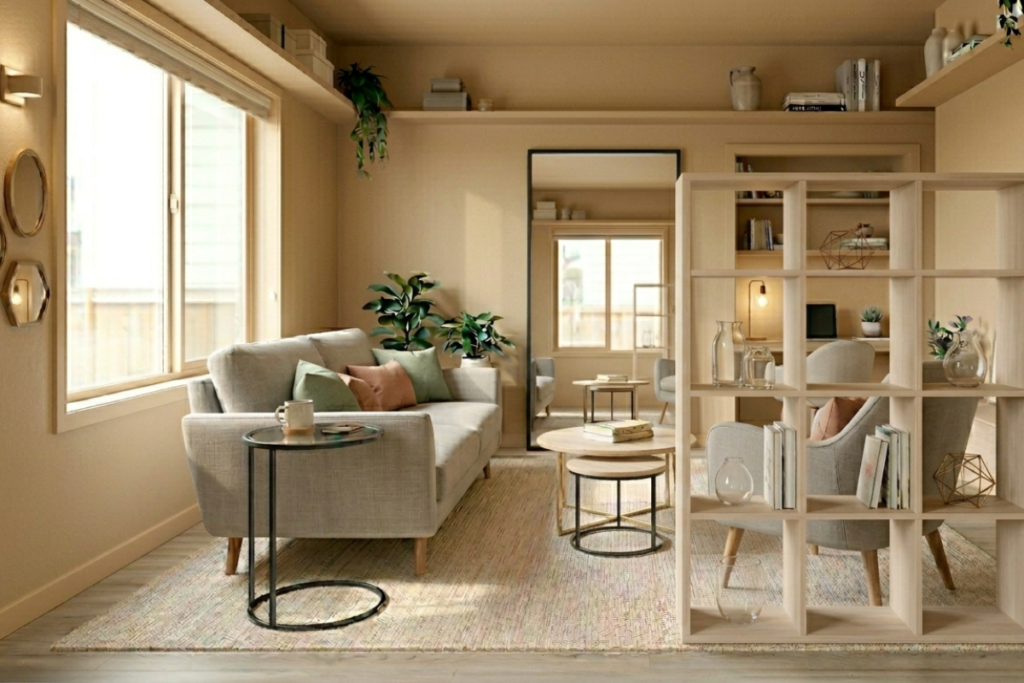
Using light color palettes is one of the easiest ways to make a small living room feel bigger and more inviting.
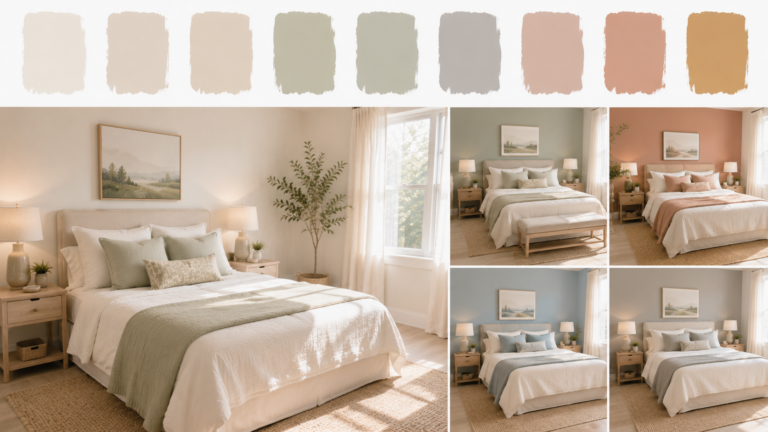
Soft neutrals like warm whites, creams, and pale grays reflect natural light instead of absorbing it, creating a sense of airiness.
Sticking to a unified palette allows furniture and decor to blend seamlessly, which reduces visual fragmentation.
The sources highlight a shift toward “warm earth tones” for 2026, such as sand beige, clay, and muted sage, which exude comfort and a biophilic connection to nature. These hues are more effective than sterile grays for creating a restorative, health-centric environment.
Adding subtle pops of color through throw pillows can bring energy to the space without overwhelming the calm foundation. A light palette acts like a “soft focus lens,” blurring boundaries and amplifying sunlight.
15. Murphy Bed and Transformer Systems
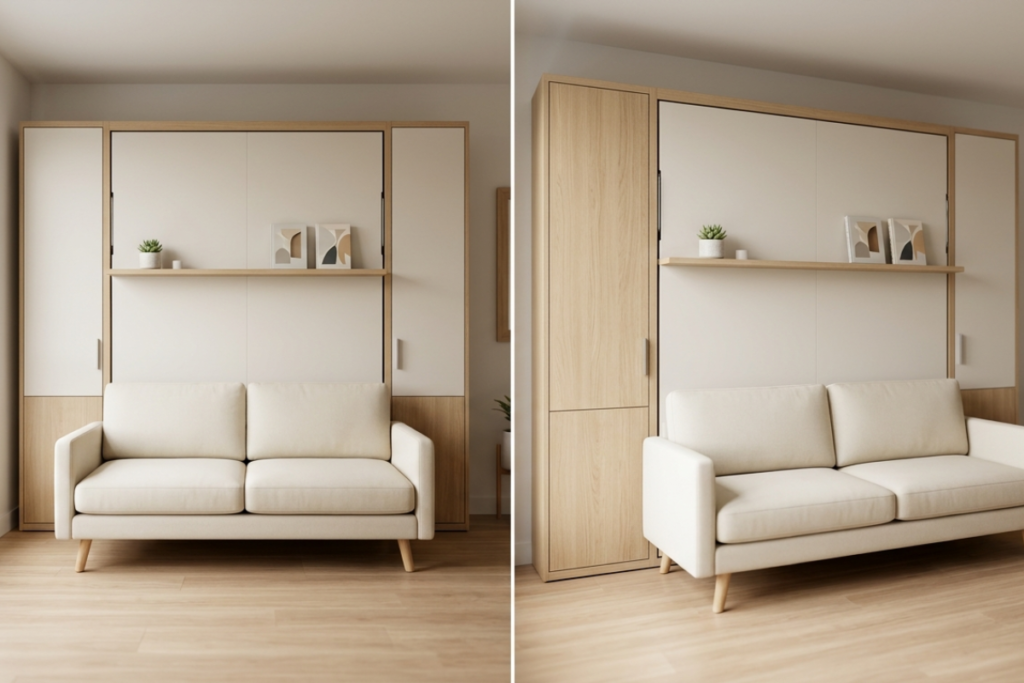
In micro-apartments where the living room must double as a bedroom, a custom Murphy bed is a masterpiece of small-space engineering that stores vertically inside a cabinet.
This “disappearing act” can reclaim more than 30 square feet of usable floor space during the day, making room for play areas or home offices. Unlike sofa beds, Murphy beds accommodate real, full-sized mattresses for superior sleep support.
Many modern models are “transformers,” featuring integrated sofas or desks that reveal the bed only when folded down.
The sources state that these systems are excellent for renters who need multifunctional zones, as they transition the room from a social hub to a guest suite in minutes.
While they require wall-mounting for safety, they significantly increase the long-term utility and value of a micro-apartment.
16. Intelligent Layered Lighting
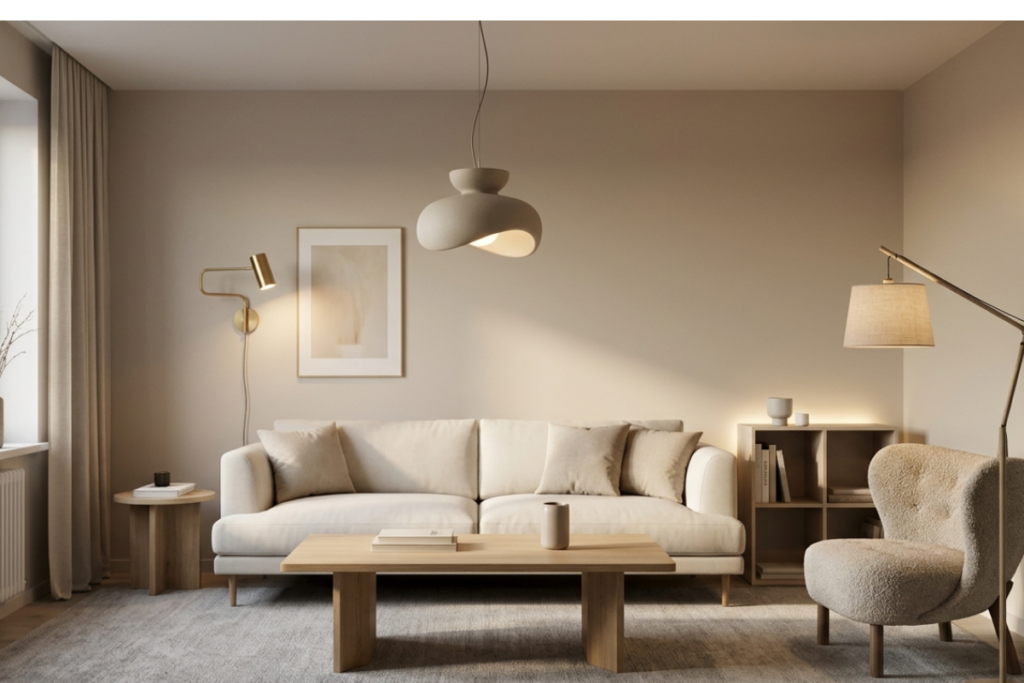
Relying on a single harsh overhead “big light” is a common design failure that leaves the perimeter of a room in shadow, effectively “pulling in” the walls.
A professional lighting plan for small apartments utilizes at least three distinct layers: ambient, task, and accent lighting.
Sculptural floor lamps and pendants can be focal points, while wall-mounted sconces eliminate dark corners and highlight architectural features. Layered lighting adds depth, making a room feel warm and complex rather than flat.
Technological integrations for 2026 include “daylight-responsive” smart systems that automatically adjust color temperature throughout the day—shifting from cool blue at noon to warm amber at sunset—to support the occupant’s natural circadian rhythm.
The sources emphasize that soft, warm bulbs create the most flattering environment for relaxation and comfort.
17. Transparent Acrylic and Glass Furniture
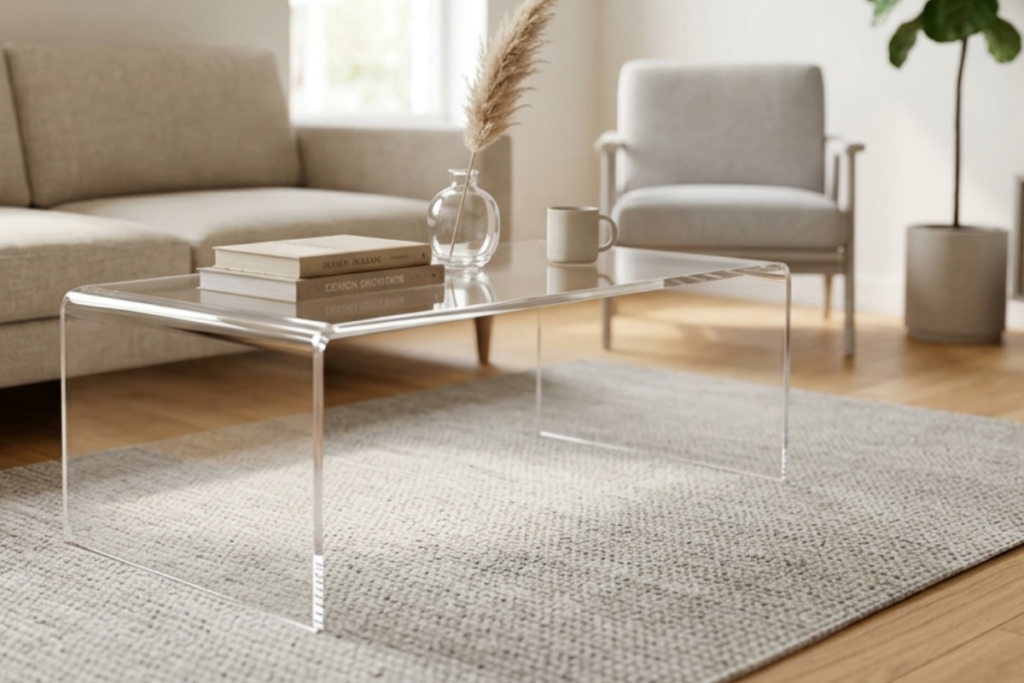
Transparency is a powerful tool for maintaining an open, airy feeling in small rooms by taking up zero “visual weight”.
Pieces like clear acrylic (Lucite) or glass coffee tables are “visual chameleons” that allow the eye to travel right through them to the floor beyond. This effectively declutters the visual field while still providing necessary utility.
Acrylic is particularly durable, lightweight, and shatterproof, making it ideal for busy urban households. Because these pieces don’t visually dominate a room, they allow your rug’s patterns and other decor elements to shine.
High-quality acrylic transmits approximately 92% of light, helping to distribute brightness throughout windowless or dim spaces.
The sources suggest choosing furniture with minimalist silhouettes to keep the space feeling modern and chic without weighing down the vibe.
18. High-Hung Drapery for Vertical Lift
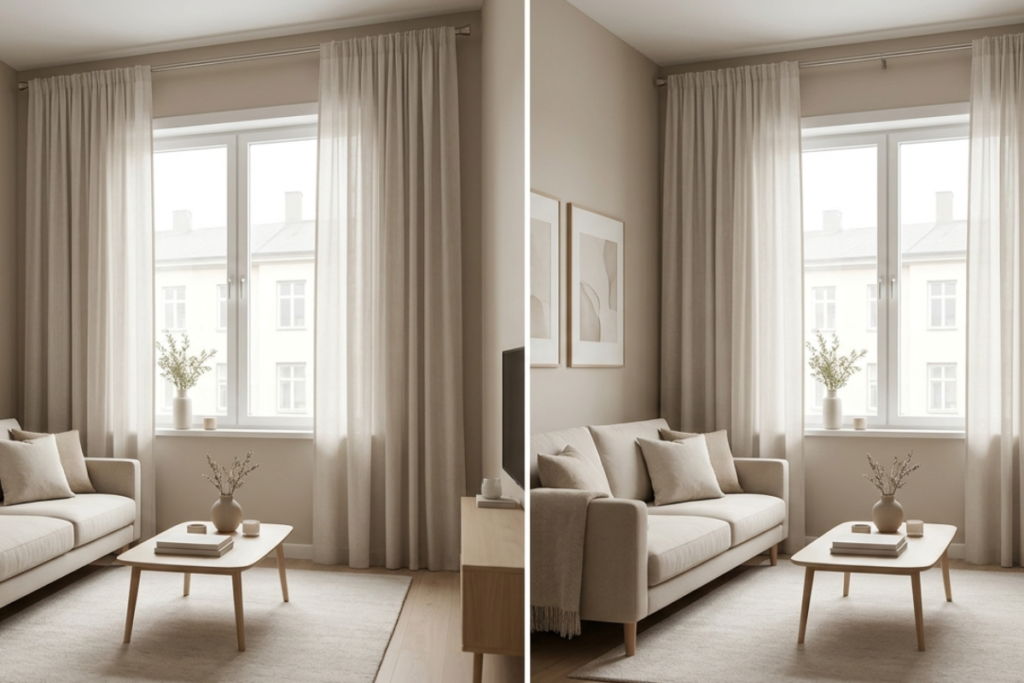
To visually enhance a small living room, designers frequently employ the “vertical rule” by drawing the eye toward the ceiling.
Hanging curtain rods higher and wider than the actual window frames creates the illusion of taller ceilings and more expansive walls. This simple trick adds a sense of “breathing room” and luminous sophistication to cramped apartments.
The sources recommend using light, airy fabrics in neutral tones to allow natural light to filter through uninterrupted while still providing soft privacy. Avoiding heavy, oppressive window treatments is crucial, as they can “swallow light whole” and make a room feel closed off.
For rooms with low ceilings, floor-to-ceiling drapes can even “fake” the look of big windows when placed over large mirrors. This vertical strategy frames your views beautifully without occupying any extra square footage.
19. Small-Scale Dining Nooks
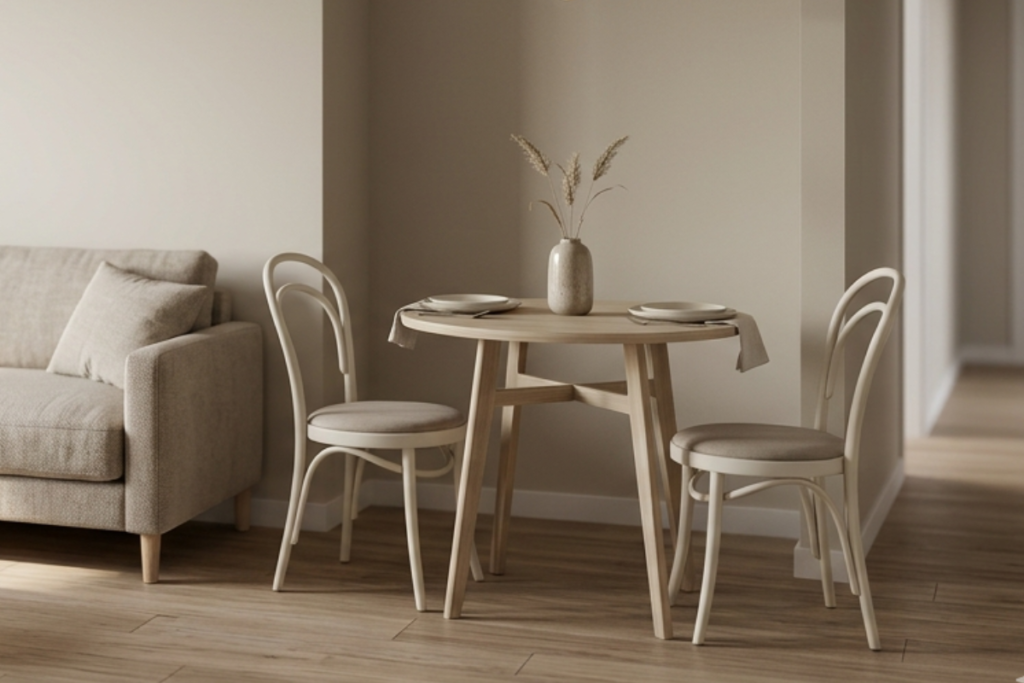
Small apartments often lack formal dining areas, creating a “blur” between eating and relaxation spaces. A realistic solution is to integrate a “bistro nook”—a compact table and chair set that fits into an unused corner or sits behind a sofa.
Round or oval tables are ideal because their lack of sharp corners preserves flow and facilitates movement in tight quarters. A 36-inch round table can seat two to four people without dominating the floor plan, effectively reclaiming up to 30 square feet of floor space.
The sources suggest using drop-leaf tables for even more flexibility; these can collapse against a wall when not in use and expand only for dinner parties. This intervention serves as a “perceptual threshold,” signaling to the brain a shift from social tasks to relaxation mode.
20. Strategic Corner Reading Nooks
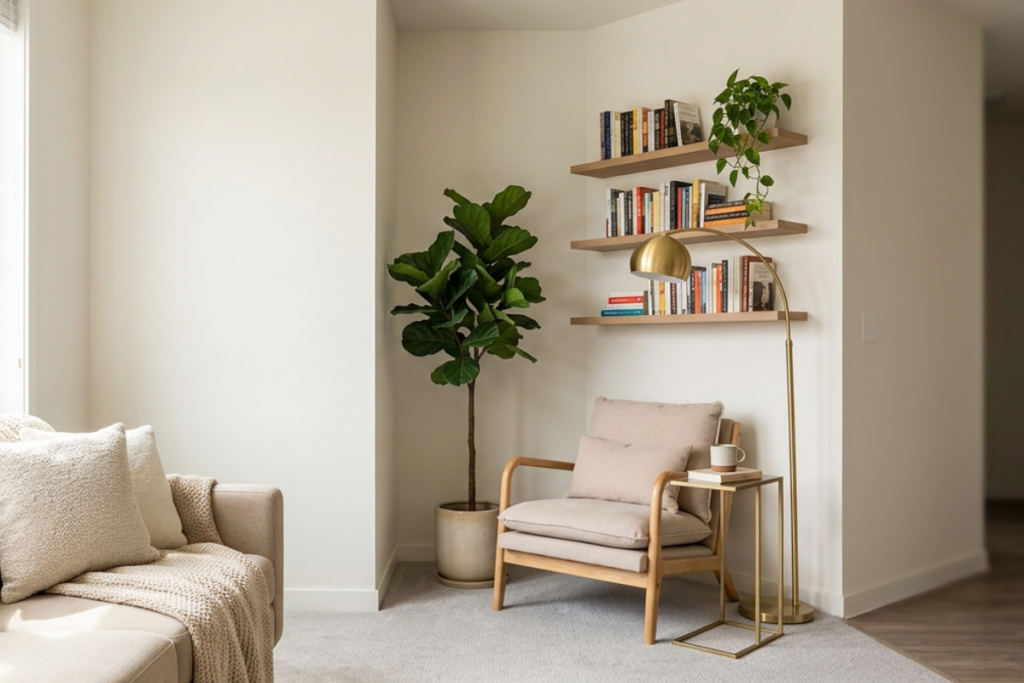
Living room corners hold immense potential for transforming “dead space” into functional zones.
By placing a small accent chair, a slim side table, and a dedicated floor lamp in an ignored corner, you can create a cozy reading nook that serves as a tranquil escape. This setup adds purpose to the room’s perimeter without crowding the main seating area. T
he sources suggest painting just that corner a different color or using a focal-point plant to further delineate the zone. Utilizing vertical storage—such as floating corner shelves for books—keeps the floor clear and adds character to the space.
Reading nooks support the “zone-based” framework by providing a dedicated spot for solitude, helping to differentiate active social zones from quiet restorative areas. For an organic feel, pair the chair with a tall, narrow plant to draw the eye upward.
Final Words
Designing a small apartment living room is all about thinking smart rather than thinking big. With the right layout, furniture choices, and visual techniques, you can completely transform how your space looks and feels. Small changes—like adding a mirror, choosing light colors, or using multifunctional furniture—can make a surprisingly big difference.
The goal isn’t to fill every inch, but to create a space that feels open, comfortable, and functional for your lifestyle. Whether you’re working from home, entertaining guests, or simply relaxing, these ideas help you make the most out of limited space without sacrificing style.
Start by implementing just a few of these ideas, and you’ll quickly notice your living room feels bigger, brighter, and more organized. Remember, a small space can still have a big impact when designed thoughtfully.