Cheap Decorating Ideas for Your Home That Actually Look Expensive
There’s a persistent myth in home decorating that good taste costs money. That the rooms on your Pinterest board look that way because expensive things were purchased to fill them.
Some of that is true. Quality furniture costs more than flat-pack alternatives, and the difference often shows. But the gap between a room that looks polished and a room that looks thrown together has surprisingly little to do with budget. It has to do with intention.
A room filled with expensive things, arranged without thought, still looks like a mess. A room furnished mostly from thrift stores and budget retailers, but put together with a clear eye for colour, proportion, and styling — that room looks designed. Sometimes it looks better.
This is the territory these cheap decorating ideas for your home live in. Not “how to buy less expensive versions of the same things” but “how to use what you have more effectively, find things that look far more expensive than they are, and make decisions that punch above their price tag.”
None of the ideas here require a significant investment. Most cost under $50. Several cost nothing at all. What they all require is intention — deciding what you want the room to feel like and making deliberate choices that move it in that direction.
That’s not a budget constraint. That’s just good decorating.
Start With What Costs Nothing: The Edit
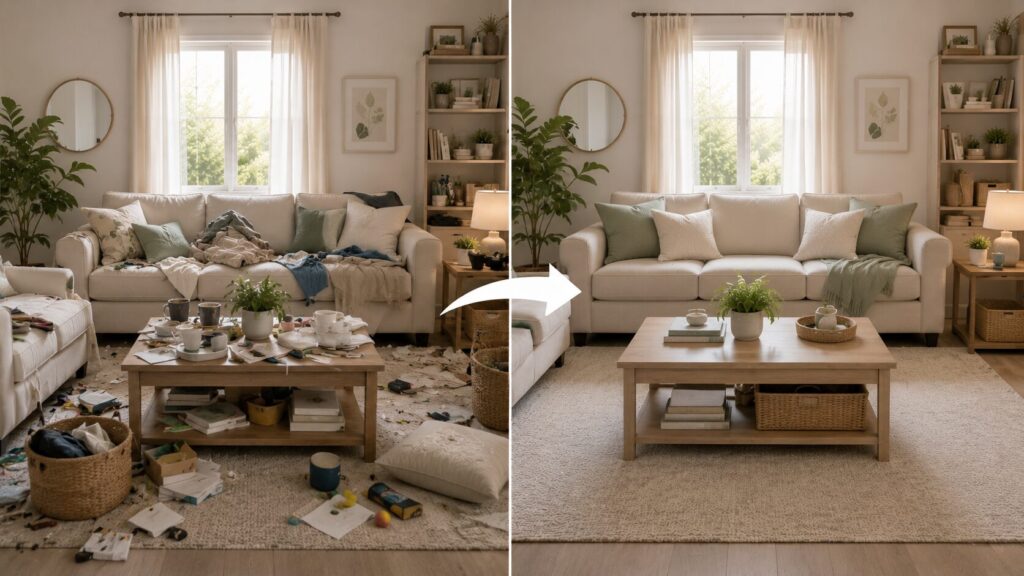
Before any money is spent, the single most impactful thing you can do to improve any room in your home is remove things from it.
Clutter is the enemy of any decorating budget, no matter how large. A room full of objects — even nice objects — looks like too much. The brain can’t rest. The eye doesn’t know where to land. The room feels busy and small simultaneously, regardless of how it’s been decorated.
Editing is free. And it almost always improves a room more dramatically than adding anything new.
The practical process: go room by room and remove everything from surfaces and the floor that doesn’t genuinely earn its place. “Earn its place” means one of two things: it’s functional (something you use regularly) or it’s beautiful to you (something you actively enjoy looking at). Things that are neither — the random decorative objects accumulated over time, the stacks of papers that migrated to the coffee table, the items sitting on the floor because they haven’t found a proper home — these come out.
What’s left will look more considered instantly, without buying a single thing.
From there, you have a clear baseline. What the room actually needs becomes much more obvious when it isn’t obscured by what it doesn’t need.
Cheap Decorating Ideas for Your Home: Room by Room
Living Room
Rearrange the furniture before buying anything new.
Most people arrange furniture once when they move in and never reconsider it. But furniture placement has an enormous effect on how a room feels — and rearranging costs nothing.
Try pulling the sofa away from the wall (even 4–6 inches creates depth). Angle the accent chair rather than pushing it flat against a wall. Move the coffee table closer to the sofa than feels natural — 15–18 inches is the functional and aesthetic sweet spot.
Photograph the room from the doorway after rearranging. This is how visitors and cameras see the room, and it’s often very different from how it looks when you’re standing in it.
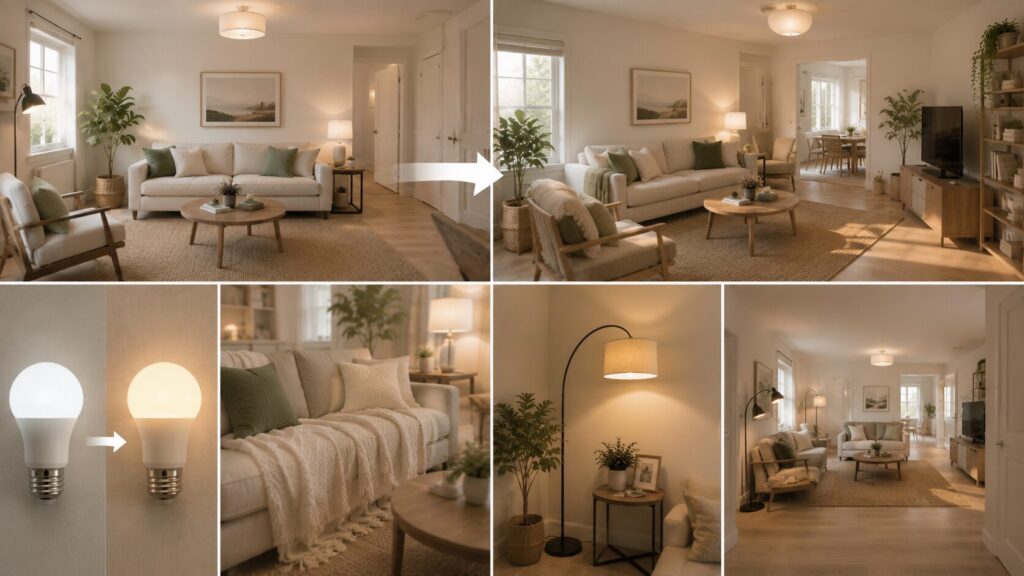
Swap your light bulbs.
This is consistently one of the highest-impact, lowest-cost changes in home decorating — and it’s almost never mentioned in budget decorating articles because it’s unglamorous.
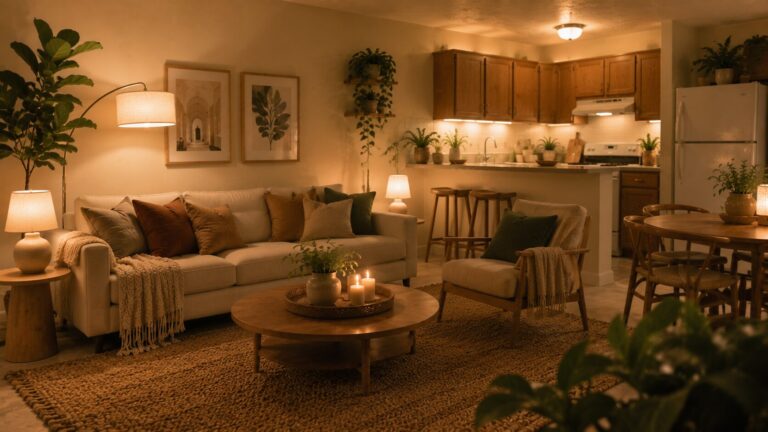
The color temperature of a bulb changes the entire mood of a room. Cool white or daylight bulbs (4000K–6500K) create a clinical, flat atmosphere. Warm white bulbs (2700K–3000K) produce the soft, golden light that makes rooms look like the lifestyle photographs people pin and save. The cost difference is negligible. The effect is significant.
Go through every room and replace any cool or bright white bulbs with warm white equivalents (2700K is the target). Do this before spending money on anything else decorative.
Throw a large blanket over a tired sofa.
A textured throw — linen, waffle-knit, chunky knit, or a Belgian linen slipcover style — draped over a sofa that’s seen better days updates it instantly. This doesn’t work if the throw is too small or too thin; it needs to have enough presence to read as an intentional choice rather than something that got left on the sofa.
For under $40–$60, a quality oversized throw transforms a dated couch into something that reads as intentionally casual-luxe. It also adds texture, which is one of the things budget rooms most consistently lack.
Add one floor lamp to a dark corner.
Dark corners make rooms feel smaller and more cramped. A floor lamp in a corner, throwing warm light upward and outward, opens the room visually and adds the layered lighting that distinguishes designed rooms from undesigned ones.
A good-looking floor lamp doesn’t need to be expensive. Simple arc floor lamps in matte black, brushed brass, or natural materials are available at every price point from $30 upward. The light it provides is more important than the fixture itself.
Bedroom
Invest $30–$50 in new bedding before anything else.
The bed is the largest visual surface in any bedroom. It’s what the room is organized around, and it’s what every other decorating decision responds to. A bedroom with unmade, mismatched, or worn bedding looks decorating-resistant no matter what else is done.
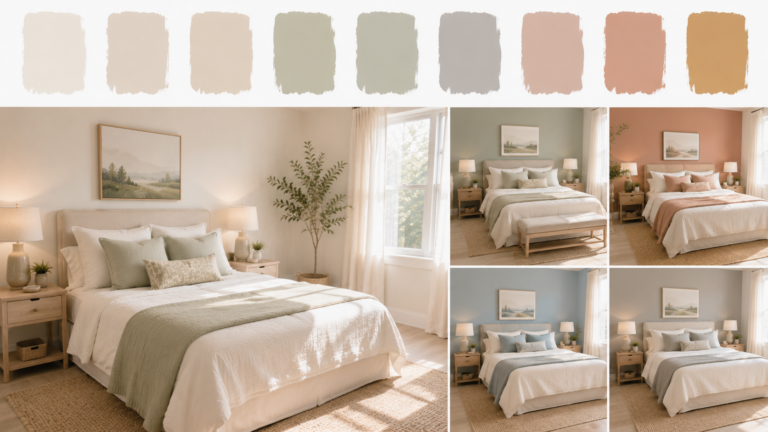
A simple duvet cover in a solid linen-look or textured fabric — not a pattern, at least not to start — in a color that works with the room immediately elevates the space. Budget linen-look duvet covers are available for $30–$70 and photograph beautifully. Layer with a second textural element: a waffle-knit or chunky blanket folded at the foot, and a mix of pillows in complementary sizes.
A bed that’s styled with intention becomes the room’s focal point. When the focal point is right, everything else in the room looks better by association.
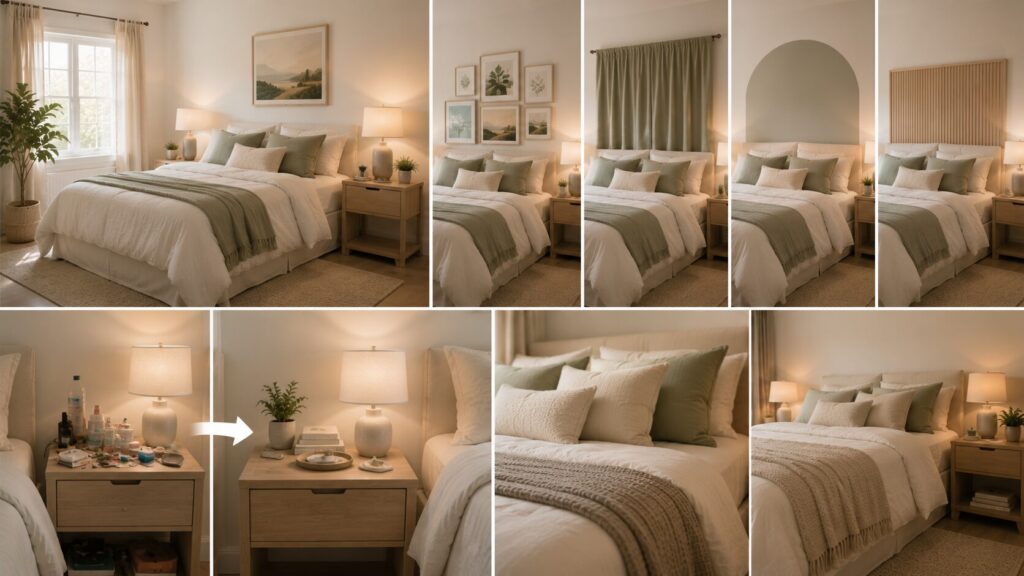
Create a headboard from what you have.
A bed without a headboard lacks a visual anchor. But headboards don’t need to be purchased as standalone furniture pieces.
Cheap headboard alternatives that genuinely work:
- A large piece of art or a gallery arrangement centered on the wall behind the bed at headboard height. Art that starts at mattress level and extends 24–30 inches above it functions exactly as a headboard does visually.
- A length of fabric hung from a curtain rod mounted above the bed — even a single panel of linen or velvet draped behind the headboard position creates warmth and vertical presence.
- A painted arch or rectangle directly on the wall behind the bed in a contrasting color. This faux-headboard technique uses a small amount of paint and produces an architectural look that costs less than $15 in materials.
- Removable peel-and-stick panels in a wood or textured look, arranged in a headboard-shaped section behind the bed.
Reorganize the nightstand.
Two nightstands organized and styled intentionally transform the feel of a bedroom more than most people expect. The change costs nothing — it just requires editing the nightstand down to what belongs there and adding one or two small items that work aesthetically.
A lamp (already there or a thrift store find for under $10), one book, a small plant or succulent, and a simple tray to contain the phone/charger/lip balm cluster. That’s it. Clear everything else.
Kitchen and Dining
Clear the counters ruthlessly.
In a kitchen, counter clutter creates visual noise that makes even a renovated kitchen look messy. Clearing all but the most essential items (the coffee maker, a fruit bowl, a knife block if it’s attractive) opens the kitchen visually and makes it look significantly more expensive.
Items that get used once a week don’t need counter space. Items that get used once a month definitely don’t. The blender, the toaster, the air fryer — evaluate each one honestly. If it’s not used almost daily, store it.
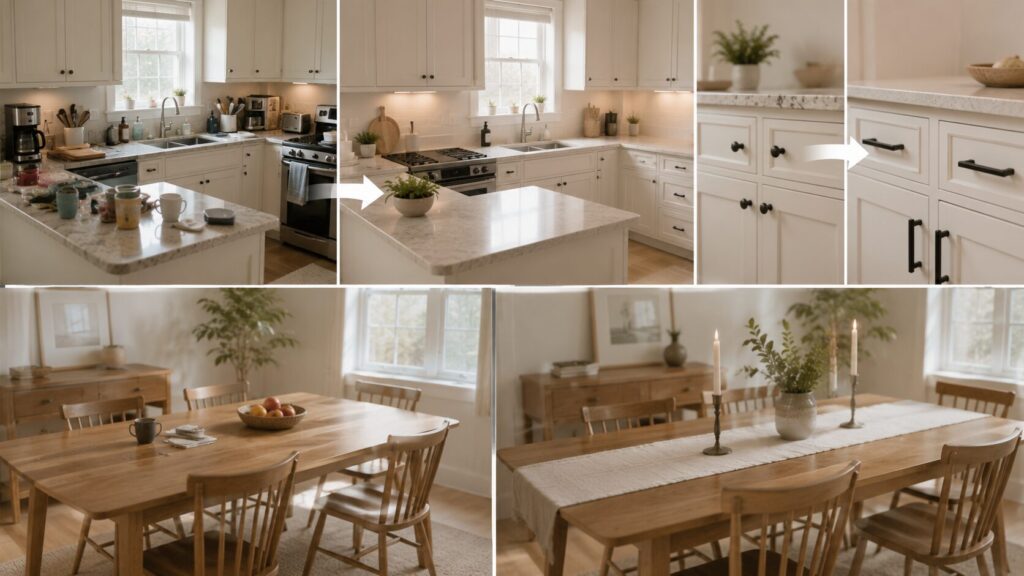
Update kitchen cabinet hardware.
This is the highest-impact kitchen update on a tight budget and it appeared in the outdated apartment article for good reason — it’s worth repeating for a broader home decorating context.
Replacing dated cabinet pulls and knobs with simple, clean hardware in matte black, brushed nickel, or brass takes under two hours, costs $50–$150 for a full kitchen, and modernizes the space more significantly than almost any other single change. The originals go in a labeled bag for reinstallation if renting.
Add a simple table runner and two candlesticks to the dining table.
A dining table that’s clear except for a simple runner and a pair of candlesticks (or a low plant or vase) is styled. It looks like someone thought about it. The cost of a linen table runner and two candlesticks from a discount home store is typically under $30 total.
This is one of those changes that looks disproportionate to the effort and cost involved. A styled dining table anchors the dining zone and makes the whole room feel more put-together.
Hallways and Entryways
The entryway sets the tone for the whole home.
Most entryways and hallways receive almost no decorating attention, which is a missed opportunity. The first thing someone sees when they enter your home shapes their entire impression of what follows — and a thoughtful entryway costs very little to create.
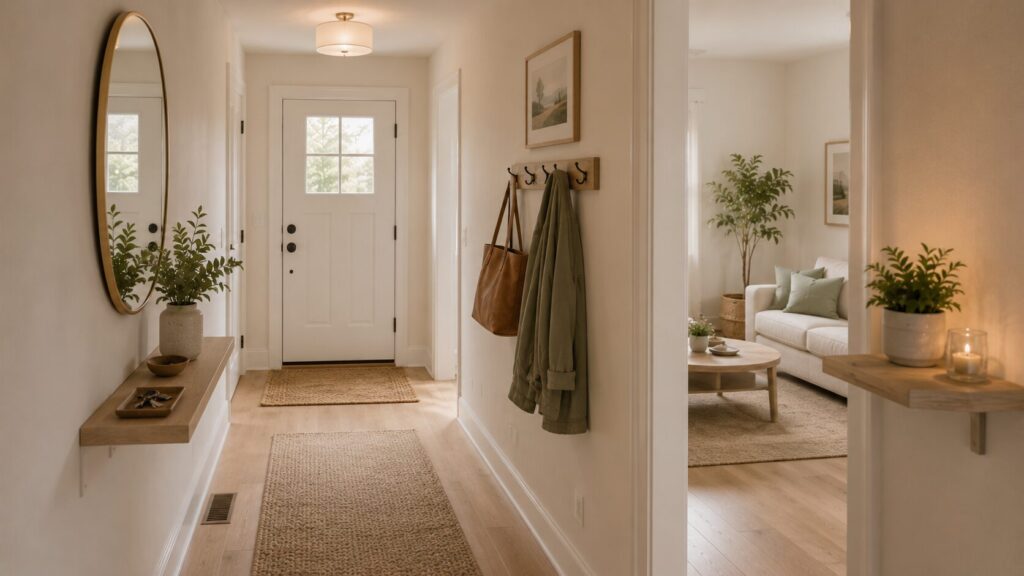
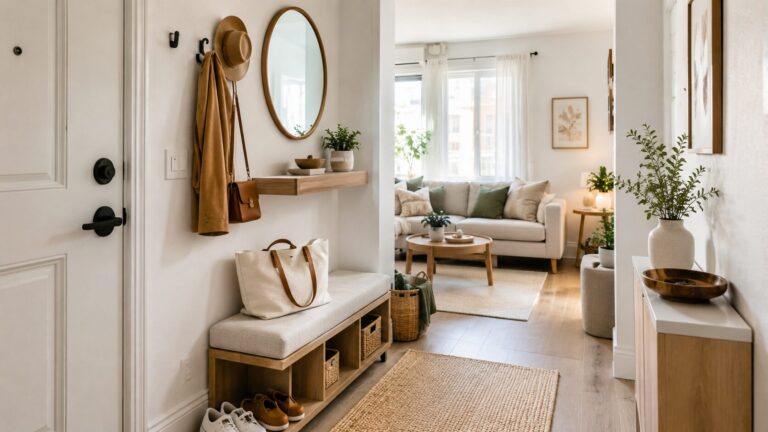
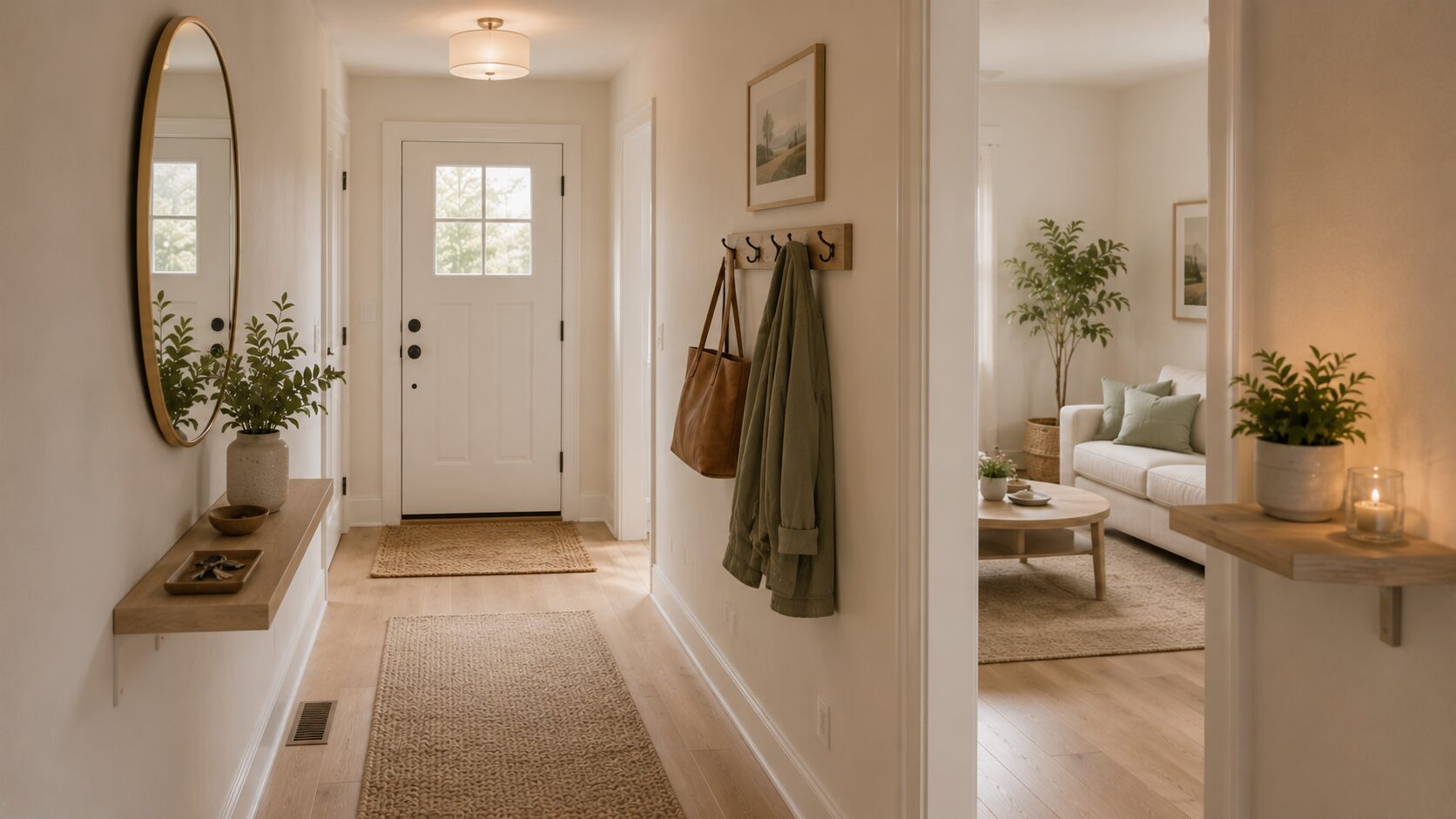
The essentials: a mirror (which makes the space feel larger and serves a practical function), a hook or coat rack for bags and outerwear, a small surface (even a narrow console table or floating shelf) for keys and mail, and something that indicates personality — a small plant, a piece of art, or an interesting object.
A thrift-store mirror with an interesting frame, a wall-mounted hook rail from a hardware store, and a $5 plant in a simple pot total well under $50 and transform a blank corridor into the intentional beginning of a home.
Cheap Home Decorating Ideas: Sourcing Without Overspending
Knowing where to look makes as much difference as knowing what to buy.
Thrift Stores, Charity Shops, and Estate Sales
The best cheap decorating finds are almost always secondhand. Thrift stores and charity shops carry furniture, art, lamps, mirrors, vases, trays, frames, and decorative objects at a fraction of their retail cost — and the range of what shows up is genuinely unpredictable in the best way.
What to look for on thrift runs specifically:
Frames in any size. The frame market has a wildly inflated retail price for what is often a simple wooden or metal form. At a thrift store, frames that cost $40–$100 new are available for $2–$8. Buy them regardless of what’s inside — any image can be replaced with a print, a piece of patterned paper, or fabric.
Lamps with good bases. The shade can always be replaced cheaply (IKEA sells replacement lamp shades for under $15). A lamp with an interesting base in ceramic, glass, or wood is worth buying even if the shade is wrong.
Solid wood furniture. Budget flat-pack furniture uses wood veneer over particleboard, which doesn’t age or refinish well. Solid wood thrift pieces — even old, dark, or dated-looking ones — can be sanded and painted or simply waxed, and they’ll outlast most new furniture bought at similar price points.
Mirrors. Any mirror, almost regardless of frame style, can be spray-painted to update it. A $4 brass-framed mirror from a charity shop plus a can of matte black spray paint is a designer-looking mirror for under $10 total.
Dollar Stores and Discount Home Retailers
Not everything at a dollar store or discount retailer is worth buying. But specific categories consistently deliver good value:
- Pillar candles and tapered candles — at dollar stores, these are often indistinguishable from their $8-each retail equivalents
- Vases and simple glass vessels — clear glass doesn’t have a quality problem at low price points. A grouping of three glass vases in different heights on a shelf looks intentional and costs under $5
- Basic wicker and rattan baskets — these vary in quality, but for simple storage use in visible areas (a bookshelf, under a bench), low-cost wicker baskets are fine
- Seasonal greenery and branches — dried grasses, cotton stems, and eucalyptus bundles at discount stores are effectively the same product as their designer counterparts
Free Sources
Your own home, first. Before buying anything, look at what you already own with fresh eyes. Objects from other rooms sometimes work better in different contexts. A vase that’s been in the bedroom might be the right piece for the living room shelf. A lamp from the office might be exactly what the hallway needs.
This is called “shopping your own home” and interior designers do it as a standard first step in any redecoration project. Moving existing pieces around costs nothing and often reveals that the room didn’t need more — it needed different.
Natural materials from outside. Branches, stones, shells, pinecones, seed pods, dried grasses — natural objects brought inside and displayed in simple groupings are a standard interior design technique that costs nothing. A large branch in a floor vase is a design statement. A collection of interesting stones in a shallow bowl is styling. These things don’t read as “I went outside and picked this up” — they read as organic and intentional.
The Principles Behind Cheap Decorating That Looks Good
Every idea in this guide follows the same underlying logic. Understanding it lets you apply the principle beyond these specific examples.
Fewer Things, Better Placed
Budget decorating fails most often not from the quality of what’s purchased but from buying too much of it. A room stuffed with inexpensive things looks like a room stuffed with inexpensive things. A room with a few well-chosen pieces — even cheap ones — in the right spots looks curated.
The display principle: group objects in odd numbers (three or five), vary heights within a grouping, and leave space between groupings. This is the difference between a shelf that looks like a collection and a shelf that looks like a pile.
Texture Costs Less Than Pattern or Color
Rooms that feel designed but not overdone usually have more texture than pattern. Texture — linen weave, rattan, chunky knit, raw wood, hammered metal — adds visual richness without the risk of color or pattern clashing. And textured items are almost universally cheaper than patterned equivalents because they don’t require printing costs.
When the budget is tight, choose texture over pattern. A linen cushion cover over a printed one. A woven basket over a painted box. A raw wood frame over a gilded one.
Lighting Is the Multiplier
Every other decorating decision looks better with good lighting and worse without it. Warm bulbs, multiple sources, and light that reaches the corners of the room — this is the invisible infrastructure that makes everything else work.
No amount of new throw pillows will improve a room that’s lit by a single cool overhead bulb. But a room with warm, layered lighting looks good in a way that’s difficult to articulate and almost impossible to photograph badly.
Plants Are the Cheapest High-Impact Addition
A single healthy plant in a simple pot — any plant, almost any pot — adds life, color, and scale to a room in a way that no inanimate decorative object can. Plants are the cheapest single-item improvement in home decorating relative to their visual impact.
For a $5–$15 investment, a small pothos in a plain terracotta pot on a shelf or nightstand contributes more to a room’s feel than most $40 decorative objects. For $20–$40, a larger fiddle-leaf fig or monstera in a corner becomes the room’s focal point.
Quick Reference: Cheap Decorating Ideas by Cost
Free:
- Edit and remove items from every room
- Rearrange furniture
- Shop your own home — move objects between rooms
- Bring in natural elements (branches, stones, dried grasses)
- Make the bed properly, every day
Under $15:
- Replace cool bulbs with warm white (2700K) throughout
- Style the nightstand with what’s already there
- Clear kitchen counters
- Group objects in odd numbers on shelves
- A single plant cutting propagated from an existing plant
Under $50:
- A large textured throw for the sofa
- A floor lamp for a dark corner
- A thrift-store mirror (spray-painted if needed)
- New cabinet hardware for kitchen or bathroom
- A simple duvet cover in a solid or texture
Under $100:
- A quality linen-look duvet cover with pillow arrangement
- A thrift-store lamp with replacement shade
- Three coordinating vases or vessels for shelves
- A runner and candlesticks for the dining table
- A basic entryway mirror, hook rail, and plant
Conclusion
The best cheap decorating ideas for your home share one characteristic: they create impact through intention rather than expenditure. The warm light bulb that transforms the mood of a room. The edited shelf that finally looks curated. The bed that’s properly styled with a $40 duvet cover and whatever pillows you already own. The thrift-store mirror that anchors the entryway.
None of these require a significant budget. They require noticing what the room needs, understanding which changes have the highest impact, and making deliberate choices rather than accumulative ones.
The sequence that works in almost every home: start with the edit (free), swap the bulbs (cheap), style the bed and sofa with what you have (free), then add one or two specific items that address the room’s most obvious gaps. In most homes, that sequence — done once, done with attention — produces a transformation that feels disproportionate to the cost.
Cheap home decorating done well doesn’t look cheap. It looks considered. And considered is exactly what makes a home feel good to live in — at any budget.
Start with one room. The smallest one, or the one that bothers you most. Apply the principles here, in the order listed. Then stand in the doorway and photograph it.
You’ll see the difference immediately.
Frequently Asked Questions (FAQs.):
What is the cheapest way to update the look of a room?
The three lowest-cost, highest-impact changes are: editing and removing clutter (free), rearranging furniture (free), and replacing light bulbs to warm white 2700K throughout (typically $10–$20 for a full room). These three changes alone transform most rooms more dramatically than buying new decorative items. After those, swapping cool overhead lighting for lamps with warm bulbs, styling the main surface in the room (the bed, the sofa, the dining table) with what’s already there, and adding one plant complete a low-cost update that makes a visible difference.
How can I decorate my home on a very tight budget?
Prioritize in this order: thrift and secondhand stores for anything with a frame (mirrors, art, lamps), free natural elements from outside (branches, stones, dried grasses in vases), things you already own relocated to better spots, and one or two specific purchases that address the highest-visibility gap in each room. The most valuable budget items for most homes are: a large textured throw for the sofa ($30–$50), warm light bulbs ($15–$20), one plant per main room ($5–$15), and a styled surface in each room using what you already own. With $75–$100 total spread across a home, more improvement is possible than most people realize.
What home decor items look expensive but are actually cheap?
Several categories consistently punch above their price. Dried botanicals and grasses (look expensive, cost $5–$15 at discount stores). Clear glass vessels and vases (visually neutral and high-quality looking, often under $5 at thrift stores). Textured linen-look cushion covers (budget versions from discount retailers are difficult to distinguish from expensive ones in person). Terracotta pots (a stack of three different-sized terracotta pots with plants reads as a designer moment for under $15). Plain white or neutral ceramic objects — bowls, jugs, simple vases — (look expensive, available cheaply almost everywhere). And mirrors with interesting frames, found secondhand and spray-painted matte black or warm gold, which look custom for under $10.
Does rearranging furniture really make a difference to how a room looks?
Yes — often more than buying anything new. Most rooms are arranged the way they were set up when someone first moved in, which is rarely the best configuration for the space. Pulling furniture away from walls, creating a clear traffic path, ensuring the main seating faces the room’s focal point, and floating the rug under the furniture properly can completely change how a room feels. The standard wall-hugging arrangement makes most rooms look smaller and less interesting. A furniture arrangement that creates depth, defines a clear conversation zone, and leaves some negative space makes the same furniture look more intentional.
Where is the best place to find cheap home decor that doesn’t look cheap?
In order of reliability: thrift stores and charity shops (the highest-quality finds for the lowest prices, requiring patience and regular visits), estate sales (good for furniture and lamps especially, often significantly underpriced), discount home retailers like HomeGoods, TK Maxx, or similar chains (good for textiles, vases, and decorative objects at 40–70% below retail), and dollar stores for candles, glass vessels, and basic seasonal items. Online: Facebook Marketplace and local sell/swap groups for furniture and larger pieces. The underlying principle across all these sources is buying things that have good materials and interesting form, regardless of brand — texture, shape, and material quality read as expensive at any price point.