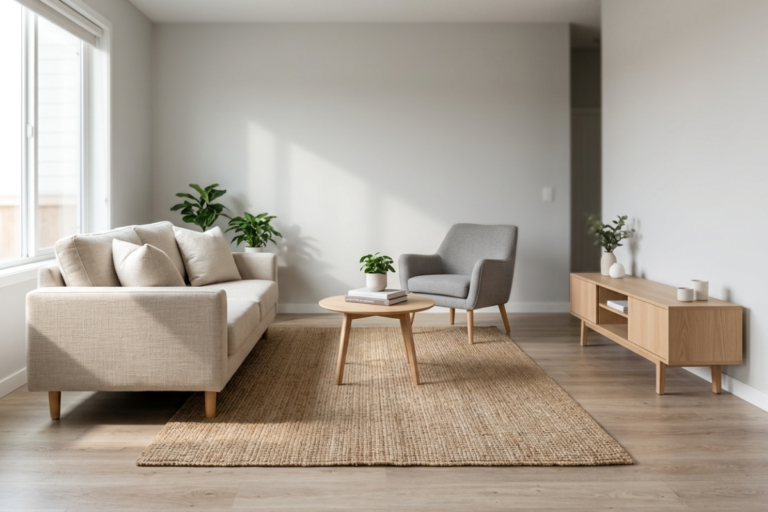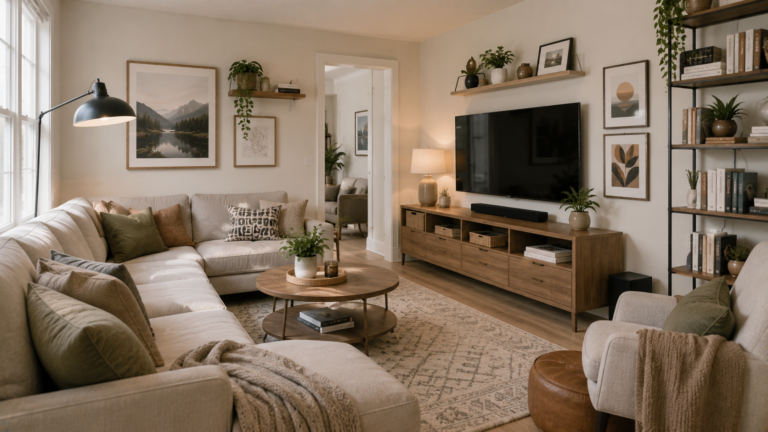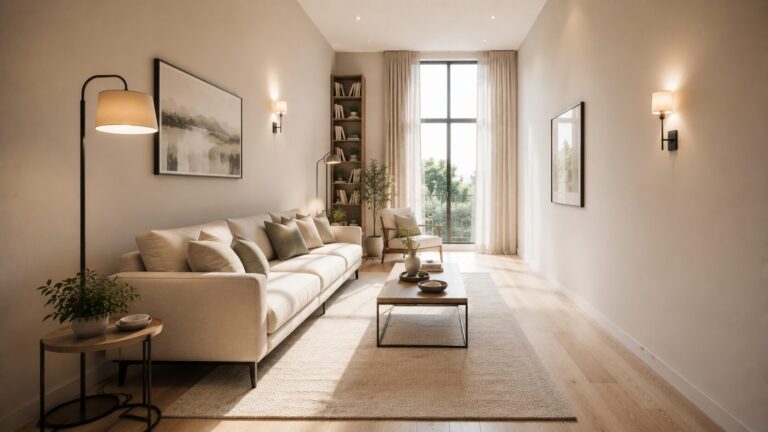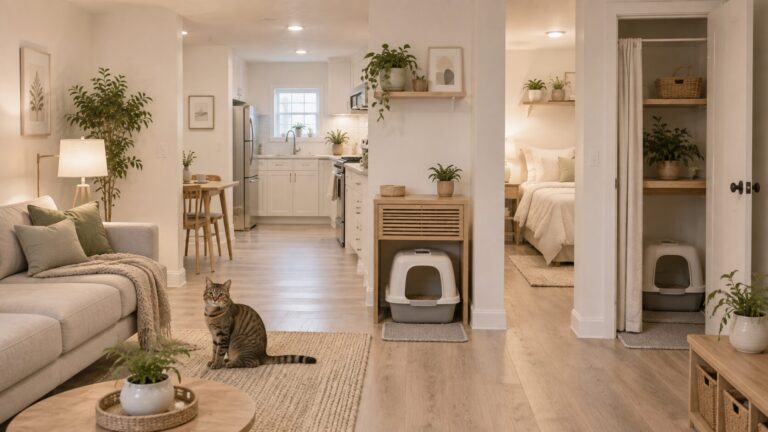
How to Furnish a Small Apartment – Right Order to Buy Everything
Moving into a new apartment tends to trigger one of two furnishing patterns, and neither one works especially well. Either everything gets bought at once – a stressful, expensive weekend of decisions made too fast to actually get right – or nothing gets bought with any real plan, and six months later the apartment still has a mattress on the floor and a folding chair doing the work of a proper seating area.
Both patterns come from the same root problem: not having a sequence. Furnishing a small apartment well isn’t really about knowing which sofa or which rug to buy. It’s about knowing what order to make those decisions in, so that early purchases don’t box you into bad later ones, and so the apartment becomes functional quickly without requiring every decision to happen simultaneously.
This matters more in a small apartment than a larger home, because there’s less room for furnishing mistakes to hide. A sofa that’s the wrong size in a large living room is a mild inconvenience. The same mistake in a small apartment can mean a blocked walkway, an unusable corner, or a piece that has to be returned and replaced entirely.
This guide walks through exactly how to furnish a small apartment in the right order — what needs to happen before you buy anything, what to prioritize first, what can genuinely wait, and the specific mistakes that cost the most time and money to fix later.
Before You Buy Anything: The Two-Hour Planning Investment
Every furnishing mistake covered later in this guide traces back to skipping this step. Two hours of planning before any purchases prevents weeks of returns, remeasuring, and frustration.
Measure Every Room Precisely
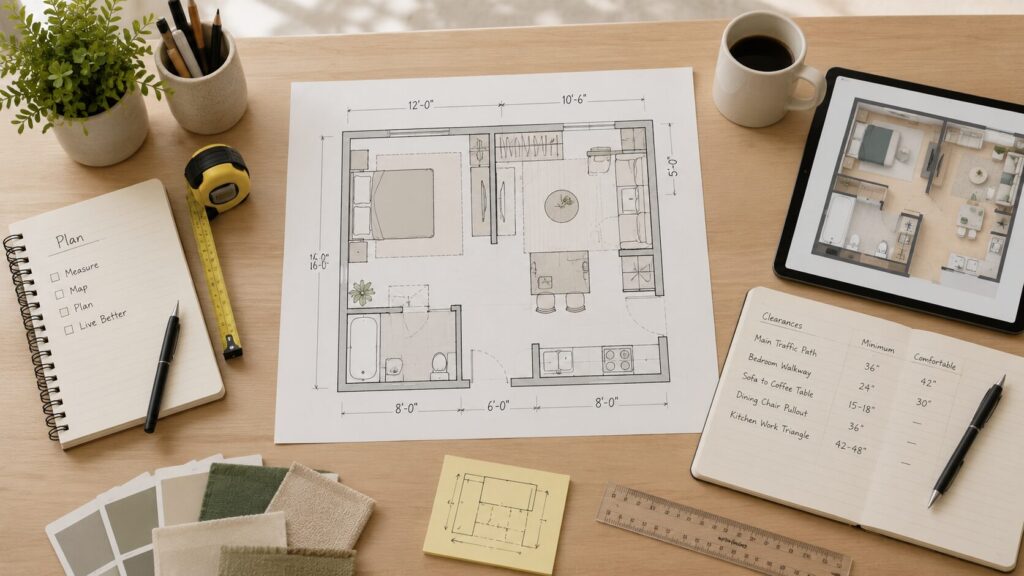
Length, width, ceiling height, door swing direction and clearance, window positions and sill heights, and the location of any outlets, radiators, or built-in features. Write these down or sketch a simple floor plan — this becomes the reference document for every furniture decision that follows.
Measure the Path Furniture Will Actually Travel
This is the step people skip most often, and it’s responsible for a genuinely common and completely avoidable problem: buying a sofa that doesn’t fit through the front door, up the stairwell, or around a tight hallway corner. Measure your doorways, hallway width, stairwell turns, and elevator dimensions if applicable, before finalizing the size of any large furniture piece.
Set a Realistic Total Budget and a Rough Allocation
Decide on a total furnishing budget and a rough sense of how it splits across categories — the sofa typically deserves the largest single allocation, since it sees the most daily use and shows quality differences fastest, while categories like lighting, textiles, and decor perform well even at lower price points. This rough allocation, decided before shopping starts, prevents the common problem of running out of budget before reaching the categories that matter.
Decide What You’re Keeping From Before
If this isn’t a completely from-scratch move, identify what existing furniture is coming with you and what genuinely isn’t working for the new space. This determines your actual furnishing list — the gaps that need filling — rather than starting the planning process as if every category is starting from zero.
How to Furnish a Small Apartment: The Priority Order
Once the planning is done, furnishing in the right sequence matters as much as any individual purchase decision. Buying decorative items before functional furniture, or a coffee table before a sofa, produces a room that never quite comes together even after significant money has been spent.
Priority 1: The Bed
Whatever else changes about the sequence, the bed goes first. Sleep quality affects everything else about how the move-in period feels, and a proper bed is genuinely one of the hardest categories to substitute with a temporary solution.
If budget or delivery timing means the full bedroom setup can’t happen immediately, prioritize a quality mattress and a basic frame over a complete, styled bedroom. The nightstands, the proper bedding, and the decorative layer can follow once the fundamentals are handled.
Priority 2: Seating
The sofa (or the primary seating solution, if going sofa-free per other small-space strategies) comes next, both because it’s the piece that anchors the living space and because it’s typically the longest lead-time item — quality sofas from most retailers take anywhere from a few weeks to a couple of months to arrive, especially for anything beyond immediate-stock options.
Ordering the sofa early, even if it won’t be the very first thing furnishing the apartment, means the wait time overlaps with other decisions rather than becoming the final bottleneck before the living room is functional.
Priority 3: A Table Surface (Dining, Work, or Both)
Some kind of table — even a small, simple one — matters more early in the furnishing process than most people initially prioritize it. Eating meals and doing any kind of work without a table surface becomes genuinely tiring within the first few weeks of living somewhere, in a way that’s easy to underestimate before you’re actually experiencing it daily.
This doesn’t need to be the final table. A simple, inexpensive option that gets replaced later once the ideal piece is sourced (secondhand, or a specific style you’re waiting to find) is a reasonable interim solution — but going without any table surface at all for weeks or months is one of the more commonly regretted furnishing delays.
Priority 4: Storage Basics
Closet organization systems, a dresser or storage solution for clothing, and basic kitchen storage (even simple, inexpensive shelving or bins) come next. Living without adequate storage creates a compounding problem — items accumulate on visible surfaces because there’s no designated home for them, which then makes the apartment feel cluttered and unfinished regardless of what else has been furnished.
Priority 5: Lighting
Lighting is frequently delayed simply because most apartments come with at least a functional overhead fixture, so it doesn’t feel urgent the way an empty living room or bedroom does. But it’s worth prioritizing earlier than most people naturally would, because the transformation from a single overhead bulb to properly layered lighting is one of the highest-impact, lowest-cost changes available, and living without it for months means missing that improvement for an extended stretch of the time you’re actually in the apartment.
Priority 6: Window Treatments
Curtains or blinds matter for privacy and light control, but they’re genuinely lower priority than the categories above unless privacy is an immediate practical concern (a ground-floor unit facing a street, for instance). Once the functional furniture is in place, window treatments are a relatively fast and affordable addition that meaningfully finishes the look of each room.
Priority 7: Decorative Layers
Art, decorative objects, plants, and styling details come last — not because they don’t matter, but because they’re the layer that makes an already-functional apartment feel personal, and adding them before the functional layer is complete tends to produce a room that looks decorated but doesn’t actually work day to day. This is also the category most suited to gradual accumulation over time rather than a single furnishing push — an apartment’s decorative layer legitimately benefits from being built slowly, as you find pieces that genuinely fit rather than filling the space quickly with whatever’s available.
What Can Genuinely Wait
Understanding what doesn’t need to happen immediately is as useful as knowing what does, because trying to complete every category at once is what usually causes both the budget strain and the decision fatigue that make furnishing feel overwhelming.
A coffee table can wait weeks without meaningfully affecting daily function — a folding tray table or even the floor works as a temporary substitute.
Matching or complete decor can wait months. A room with functional furniture and no decorative layer yet is genuinely more livable than a room furnished in a rush with mismatched or poorly-chosen decorative items just to “finish” it quickly.
A full dresser or wardrobe can sometimes wait if a temporary solution (a garment rack, stackable storage bins) handles the immediate need while you source the right piece — particularly relevant if you’re waiting for a secondhand find or a specific style rather than settling for whatever’s immediately available.
An accent chair or secondary seating is rarely urgent in the first weeks of living somewhere, since the primary seating (the sofa or main seating solution) typically covers immediate needs.
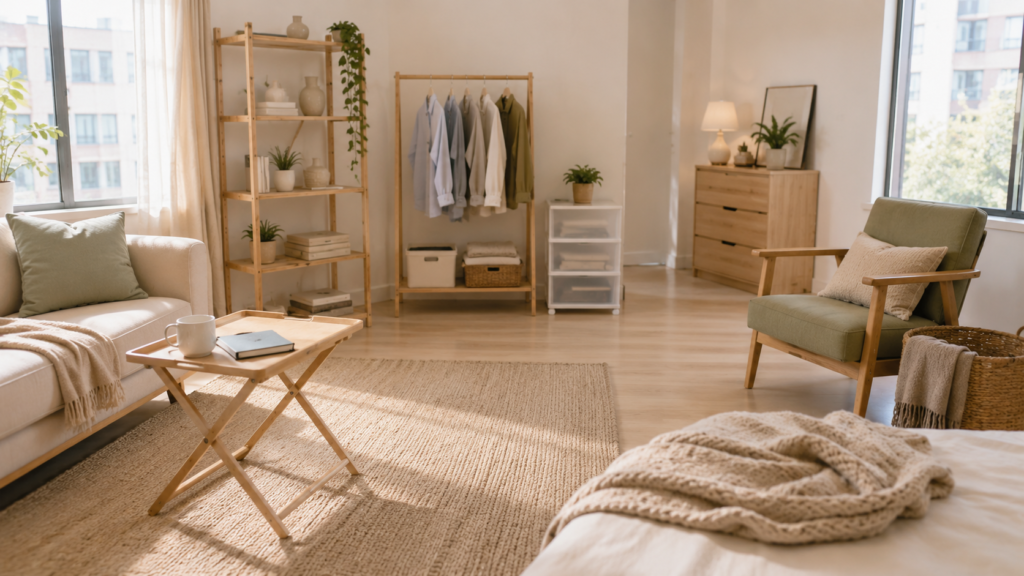
Small Apartment Furnishing Solutions for Common Budget Constraints
If the Budget Is Very Tight at Move-In
Prioritize ruthlessly within the priority order above: a mattress and simple frame, one seating piece, one table, and basic lighting. Everything else — proper storage, window treatments, decor — follows as budget allows over the following months. This staged approach produces a genuinely functional apartment faster than trying to furnish everything at a uniformly low price point simultaneously, which often means compromising on the pieces (bed, seating) where quality actually matters most.
If You Need to Furnish Quickly (Relocation, Tight Timeline)
Focus budget and urgency on the items with the longest lead times — a sofa or bed frame ordered from a retailer with in-stock or quick-ship options, rather than a custom or made-to-order piece that could take months. Secondhand marketplaces (Facebook Marketplace, local listings) often provide the fastest path to a quality piece, since items are typically available for pickup within days rather than weeks.
If You’re Furnishing a Small Apartment for the First Time
Resist the urge to buy everything a full-sized apartment or house would have. A small apartment furnished with fewer, correctly-scaled pieces functions and looks better than one furnished with a complete “starter apartment” set that doesn’t account for the specific space’s proportions. Measure first, buy what actually fits, and treat the process as apartment-specific rather than defaulting to a generic furniture list.
Common Small Apartment Furnishing Mistakes
Buying furniture before measuring the space and the delivery path. Covered above, but worth repeating as the single most consequential and avoidable mistake — a piece that doesn’t fit through the door or doesn’t leave adequate clearance in the room means a return, a delay, and often a rushed replacement decision made under worse conditions than the original one.
Furnishing every category at once. This spreads the budget too thin across every category simultaneously, often meaning the highest-impact items (bed, sofa) get a lower-quality version than they should, while lower-priority categories get funded before they’re actually needed.
Buying a complete matching set. A matching living room or bedroom set often costs more than assembling the same room piece by piece from varied sources, and tends to look less considered — matching sets read as “furnished” rather than “designed,” a distinction covered in more depth in other small-space guides but worth noting specifically in the context of a from-scratch furnishing process, where the temptation to buy a complete set for convenience is strongest.
Underestimating how long quality pieces take to arrive. Custom or made-to-order furniture, particularly sofas and larger case goods, can take 8–16 weeks from order to delivery depending on the retailer. Factoring this lead time into the furnishing sequence — ordering the longest lead-time items earliest — prevents an extended stretch of the apartment feeling unfinished while waiting on a single delayed piece.
Not planning for storage until after the “visible” furniture is in place. Storage often gets deprioritized because it’s less visually exciting than a sofa or a coffee table, but delaying it means the apartment has nowhere for belongings to go, which creates visible clutter that undermines whatever furnishing progress has already been made.
Quick Reference: How to Furnish a Small Apartment in Order
Before buying anything:
- Measure every room precisely, including doorways and hallway clearances
- Set a total budget with a rough category allocation (sofa gets the largest share)
- Identify what’s staying from a previous space vs. what’s genuinely needed new
Priority order:
- Bed (mattress and frame, even if basic)
- Seating (order early — longest typical lead time)
- A table surface (even a temporary one, rather than none)
- Storage basics (closet systems, dresser, kitchen storage)
- Lighting (higher priority than most people initially rank it)
- Window treatments
- Decorative layer (art, plants, styling — can build gradually over time)
Can genuinely wait:
- Coffee table
- Complete or matching decor
- A “perfect” dresser or wardrobe (temporary solutions bridge the gap)
- Accent or secondary seating
Avoid:
- Buying before measuring the room and delivery path
- Furnishing every category simultaneously on a tight budget
- Complete matching furniture sets
- Underestimating lead times on custom or made-to-order pieces
- Deprioritizing storage until everything else is in place
Conclusion
How to furnish a small apartment well comes down to sequence as much as selection. The specific sofa or bed frame you choose matters, but the order you buy things in — bed first, seating early given lead times, a table surface before decor, storage before the apartment starts accumulating visible clutter — determines whether the process feels manageable or overwhelming, and whether the apartment becomes functional in weeks rather than months.
The planning investment upfront — measuring rooms and delivery paths, setting a rough budget allocation, deciding what’s staying versus what’s new — prevents the most consequential and expensive mistakes: furniture that doesn’t fit, a budget spread too thin across every category at once, or a months-long wait on a single delayed piece that could have been ordered earlier in the sequence.
None of this requires furnishing an entire apartment in one exhausting weekend, and it shouldn’t. The decorative layer especially benefits from patience — an apartment that develops its personal character gradually, as you find pieces that genuinely fit, tends to feel more like home than one assembled quickly from whatever happened to be available.
Start with the planning session, then work through the priority order at whatever pace your budget and timeline actually allow. A small apartment furnished this way — deliberately, in sequence, with the functional layer established before the decorative one — works well from early on and keeps getting better as the process continues.
Frequently asked questions:
What should I buy first when furnishing a small apartment?
The bed comes first, since sleep quality affects everything else about the move-in experience and it’s one of the hardest categories to substitute temporarily. Seating (the sofa or primary seating solution) should be ordered early as well, even if it’s not physically the first thing in the apartment, because quality sofas typically have the longest lead times of any furniture category — often several weeks to a couple of months. A basic table surface, even a temporary or inexpensive one, matters more early in the process than most people initially prioritize it, since going without one for daily meals and work becomes genuinely tiring within the first few weeks.
How much does it cost to furnish a small apartment from scratch?
This varies enormously based on quality tier and sourcing, but a reasonable range for a genuinely functional small apartment (bed, seating, a table, basic lighting, and minimal storage) using a mix of new budget furniture and secondhand pieces typically runs $1,500–$3,500. A tighter budget focused on the essential priority categories, with decor and additional furniture added gradually over subsequent months, can bring initial move-in furnishing costs down to $800–$1,500. A fuller furnishing budget using primarily new furniture across every category, including a quality sofa and complete bedroom setup, often runs $3,000–$6,000 or more depending on brand and material choices.
Should I buy furniture before or after measuring my apartment?
Always measure first — this is the single most consequential step in the entire furnishing process, and skipping it is responsible for one of the most common and costly furnishing mistakes: buying a piece that doesn’t fit through the door, up a stairwell, or around a tight hallway corner, resulting in a return and a rushed replacement decision. Measure every room’s dimensions, plus the full delivery path (doorway widths, hallway clearances, stairwell turns, elevator dimensions if applicable) before finalizing the size of any large furniture piece, particularly a sofa or a bed frame.
Is it better to buy a matching furniture set or individual pieces for a small apartment?
Individual pieces, sourced deliberately rather than as a matching set, generally produce a better result for both budget and appearance. Matching sets are often priced at a premium relative to buying comparable pieces individually, and they tend to look more generically “furnished” rather than considered — a room assembled piece by piece, even gradually over time, typically reads as more personal and intentional. The main advantage of a matching set is convenience and speed, which matters if you’re on a tight timeline, but for most furnishing situations, individual sourcing produces a better long-term result.
How long does it take to fully furnish a small apartment?
A functional apartment — bed, seating, a table, basic storage, and lighting — can typically be achieved within 4–8 weeks from move-in, accounting for standard furniture delivery times, assuming the highest-priority, longest-lead-time items (particularly the sofa) are ordered early in that window. A fully finished apartment, including the decorative layer, window treatments, and any secondhand or custom pieces you’re specifically waiting to find, often takes 6–12 months to feel complete — and this gradual timeline is genuinely fine, since the decorative layer especially benefits from patience rather than being rushed to completion alongside the functional furniture.