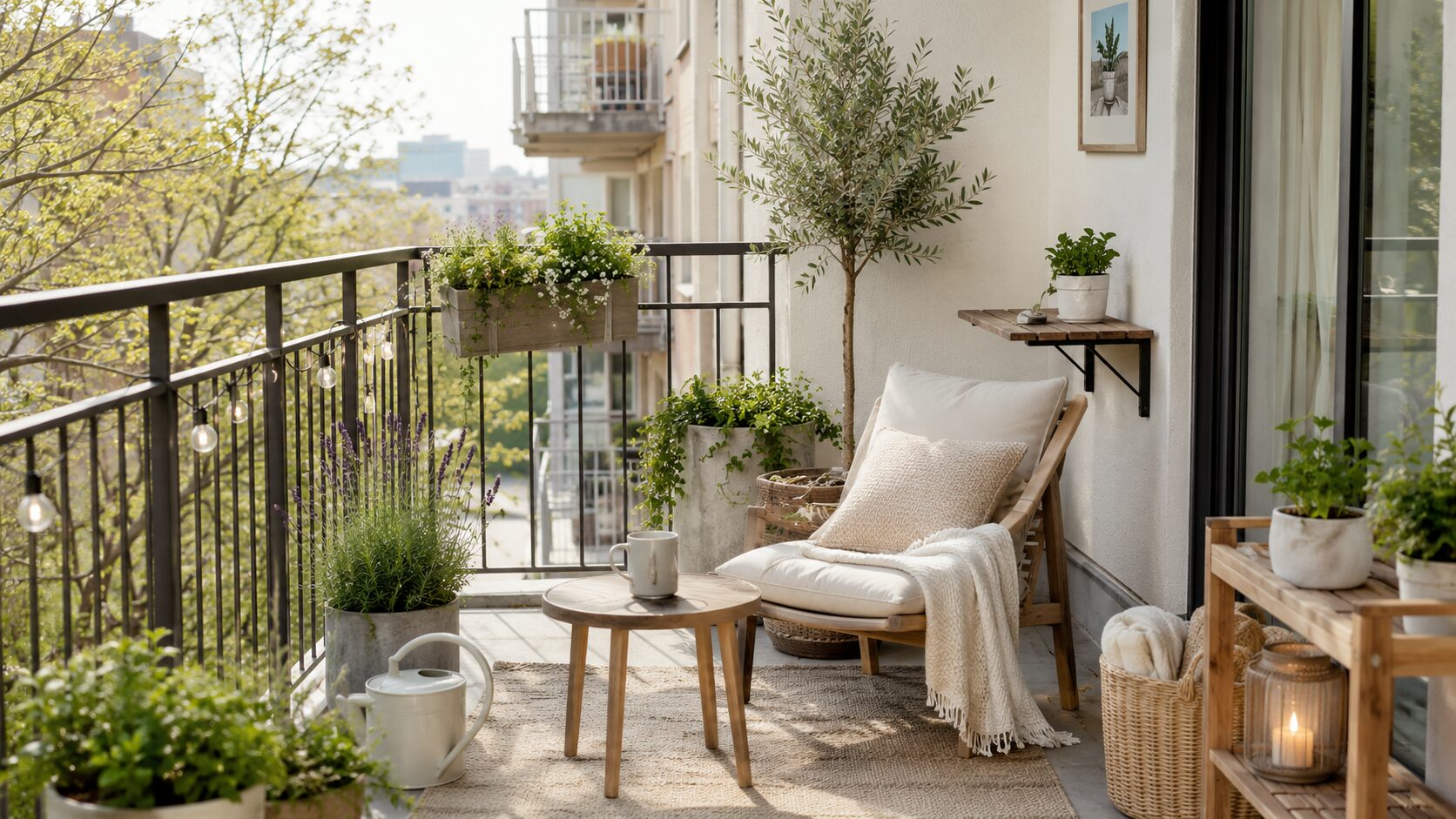
13 Small Apartment Patio Ideas to Make a Tiny Outdoor Space Feel Like a Retreat
A lot of apartment patios and balconies get treated like storage. The bike leans there. A few boxes that didn’t fit inside end up there. Maybe a folding chair, used twice a year.
That’s a real waste, because even a genuinely tiny outdoor space — 4 feet by 6 feet, sometimes smaller — can become one of the most valuable parts of an apartment. It’s outdoor air in a home that might not have much of it. It’s a spot for morning coffee, a place to read without a screen, somewhere to sit that isn’t the same four walls you’ve been in all day. In a small apartment, a functioning patio effectively adds a room.
The reason most small patios don’t get used isn’t the size. It’s that they were never actually designed — just left as leftover space with a chair in it. A patio this size needs the same intentional thinking as any interior room: what’s the space for, what furniture actually fits, how do you create privacy and comfort in a footprint that leaves almost no margin for error.
These 13 small apartment patio ideas cover exactly that — from furniture sized correctly for tight footprints to privacy solutions, plant strategies, and lighting that make a small outdoor space feel considered rather than forgotten. Whether you’re working with a Juliet balcony, a narrow patio slab, or a fire-escape-adjacent ledge, there’s something here that applies.
Start by Measuring — Precisely
Before any furniture gets considered, measure the space with more precision than you’d think necessary for interior rooms. A patio’s exact dimensions determine everything, and there’s genuinely no margin in most small outdoor spaces for furniture that’s “close enough.”
Measure the full width and depth, note any railing height and style (this affects both what furniture can go against it and what privacy solutions are possible), check for a door swing if there’s a sliding or hinged door leading out, and note the location of any drain, outlet, or fixed feature.
For balconies specifically, check the weight capacity if you’re planning anything beyond lightweight furniture — most residential balconies are rated for 40–60 pounds per square foot, which is more than adequate for typical patio furniture but worth confirming for anything heavier like a large planted container garden or a water feature.
Small Apartment Patio Ideas: Furniture That Actually Fits
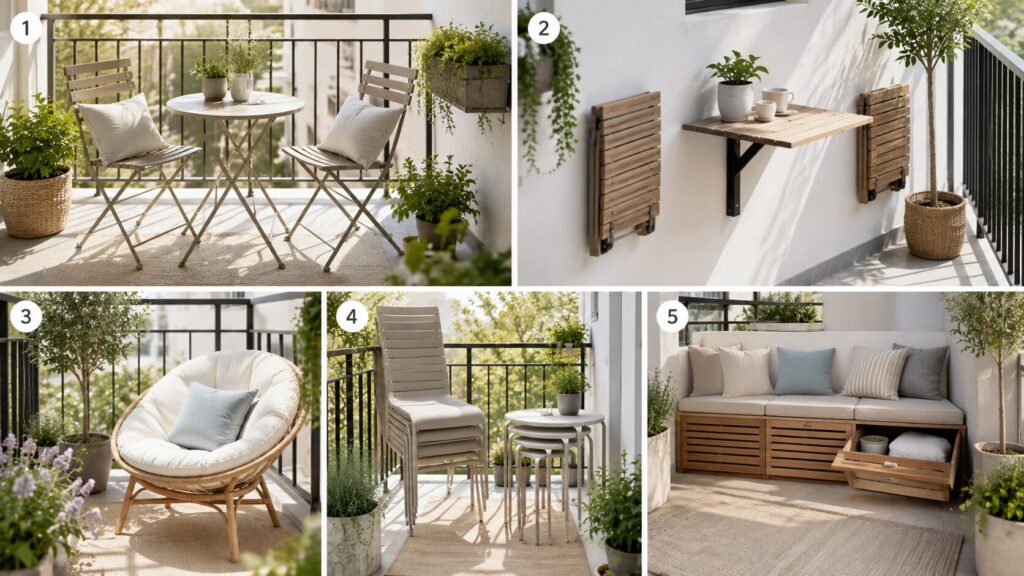
Idea 1: Choose a Bistro Set Sized to the Space, Not the Showroom
The classic two-chair bistro set is the default recommendation for small patios, and it’s a good one — but only when it’s actually sized correctly for the space, which most people skip checking.
A standard bistro table is 27–32 inches in diameter. In a patio narrower than 5 feet, even this modest size can feel tight once two chairs are pulled out. Measure the clearance needed: each chair needs about 24 inches of depth when pulled out, plus walking space to get around the table.
For patios under 4×6 feet, a smaller bistro table (24 inches or less) or a wall-mounted folding table (discussed below) makes more sense than the standard size. For patios 6×8 feet or larger, a standard bistro set has comfortable room to work.
Idea 2: Wall-Mounted Folding Furniture for the Tightest Spaces
In patios where floor space is at an absolute premium — think narrow balconies under 4 feet deep — a wall-mounted folding table and folding chairs solve the fundamental problem: they disappear when not in use.
A folding shelf-style table mounts to the exterior wall and folds flat when not needed, projecting only 2–3 inches from the wall. Folded-down chairs (similar to the folding designs used in small boats and tiny homes) hang flat against the wall or a side railing.
This setup means the patio floor is completely clear except during actual use — which matters enormously in patios so narrow that a permanent table and chairs would make passage difficult even when nobody’s sitting there.
Idea 3: A Single Well-Chosen Lounge Chair Instead of a Set
For balconies too narrow for a table and two chairs, a single quality lounge or accent chair — positioned to face the best view or the most sun — often makes better use of the space than trying to force in a full seating set.
A folding papasan-style chair, a compact rattan accent chair, or a low-profile outdoor lounge chair (18–20 inches wide) takes minimal floor space and provides a genuinely comfortable spot for one person, which matches how most small balconies actually get used — solo coffee, solo reading, solo unwinding — more accurately than a two-seat setup that often sits half-empty.
Idea 4: Stackable or Nesting Furniture for Flexibility
For patios that occasionally need to seat more people than they comfortably fit day-to-day (hosting a small gathering, for instance), stackable outdoor chairs and nesting side tables provide flexibility without permanent floor commitment.
Stackable resin or metal chairs store in a fraction of their footprint when nested together, pulled out and separated only when extra seating is needed. Nesting side tables — two or three tables that fit inside each other — expand surface area on demand and collapse back to almost no footprint otherwise.
Idea 5: A Built-In Bench Along the Railing
If the patio has a solid railing wall (rather than an open bar railing), a built-in bench running along that wall makes highly efficient use of a narrow space. Unlike a freestanding chair or bench, a built-in version has zero clearance requirement around its back and sides — it simply occupies the wall’s footprint.
A simple wooden bench, built or purchased to the patio’s exact width, with an outdoor cushion on top, seats two to three people in the same floor footprint that a single chair with clearance around it would require. Many built-in bench designs also incorporate storage underneath — a lift-up seat revealing space for cushions, gardening tools, or anything else that would otherwise take up floor space.
Small Patio Ideas for Privacy
Apartment patios and balconies are frequently overlooked by neighbors, adjacent units, or the street below. Privacy is one of the biggest factors in whether a small outdoor space actually gets used regularly — an exposed patio, however nicely furnished, often goes unused simply because it doesn’t feel comfortable to relax in.
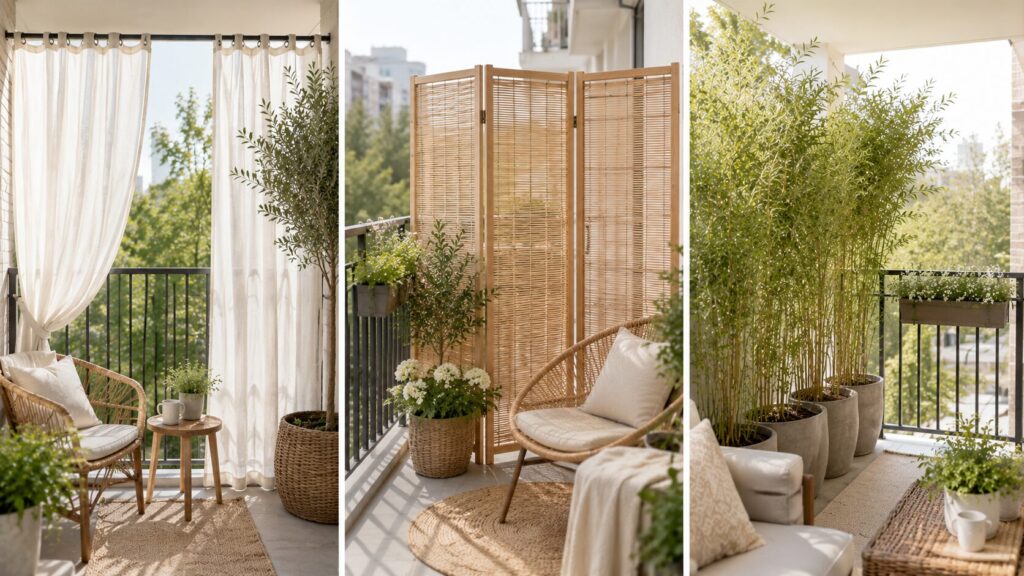
Idea 6: Outdoor Curtains on a Tension Rod
Outdoor-rated curtains, hung from a tension rod mounted between the railing posts or ceiling, create instant privacy on one or more sides of the patio without any permanent installation. Most apartment leases permit tension rod installations since they require no drilling.
Outdoor fabric (solution-dyed acrylic, like the material used in quality outdoor cushions) resists fading and moisture far better than standard curtain fabric. A single panel on the most exposed side of the patio — the side facing a neighboring unit’s window, for instance — often solves the privacy problem without fully enclosing the space.
Idea 7: A Freestanding Privacy Screen or Trellis
A folding privacy screen or a freestanding trellis panel requires no wall mounting and can be positioned exactly where privacy is needed, then repositioned or folded away seasonally.
Bamboo or reed screening panels (typically sold in rolls, 6 feet tall by varying widths) attached to a simple wood frame create an attractive, natural-looking privacy barrier. A metal or wood trellis with climbing plants trained across it (discussed further below) achieves the same goal while adding living greenery.
Idea 8: Living Privacy With Tall Potted Plants
Plants deliver privacy and greenery simultaneously, which makes them one of the most efficient additions to a small patio in terms of function-per-square-foot.
Tall, narrow plants in large pots — bamboo (specifically clumping varieties, which don’t spread invasively the way running bamboo does), arborvitae in patio-sized containers, or ornamental grasses — create a living screen along the most exposed edge of the patio without requiring construction or a rod installation.
For balcony railings specifically, railing-mounted planter boxes filled with tall, bushy plants (like boxwood or dense flowering shrubs suited to container growing) create a green privacy line at exactly the height where it matters most — eye level from adjacent units or the street.
Small Apartment Patio Ideas: Making the Floor Work Harder
Idea 9: Outdoor Rugs Designed for Small Spaces
An outdoor rug does the same zone-defining work on a patio that an indoor rug does in a living room — it visually separates the “outdoor room” from the surrounding balcony deck or concrete slab and makes the space feel intentional rather than incidental.
For small patios, a rug sized to leave 6–12 inches of visible floor around the edges (rather than covering wall to wall) actually looks more considered and makes the small space appear slightly larger, similar to how floating furniture works indoors.
Polypropylene outdoor rugs handle moisture and UV exposure far better than indoor rugs brought outside, and they’re available in patterns and colors that read as genuinely stylish rather than purely utilitarian. Rolling the rug up during heavy rain or winter storage extends its lifespan considerably.
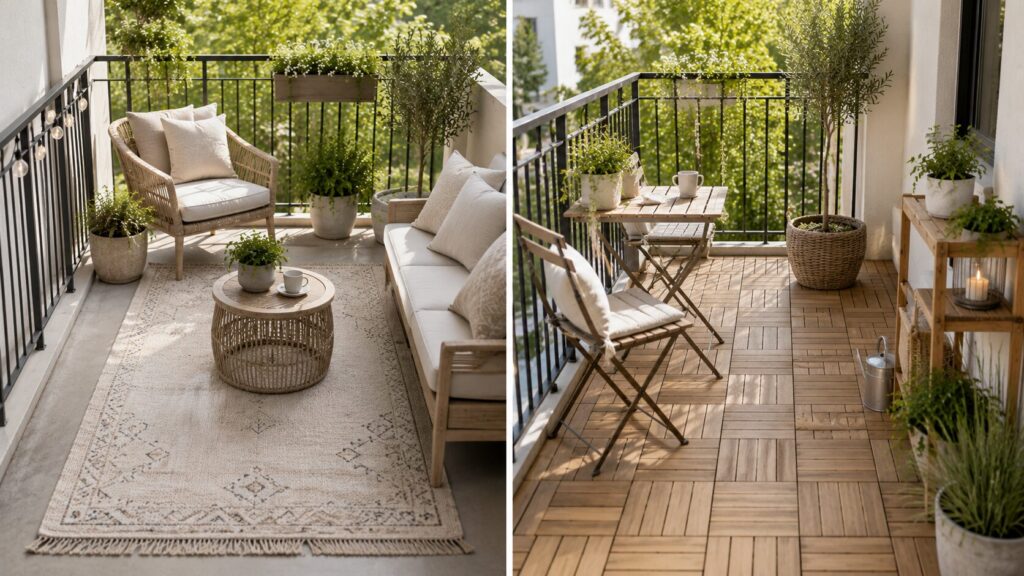
Idea 10: Interlocking Deck Tiles Over Concrete or Composite
If the patio surface is bare concrete or an unattractive composite deck, interlocking deck tiles — typically made from wood composite or synthetic materials designed for outdoor use — snap together over the existing surface without any permanent installation, creating a warmer, more finished floor.
This is a fully reversible upgrade (the tiles lift back up when moving out) and transforms the visual quality of the entire patio more dramatically than almost any other single change, because floor surface affects the perceived quality of the whole space in a way that’s easy to underestimate.
Plants and Greenery for Small Outdoor Spaces
Idea 11: Vertical Gardening to Maximize a Tiny Footprint
When floor space for planters is minimal, vertical gardening structures let you grow considerably more in the same footprint. Wall-mounted planter systems, hanging planters suspended from a ceiling or overhead structure, and tiered plant stands all use height rather than floor area.
A simple wall-mounted grid system with individual pocket planters can hold a dozen small plants — herbs, succulents, trailing vines — in the space that a single ground-level planter would otherwise occupy. For balconies with railings, railing-mounted planter boxes are one of the most space-efficient plant solutions available, adding a full line of greenery without touching the floor at all.
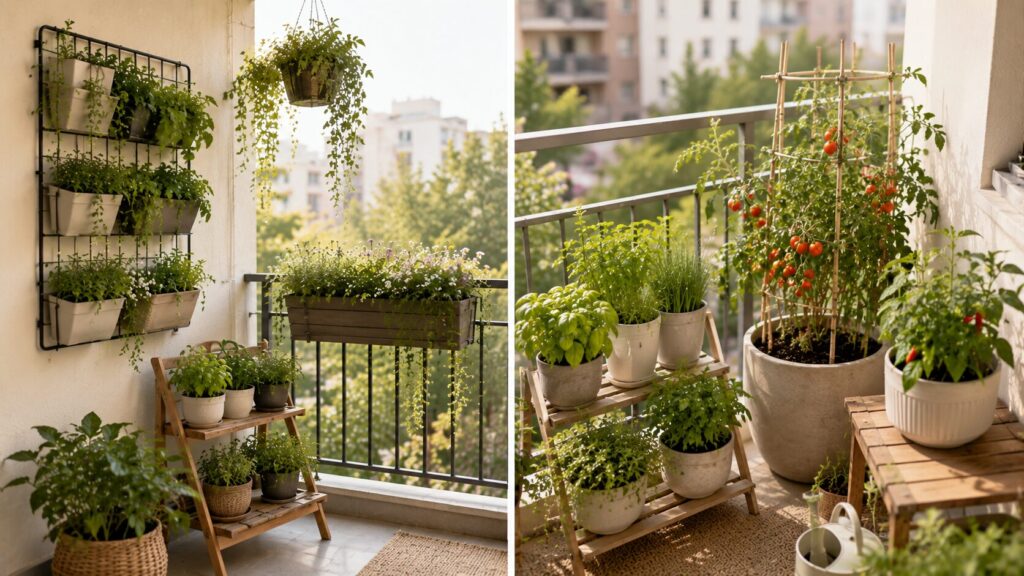
Idea 12: Herbs and Edibles for a Functional Green Space
A small patio has room for a genuinely productive herb garden even at a modest scale, and growing something edible changes the relationship people have with their outdoor space — it becomes functional rather than purely decorative, which tends to increase how often it actually gets used.
Basil, mint, chives, and thyme all grow well in containers as small as 6–8 inches in diameter and tolerate the partial sun conditions many apartment patios provide. A simple railing planter or a tiered stand holding four to six herb pots provides a genuinely useful kitchen garden in a space of just a couple of square feet.
For patios with more direct sun (at least 6 hours daily), cherry tomatoes in a large container (minimum 5-gallon size) and peppers are both realistic additions that produce real, usable harvest from a compact footprint.
Lighting for Small Patios
Idea 13: Layer Light the Same Way You Would Indoors
The same layered lighting principle that transforms small interior rooms applies directly to patios — a single light source (if there’s even a fixture at all) leaves the space feeling flat and underused after dark, while multiple light sources at different heights create warmth and usability well into the evening.
String lights remain the most popular and most effective patio lighting solution for good reason — they’re inexpensive, easy to install without drilling (using adhesive hooks or attaching to an existing railing), and produce warm, flattering light that makes almost any small outdoor space feel more inviting. Warm white LED string lights (2700K) rather than cool white make a significant difference in the mood they create.
Solar-powered path or planter lights add a lower-level accent light source without requiring any wiring or outdoor-rated outlets — genuinely practical for rental apartments where running new electrical isn’t an option.
A small battery-powered lantern or LED candle on the table or floor provides a warm, low light source for evening use — the outdoor equivalent of a table lamp, and just as important for creating atmosphere as it is indoors.
Combined, these three light sources — overhead string lights, lower accent lighting, and a tabletop light — create the same kind of layered depth that makes indoor rooms feel finished, applied to a space that’s often treated as an afterthought.
Weatherproofing and Practical Considerations
Choose Materials Built for Outdoor Exposure
Furniture, cushions, and textiles on a small patio face sun, rain, and temperature swings that indoor equivalents never encounter. Choosing genuinely outdoor-rated materials from the start saves money and disappointment.
Furniture frames: teak, eucalyptus, and other weather-resistant hardwoods age gracefully outdoors without maintenance beyond occasional oiling. Powder-coated aluminum and resin wicker resist rust and UV degradation better than untreated metal or natural wicker.
Cushions and textiles: solution-dyed acrylic fabric (the material used in quality outdoor cushions) resists fading and doesn’t hold moisture the way standard upholstery fabric does. Storing cushions in a weatherproof deck box or bringing them inside during rain extends their lifespan significantly.
Rugs: as mentioned above, polypropylene rather than natural fiber for anything left outdoors regularly.
Container Considerations for Renters
For renters, container gardening (rather than anything requiring permanent installation) keeps every plant investment portable for the next move. Self-watering containers reduce the maintenance burden for anyone who travels or simply doesn’t want to water daily — the reservoir at the base keeps soil moisture consistent for several days between refills, which matters considerably for a small patio that might not get checked on every single day.
Quick Reference: Small Apartment Patio Ideas by Category
Furniture:
- Correctly sized bistro set (measure clearance before buying)
- Wall-mounted folding table and chairs for the tightest spaces
- Single lounge chair for solo-use balconies
- Stackable/nesting pieces for occasional extra capacity
- Built-in bench along a solid railing wall
Privacy:
- Outdoor curtains on a tension rod (no drilling required)
- Freestanding privacy screen or bamboo trellis panel
- Tall potted plants (clumping bamboo, container arborvitae) as living screens
Flooring:
- Outdoor rug sized to leave visible floor edges
- Interlocking deck tiles over unattractive concrete or composite
Greenery:
- Vertical planting systems (wall-mounted grids, railing planters)
- Compact herb garden for functional, edible greenery
Lighting:
- Warm white string lights (2700K) as the primary layer
- Solar path or planter lights for accent
- Battery-powered lantern or LED candle for tabletop warmth
Materials:
- Teak, eucalyptus, or powder-coated aluminum frames
- Solution-dyed acrylic cushions
- Polypropylene rugs for weather resistance
- Self-watering containers for renters and low-maintenance care
Conclusion
A small apartment patio, treated with the same intention as any interior room, stops being leftover space and becomes one of the most valuable square-foot-for-square-foot areas of the home. The furniture that fits correctly, the privacy that makes the space feel comfortable rather than exposed, the plants that add life and sometimes food, and the lighting that extends its use into the evening — all of it adds up to a genuinely usable outdoor room rather than a place where the bike lives.
The starting point is always precise measurement, because tiny patios have zero margin for furniture that’s slightly too large. From there, prioritize based on how the space will actually be used: a solo coffee spot needs different furniture than a space meant for occasional entertaining. Privacy matters more than most people initially think — an exposed patio, however well furnished, tends to go unused. And lighting is what turns a daytime-only space into one that works morning, afternoon, and evening.
Start with one or two changes rather than trying to transform the whole space at once. A correctly sized chair and a set of warm string lights alone often make the difference between a patio that gets used daily and one that sits empty. Build from there — privacy next, then plants, then the finishing details.
However small the space, a patio designed with this much intention earns its place as a real room in the home — just one with better air.
Frequently Asked Questions:
What furniture fits on a very small apartment balcony?
For balconies under 4×6 feet, wall-mounted folding tables and chairs are the most space-efficient option because they fold flat against the wall when not in use, keeping the floor completely clear otherwise. A single compact lounge chair (18–20 inches wide) is another strong option for solo-use balconies. For balconies 6×8 feet or larger, a correctly sized bistro set (24–32 inch table, two chairs) fits comfortably as long as you measure the clearance needed for chairs pulled out — generally 24 inches of depth per chair. Always measure the actual space before buying rather than relying on a furniture listing’s general “small space” label.
How do I add privacy to an apartment patio without permanent installation?
Outdoor curtains on a tension rod are the most flexible no-installation option — they mount between railing posts or overhead beams without drilling and can be opened or closed as needed. A freestanding privacy screen or a bamboo trellis panel provides privacy that can be repositioned or removed entirely when you move. Tall potted plants — clumping bamboo (not running bamboo, which spreads invasively), container arborvitae, or dense ornamental grasses — create a living privacy screen along the most exposed edge of the patio. Combining a screen or curtain on the most visible side with plants along the rest of the perimeter usually solves privacy concerns without any lease-violating changes.
What plants work best on a small apartment patio?
It depends on the sun exposure. For partial sun (a few hours of direct light daily), herbs like mint, chives, and thyme thrive in containers as small as 6–8 inches and provide genuinely useful kitchen ingredients from a tiny footprint. For fuller sun (6+ hours), cherry tomatoes in a 5-gallon container and peppers both produce real harvests. For privacy purposes specifically, clumping bamboo varieties and container-grown arborvitae create tall, effective screens without spreading invasively. Vertical planting systems — wall-mounted pocket planters or railing-mounted boxes — let you grow considerably more in a small footprint than ground-level pots alone, since they use vertical space that’s otherwise unused.
How can I make a small patio usable in the evening?
Layered lighting makes the biggest difference. Warm white LED string lights (2700K, not cool white) installed with adhesive hooks provide the primary ambient light source and require no drilling. Solar-powered path or planter lights add a secondary accent layer without any wiring, which matters for rental apartments where installing outdoor electrical isn’t possible. A battery-powered lantern or LED candle on the table provides warm, low tabletop lighting — the outdoor equivalent of a table lamp. Using all three together creates the layered depth that makes small indoor rooms feel finished, applied outdoors, and extends the patio’s usability well past sunset.
What outdoor materials hold up best on an apartment patio or balcony?
For furniture frames, teak, eucalyptus, and other weather-resistant hardwoods age well outdoors with minimal maintenance, while powder-coated aluminum and synthetic resin wicker resist rust and UV degradation better than untreated metal or natural wicker. For cushions and textiles, solution-dyed acrylic fabric (the standard for quality outdoor cushions) resists fading and doesn’t retain moisture the way indoor upholstery fabric does — storing cushions in a weatherproof deck box during rain extends their life considerably. For rugs, choose polypropylene rather than natural fiber materials, since polypropylene handles moisture and sun exposure without deteriorating. These material choices cost somewhat more upfront than non-rated alternatives but avoid the frustration of replacing patio furniture and textiles every season.