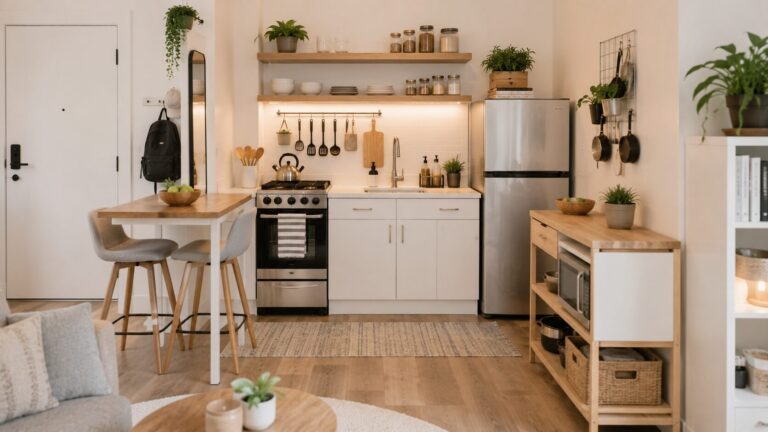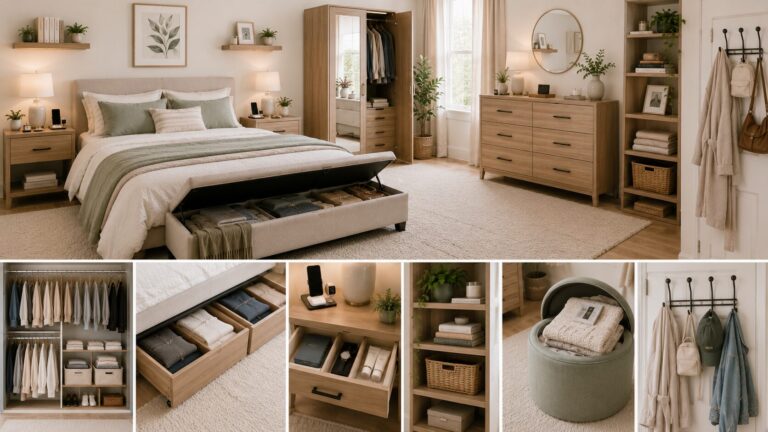
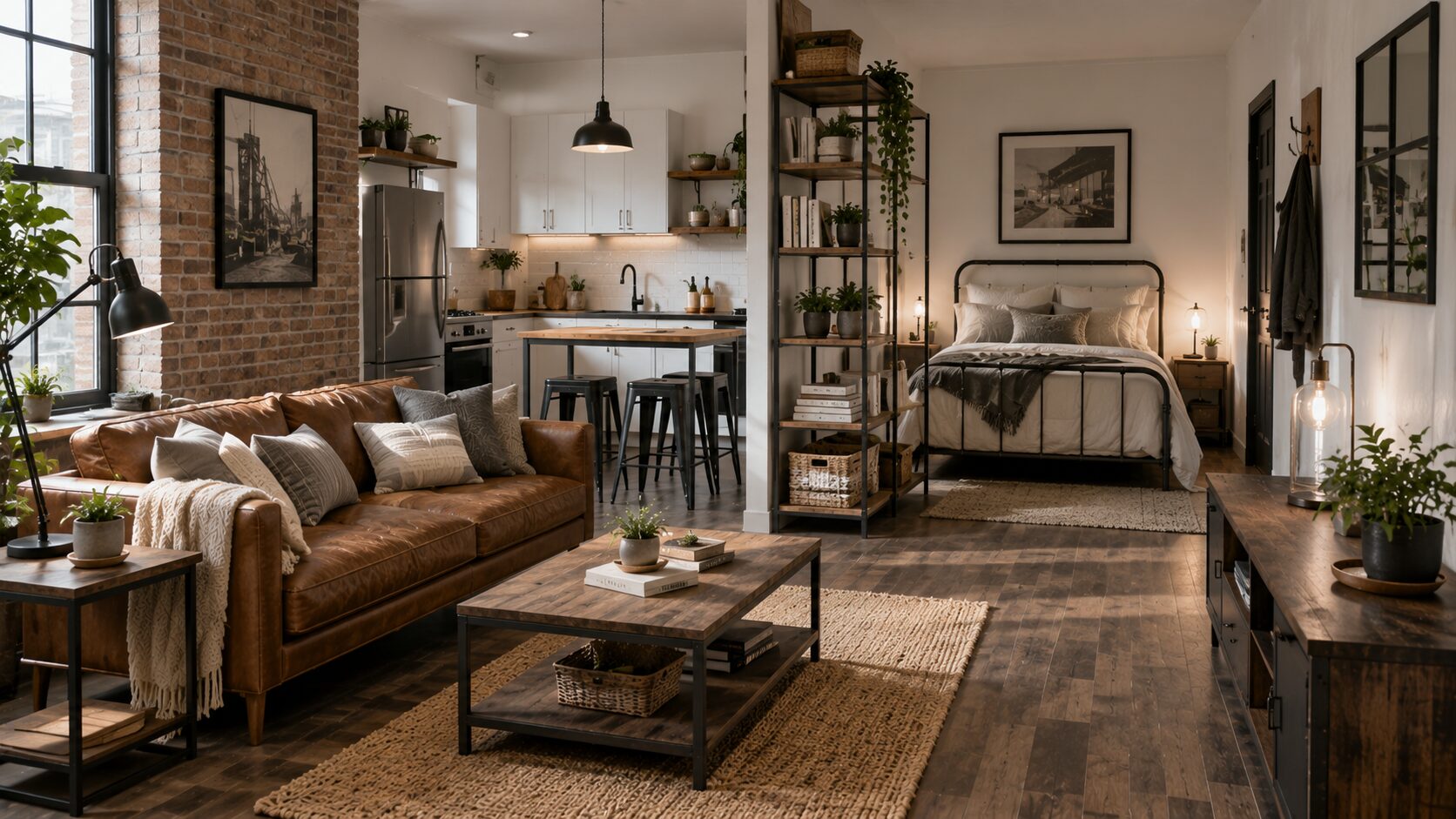
Small Apartment Style Ideas to Find Your Design Aesthetic
Every design style has a version of itself that works beautifully in a small apartment — and a version that doesn’t work at all.
Maximalist styles that thrive on layered pattern and abundant objects can overwhelm a compact room fast. Industrial style, with its love of exposed, heavy materials, can feel cold and cavernous in 400 square feet if it’s not adapted. Even minimalism, which sounds like the obvious answer for small spaces, can tip into feeling stark and unfinished if applied without enough warmth.
The real work of finding your small apartment style isn’t picking a Pinterest aesthetic and copying it exactly. It’s understanding what makes each style work — the specific choices about color, material, and object density that define it — and then adapting those choices to the realities of limited square footage.
This guide walks through the design styles that adapt most successfully to small apartments, what makes each one work in a compact footprint, and how to apply the ideas practically regardless of budget. It also covers how to actually figure out which style fits you, because that’s often the harder question than any of the individual style breakdowns.
How to Find Your Style Before You Commit to One
Before diving into specific aesthetics, it’s worth pausing on a genuinely common problem: people decorate a room in a style they don’t actually love because it photographed well online, and six months later the apartment feels like someone else’s home.
Look at What You Already Gravitate Toward
The fastest way to identify a style that will actually feel right is to look at what you already own and love — not what you’d buy for a new apartment, but what you’ve kept, worn, and chosen repeatedly over time. Clothing preferences (structured and neutral, or layered and textured, or bold and graphic) often mirror interior preferences more closely than people expect. The mug you reach for every morning, the coat you wear most, the artwork you’ve kept through several moves — these carry real information about your aesthetic instincts.
Save Without Overthinking, Then Look for Patterns
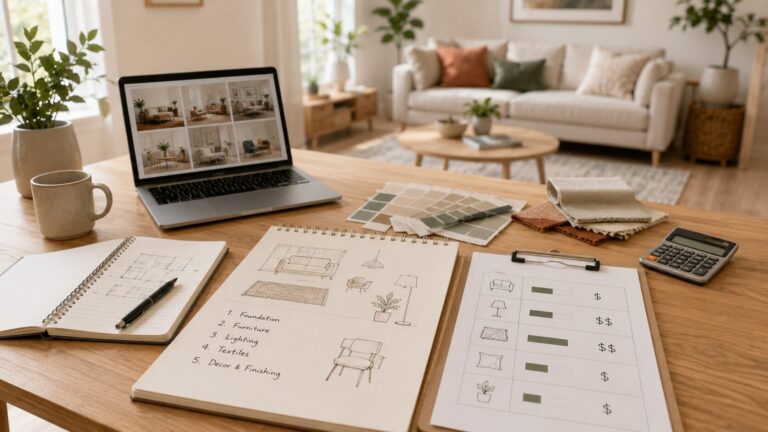
If you use Pinterest or a similar platform, save images without filtering for “does this fit my apartment” — just save what genuinely appeals to you. After thirty or forty saves, go back and look for the patterns: are the rooms mostly light and airy, or moody and layered? Mostly clean-lined, or full of pattern and texture? Warm woods, or cool metals? The saves reveal a consistent sensibility faster than trying to consciously articulate one.
Identify the Non-Negotiable Feeling
Beyond visual style, ask what feeling the space needs to produce. Some people need a home that feels calm and uncluttered to decompress after a stimulating day. Others need warmth and richness because their day is spent in sterile, minimal environments and they crave the opposite at home. This emotional target matters as much as the visual style — a coolly minimal apartment might look right in photographs and still feel wrong to live in if what you actually need is warmth and texture.
Small Apartment Style Ideas: Minimalist
Minimalism is often the first style people consider for a small apartment, and for good reason — fewer objects genuinely does make small spaces easier to navigate and visually calmer.
What Makes It Work in a Small Space
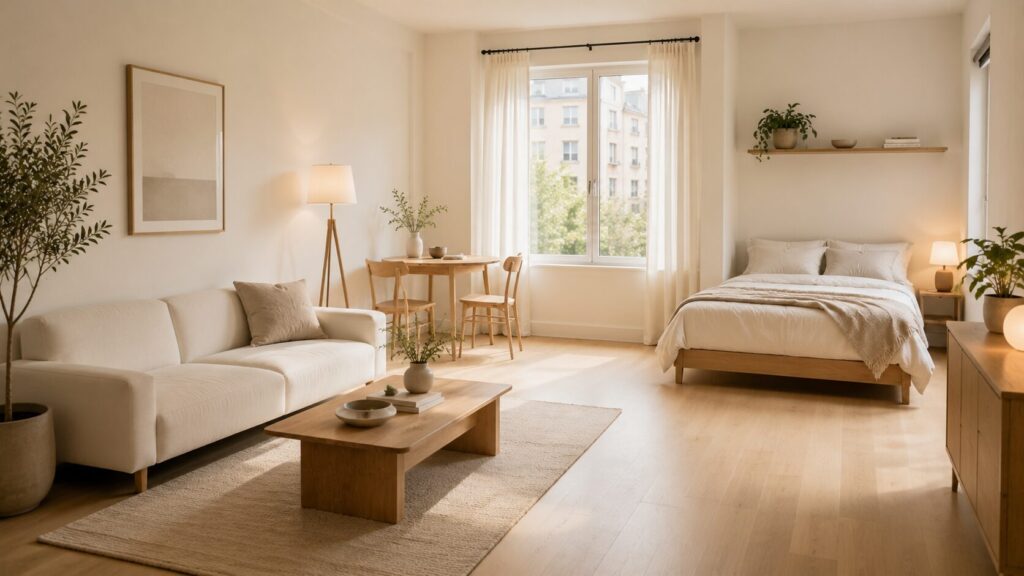
True minimalism isn’t about having very little. It’s about having exactly what’s needed, chosen with care, and nothing more. In a small apartment, this translates directly into practical benefit: fewer objects means less visual clutter, which means the compact square footage reads as more spacious than it is.
The risk in a small apartment specifically is that minimalism executed without warmth reads as unfinished or cold — a common failure mode, especially when budget constraints mean furniture gets chosen for low cost rather than quality, and the room ends up looking sparse rather than intentionally edited.
How to Adapt It
Invest in fewer, better pieces. Minimalism works best financially and aesthetically when the small number of items you do have are genuinely good — a well-made sofa rather than three mediocre seating pieces, one quality lamp rather than several inexpensive ones.
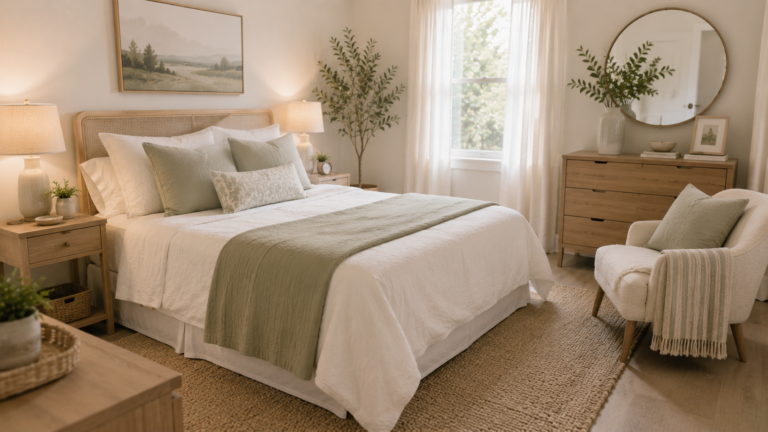
Add warmth through material, not objects. Natural wood tones, linen textiles, and warm lighting keep a minimal small apartment from feeling sterile without adding visual clutter. The warmth comes from material quality and color temperature, not from adding more things.
Leave genuine negative space. A minimalist small apartment needs visible empty space to read as intentional rather than simply underfurnished. This is the hardest part for most people — the instinct to fill a small space runs contrary to what makes minimalism actually work.
Small Apartment Style Ideas: Scandinavian
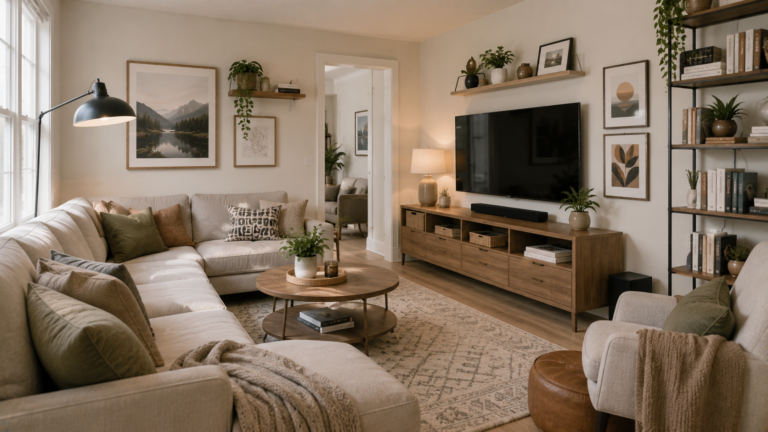
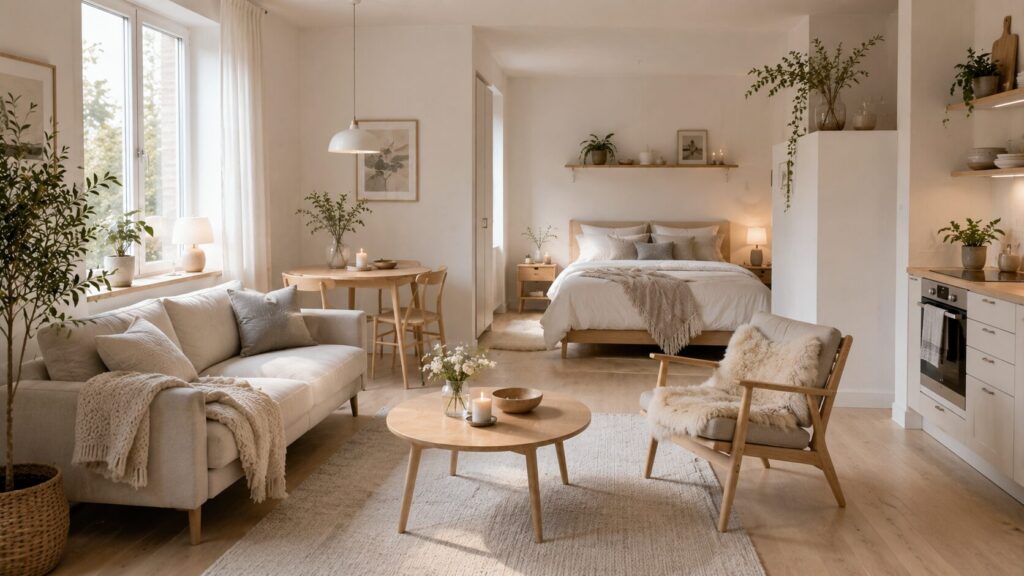
Scandinavian design — light woods, white and pale neutral palettes, functional furniture, and an emphasis on natural light — has become one of the most consistently popular aesthetics for small spaces, largely because it was developed in a context (Nordic countries with limited daylight and, historically, more compact housing) that shares real constraints with small apartment living.
What Makes It Work in a Small Space
Scandinavian design’s core principles — maximize natural light, keep colors light and warm, choose functional furniture with clean lines, incorporate natural materials — happen to solve exactly the visual problems small spaces face. Light colors reflect available light. Clean lines don’t visually compete with each other in tight quarters. Functional, well-considered furniture avoids the wasted floor space that purely decorative pieces cost.
How to Adapt It
Prioritize light wood tones. Pale oak, birch, and ash — rather than dark walnut or mahogany — keep the palette light and airy, which matters more in small spaces than large ones.
Layer texture over pattern. Scandinavian interiors get their visual interest from texture (wool, sheepskin, woven baskets, raw wood grain) rather than bold pattern. This keeps small rooms feeling calm rather than visually busy.
Add “hygge” elements deliberately. The Scandinavian concept of hygge — coziness, comfort, contentment — comes through in a small apartment via soft textiles (a chunky throw, sheepskin on a chair), candles, and warm lighting. Without these elements, Scandinavian style can tip into feeling cold; with them, it becomes genuinely comfortable.
Keep furniture legs visible. Scandinavian furniture design consistently favors exposed, often tapered wooden legs rather than solid bases — which, as covered in other small-space guides, keeps the floor plane visible and the room feeling more open.
Small Apartment Style Ideas: Boho (Bohemian)
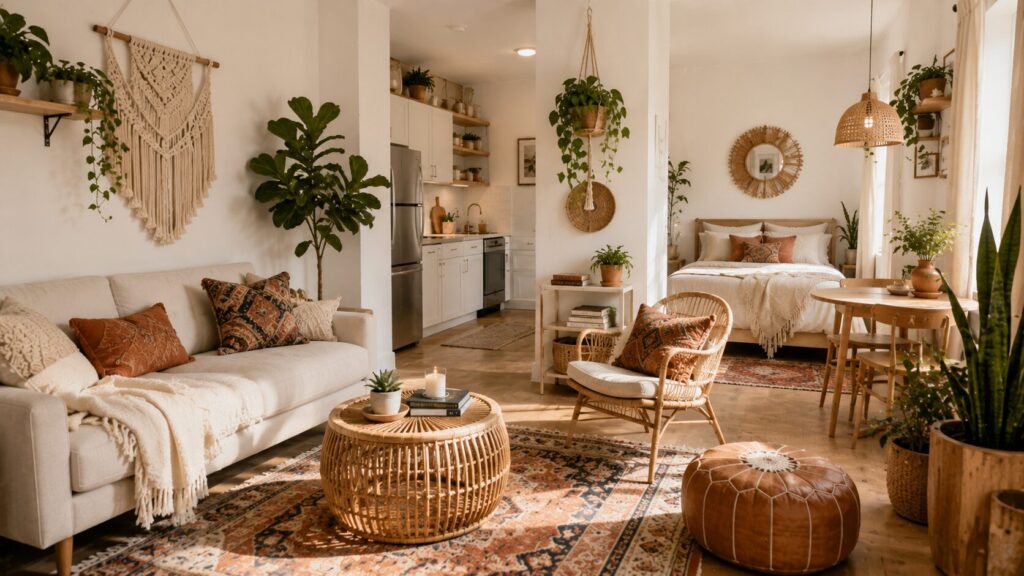
Boho style — layered textiles, plants, natural materials, global influences, and a relaxed, collected-over-time feel — seems at first like a poor fit for small spaces, since it’s often associated with abundance and layering. Done thoughtfully, though, it adapts surprisingly well.
What Makes It Work in a Small Space
The key insight: boho style’s richness comes from texture and pattern variety within a cohesive, usually warm color family — not from sheer object volume. A small boho apartment with the right restraint feels warm and personal rather than cluttered, because the visual complexity is contained within a consistent palette that keeps the eye from feeling overwhelmed.
How to Adapt It
Choose one dominant textile pattern per room, then support it with texture rather than more pattern. A patterned rug as the anchor, then solid-colored or subtly textured cushions, throws, and curtains around it. This avoids the pattern-on-pattern-on-pattern effect that reads as chaotic in a small space, even when it works in a larger one.
Prioritize plants over decorative objects. Boho style’s signature abundance of greenery works particularly well in small apartments because plants add life and visual richness without adding “stuff” in the clutter sense — and they scale from windowsill herbs to floor-to-ceiling fiddle-leaf figs depending on available space.
Use macramé and woven textiles as wall decor. A macramé wall hanging or a woven tapestry adds boho warmth to a blank wall without requiring floor space — an efficient way to bring the style’s signature texture into a small room.
Keep the furniture footprint restrained even as the styling gets rich. Boho style’s visual abundance should live in textiles, plants, and wall decor — not in an abundance of furniture pieces. A boho small apartment still needs the same furniture discipline (fewer, well-scaled pieces) as any other style; the richness comes from what dresses those pieces, not from adding more of them.
Small Apartment Style Ideas: Industrial
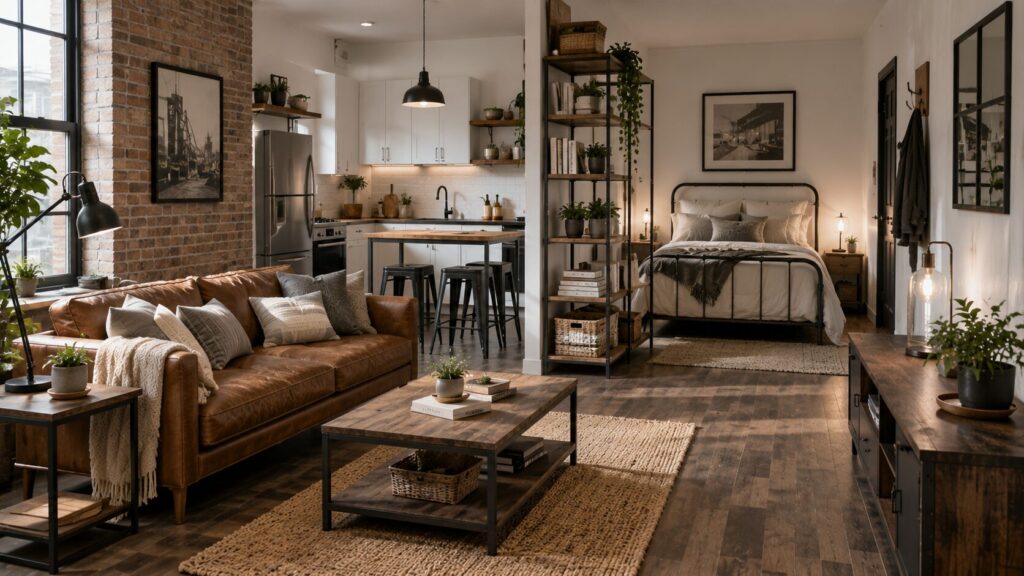
Industrial style — exposed brick or concrete, black metal fixtures, raw or reclaimed wood, and an aesthetic drawn from converted warehouses and factories — presents real challenges in a small apartment, because its source material (large converted industrial spaces) is the opposite of compact.
What Makes It Hard, and How to Adapt It Anyway
Full industrial style relies partly on scale — soaring ceilings, exposed ductwork, expansive floor plans — that a small apartment simply doesn’t have. Applied without adaptation, industrial elements (heavy black metal, raw concrete-look surfaces, exposed pipe fixtures) can make a small room feel colder and more cramped rather than more characterful.
The adaptation that works: borrow industrial’s material palette and specific accent pieces without trying to replicate its scale.
Use black metal in accents, not throughout. A black metal shelving unit, a pendant light with an exposed bulb, black window frames if you have control over them — these bring genuine industrial character without the heaviness of committing every surface to the aesthetic.
Warm up the palette. Pure industrial style skews cool and gray. In a small apartment, pairing industrial elements with warm wood tones and warm white walls (rather than gray or exposed concrete throughout) keeps the space from feeling cold — industrial character with residential warmth.
Choose one “hero” industrial element rather than several. A single exposed brick wall (real or a convincing brick-look wallpaper for renters), one substantial piece of reclaimed wood furniture, or a set of factory-style pendant lights — pick one strong element and let the rest of the room stay simpler. Multiple heavy industrial elements compete for attention in a way that overwhelms a small footprint.
Add textiles deliberately. Industrial style’s hard materials (metal, brick, concrete, raw wood) need textile softening more urgently in a small apartment than a large loft, simply because there’s less room for the hard surfaces to breathe. A soft rug, layered cushions, and warm-toned curtains keep an industrial-inspired small apartment livable rather than austere.
Small Apartment Style Ideas: Mid-Century Modern
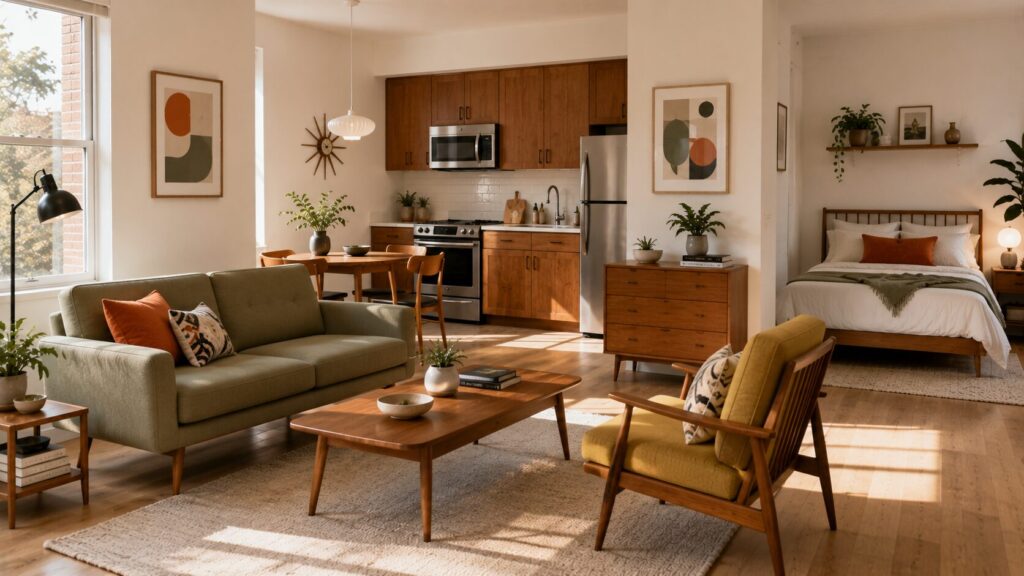
Mid-century modern — clean lines, tapered legs, organic curves, warm wood tones, and a mix of function and playful form from the 1950s–60s design era — translates unusually well to small apartments, partly because the style itself developed during a postwar period when housing was often more modest in scale than what came before.
What Makes It Work in a Small Space
Mid-century furniture was frequently designed with smaller homes and apartments in mind, which means many original and reproduction pieces are already scaled appropriately for compact rooms — tapered legs that keep the floor visible, lower-profile silhouettes, and a general restraint in proportion compared to some contemporary furniture trends toward oversized pieces.
How to Adapt It
Choose furniture with tapered, angled legs. This is the most identifiable mid-century silhouette and it does real functional work in a small space by keeping the floor plane visible beneath every piece.
Use warm wood tones as the connective material. Walnut and teak (or affordable equivalents) appearing across multiple pieces — a coffee table, a sideboard, a chair frame — create cohesion the way a consistent color palette does in other styles.
Introduce one or two statement colors, not many. Mid-century palettes often use one or two saturated accent colors (mustard, burnt orange, teal) against warm neutral bases. In a small apartment, restraint with the number of accent colors keeps the look sophisticated rather than busy.
Look for authentic vintage or well-made reproduction pieces at secondhand sources. Mid-century style has a genuinely active secondhand market — estate sales, vintage shops, and online marketplaces regularly surface real or reproduction pieces at accessible prices, which makes this one of the more budget-friendly styles to build authentically over time.
Small Apartment Style Ideas: Japandi
Japandi — a blend of Japanese minimalism and Scandinavian functionality — has become one of the most searched and recommended styles for small spaces in recent years, and the reasons why are genuinely sound rather than just trend-driven.
What Makes It Work in a Small Space
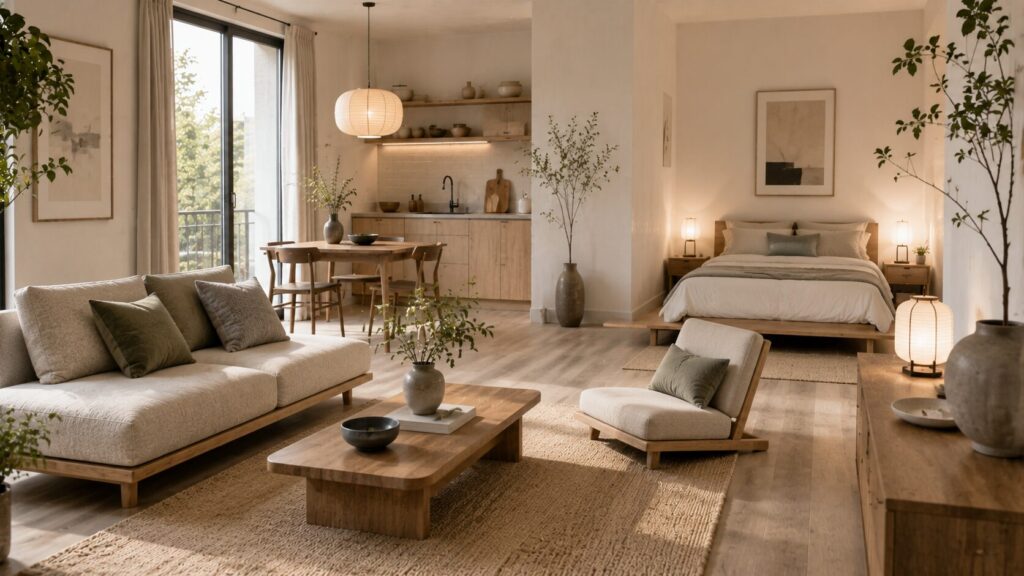
Japandi combines two design traditions that both developed strong small-space instincts: Japanese design’s emphasis on intentional emptiness (ma, the concept of meaningful negative space) and Scandinavian design’s focus on function and natural light. The result is a style built almost entirely around principles that solve small-space challenges directly.
How to Adapt It
Commit to a genuinely restrained object count. Japandi is less forgiving of clutter than almost any other style — the aesthetic depends on visible negative space and a limited palette of natural materials. This makes it demanding to execute but highly effective in a small apartment specifically because the discipline it requires produces exactly the outcome small spaces need.
Mix natural materials without adding pattern. Raw wood, stone, linen, and paper (in the form of simple shades or lighting) create textural richness without any printed pattern at all. This is one of the style’s defining features and one of its most useful lessons for small-space decorating generally: texture alone, without pattern, can create genuine visual interest.
Use low furniture. Japandi favors lower-profile furniture — low platform beds, low seating, low tables — which keeps sightlines open across a room and contributes to the sense of spaciousness that’s central to both of its parent traditions.
Choose a muted, earthy palette. Warm off-whites, soft clay tones, sage, and charcoal — colors drawn from natural materials rather than pure pigment — support the calm, uncluttered feeling the style depends on.
Building Your Own Style: Mixing Rather Than Matching
Most small apartments that actually feel personal and considered don’t commit purely to one named style. They borrow principles from two or three and blend them according to what the household actually needs and loves.
The Combination Approach
A common and effective combination for small apartments: Scandinavian’s light palette and functional furniture as the base, with boho’s textiles and plants layered on top for warmth and personality, and one or two mid-century pieces for character. This isn’t a named style in any design magazine, but it’s how most genuinely lived-in small apartments actually look — principles borrowed and combined rather than a single aesthetic followed strictly.
The Test for Whether a Combination Works
The practical check: does the space have one consistent color story (even if the furniture styles vary), and does each piece share at least one quality — material, tone, or scale — with the pieces around it? A mid-century chair in warm walnut sits comfortably next to a Scandinavian light-oak table because they share the wood-tone connection, even though they’re technically different design eras and traditions. A piece that shares nothing with anything else in the room — different material, different tone, different scale — will look out of place regardless of how much you individually like it.
Practical Takeaways: Applying Style Principles at Any Budget
Regardless of the specific style chosen, these principles consistently work in small apartments:
- Fewer, better pieces outperform more, cheaper ones in every style covered here
- Exposed furniture legs keep the floor plane visible and support every style’s small-space adaptation
- A consistent, limited color palette ties a room together more effectively than matching every piece to a single named aesthetic
- Texture substitutes for pattern when a room needs richness without visual complexity
- Negative space is a design choice, not a sign of an unfinished room — every style covered here depends on some version of restraint
Building a style over time, on a budget:
- Start with the base layer (walls, large furniture) in your chosen palette
- Add one or two statement pieces that clearly express the style (a chair, a light fixture, a rug)
- Layer in textiles and smaller objects gradually, prioritizing quality over quantity as budget allows
- Source secondhand for the pieces that define the style most strongly — vintage and thrift finds often carry more authentic character than new budget alternatives
Conclusion
Small apartment style ideas work best when they start from an honest assessment of what you actually love, rather than from what photographs well or what’s currently trending. Every style covered here — minimalist, Scandinavian, boho, industrial, mid-century, Japandi — has genuine, well-reasoned adaptations for small spaces. None of them require unlimited square footage to execute successfully.
What they share, once adapted, is more interesting than what separates them: fewer, better-chosen pieces; visible furniture legs; a consistent and restrained color palette; texture used deliberately; and negative space treated as a design decision rather than an absence.
The style that will actually feel like home isn’t necessarily the one that photographs most impressively. It’s the one that matches what you’re drawn to in the objects you already own and love, and that produces the emotional feeling your specific life needs from your home — calm or cozy, minimal or richly layered, warm or cool.
Start by looking honestly at what you already gravitate toward. Save images without filtering. Look for the patterns. Then build outward from a base layer that reflects those instincts, adapting whichever style principles apply using the small-space techniques covered here.
A small apartment styled this way — deliberately, personally, and with real understanding of why each choice works in a compact footprint — will feel like considerably more than its square footage suggests.
Frequently Asked Questions:
What is the best design style for a small apartment?
There isn’t one universally best style — the right choice depends on what emotional feeling you want the space to produce and what you’re already drawn to aesthetically. That said, Scandinavian and Japandi styles adapt most naturally to small spaces because their core principles (light palettes, functional furniture, visible negative space, natural materials) were developed specifically around constraints similar to small-space living. Minimalism works well for people who want maximum calm and are comfortable with fewer possessions. Boho and mid-century modern both adapt successfully too, but require more deliberate restraint to avoid visual clutter in a compact footprint.
How do I figure out my personal design style?
Look at what you already own and consistently choose — clothing, the objects you’ve kept through multiple moves, the colors and textures you’re drawn to without really thinking about it. If you use Pinterest or a similar platform, save images without filtering for whether they’d “fit” your space, then review the saves after you have thirty or forty and look for consistent patterns in color, texture, and mood. Beyond the visual style, identify the emotional feeling your home needs to produce for you — calm and uncluttered, or warm and richly layered — since that matters as much as any specific named aesthetic.
Can I mix design styles in a small apartment?
Yes, and most genuinely well-designed small apartments do exactly this rather than committing purely to one named style. The key to making a mix work is a consistent color palette across the whole space and ensuring each piece shares at least one quality — material, tone, or scale — with the pieces around it. A common successful combination is a Scandinavian base (light palette, functional furniture) layered with boho textiles and plants for warmth, plus one or two mid-century statement pieces for character. The combination should feel intentional rather than accidental, which comes down to that shared color story and material connection between pieces.
Is minimalism the best choice for small apartments?
Minimalism works very well for small apartments when executed with warmth — natural materials, warm lighting, and quality over quantity in the pieces chosen. However, it’s not automatically the best choice for everyone. Minimalism executed without enough warmth can read as stark or unfinished, especially on a tight budget where furniture gets chosen for low cost rather than quality. For people who want a genuinely calm, uncluttered home and don’t mind having fewer possessions, minimalism is an excellent fit. For people who feel energized by texture, pattern, and a more layered environment, a restrained version of boho or Japandi (which shares minimalism’s restraint but incorporates more natural texture) may feel more like home.
How much does it cost to decorate a small apartment in a specific style?
This varies enormously depending on how strictly “on-style” every piece needs to be, but most of the styles covered here can be built affordably over time using second hand sourcing and prioritizing a few key pieces over full-room purchases. Mid-century modern in particular has an active second hand market (estate sales, vintage shops, online marketplaces) that makes authentic pieces accessible without full retail pricing. Scandinavian and minimalist styles can be built with budget-friendly furniture as long as material quality (real wood over veneer, quality textiles) is prioritized within the smaller number of pieces the styles call for. Boho style is one of the most budget-flexible since its richness comes from textiles, plants, and thrifted objects rather than expensive furniture. In general: budget for one or two investment pieces that define the style clearly, and build the rest gradually and second hand.