12 Decor Ideas for Small Apartments That Actually Make a Difference
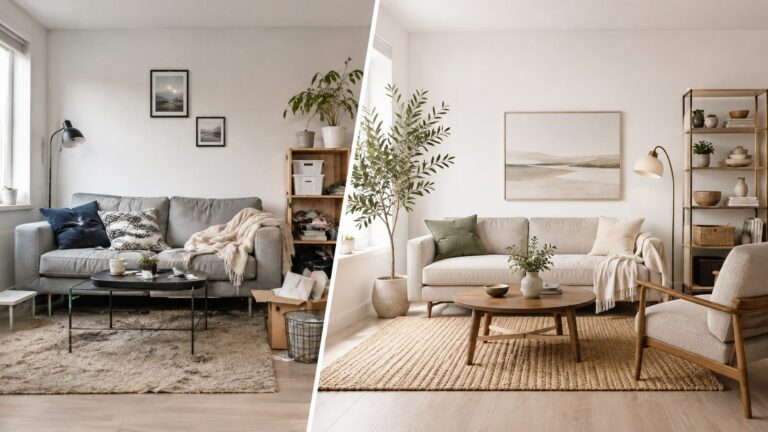
Living in a small apartment doesn’t mean you have to live with a cramped, cluttered space that never quite feels finished. The truth is, some of the coziest, most stylish homes are also the smallest ones. It’s not about how many square feet you have — it’s about how you use them.
If you’ve been searching for decor ideas for a small apartment, you’ve probably scrolled through a dozen lists that all say the same three things: “use mirrors,” “go vertical,” “declutter.” Those tips aren’t wrong, but they only scratch the surface. Real small-space decorating is about solving specific problems — awkward corners, low natural light, no storage, renter restrictions — with solutions that actually fit your life.
This guide walks through practical, tested ideas for furniture, lighting, storage, color, and layout, plus a few tricks most lists skip entirely. Whether you’re in a studio, a one-bedroom, or a shared apartment with roommates, you’ll find something here you can start today, often without spending much money at all.
Let’s get into it.
Start With What’s Actually Making Your Apartment Feel Small
Before buying anything, it helps to figure out what’s working against you. Small apartments usually struggle with one or more of these issues:
- Too much furniture for the footprint
- Dark corners with no natural light
- Clutter with nowhere to go
- Ceilings that feel low because of heavy curtains or bulky furniture
- A layout that was never designed for how you actually live
Once you know which of these apply to your space, the rest of this list becomes a lot easier to use — you can skip straight to the sections that solve your actual problem instead of trying every trend at once.
1. Choose Furniture That Does Two Jobs
In a small apartment, every piece of furniture should earn its keep. A coffee table that only holds drinks is a missed opportunity. Look for:
- Storage ottomans that double as seating and hide blankets or shoes
- Daybeds that work as a couch by day and a guest bed by night
- Nesting tables that expand when you have company and tuck away when you don’t
- Drop-leaf or extendable dining tables that shrink when it’s just you
This isn’t just a space-saving trick — it actually changes how a room feels. Fewer, smarter pieces read as intentional. A room stuffed with single-purpose furniture reads as cluttered, even if it’s technically “organized.”
2. Go Vertical, But Do It Right
“Use your walls” is common advice, but there’s a right and wrong way to do it. Floating shelves crammed with knickknacks can make a small room feel busier, not bigger.
Instead:
- Install shelves just above eye level, not at the ceiling — this draws the eye up without making the room feel top-heavy
- Group items in odd numbers (three or five) rather than lining everything up evenly
- Leave visible breathing room between objects; a shelf that’s 70% full often looks better than one that’s completely packed
Tall, narrow bookcases are also more effective than short, wide ones. They store the same amount but take up less floor space, which matters more than most people realize in a small footprint.
3. Let Curtains Do More Work
Curtains are one of the most overlooked tools in small-space decorating. Two adjustments make a real difference:
- Hang curtain rods higher than the window frame — a few inches above the window, or even closer to the ceiling — to visually stretch the wall upward
- Choose curtains that are floor-length, not ones that stop mid-wall, since a shorter curtain visually cuts the room in half
If privacy isn’t a major concern, sheer curtains let in more light while still softening a window. More natural light almost always makes a small space feel larger, so this is worth prioritizing over pattern or color.
4. Pick a Light, Cohesive Color Palette — But Don’t Overdo White
There’s a myth that small apartments have to be all-white to feel bigger. That’s not quite true, and going too far with it can make a space feel cold and sterile.
What actually works better:
- A light, warm base color (soft beige, warm white, pale gray) on walls
- One or two accent colors repeated throughout the space — a throw pillow, a vase, artwork
- Avoiding too many competing colors, which fragments the eye and makes the room feel busier
Color doesn’t need to be avoided in small spaces. In fact, a single confident color choice — like a deep green accent wall in a nook — can add depth and personality that all-white rooms often lack.
5. Use Mirrors With Intention, Not Just for Decoration
Mirrors reflect light and create the illusion of depth, but placement matters more than most guides mention.
- Position a mirror across from a window so it reflects natural light back into the room
- Avoid placing a mirror directly across from clutter or a messy closet — it’ll reflect that too
- A single large mirror usually looks better and works better than several small ones scattered around
A leaning floor mirror in a corner is a simple way to add this effect without needing to drill into rental walls.
6. Rethink Your Entryway (Even If You Don’t Have One)
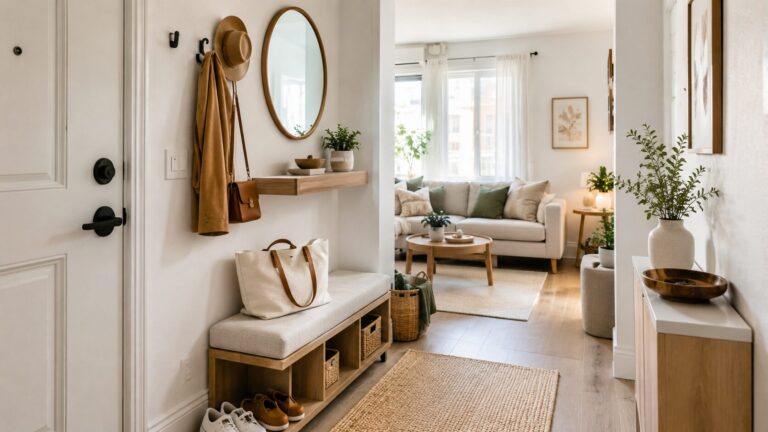
Many small apartments don’t have a dedicated entry space, which means shoes, bags, and keys end up scattered near the door. A few square feet of intentional design here goes a long way:
- A slim console table or wall-mounted shelf just inside the door
- A small basket or tray for keys and mail
- Hooks at two heights — one for coats, one for bags — so things don’t pile up on the floor
This kind of “landing zone” solves a problem most small-apartment guides skip entirely, but it’s often the first thing that makes an apartment feel chaotic.
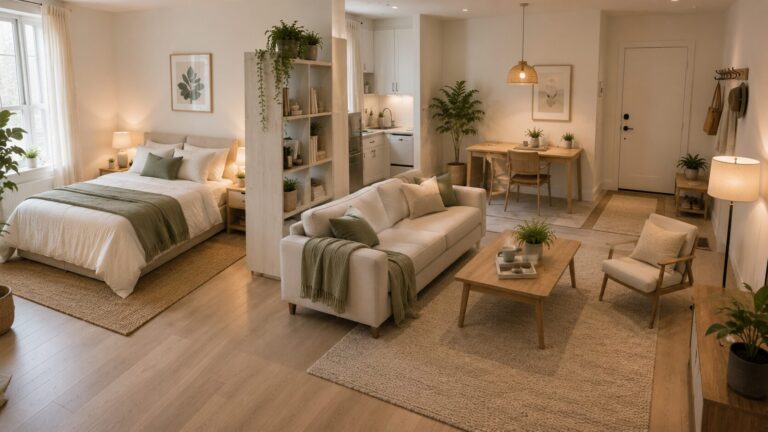
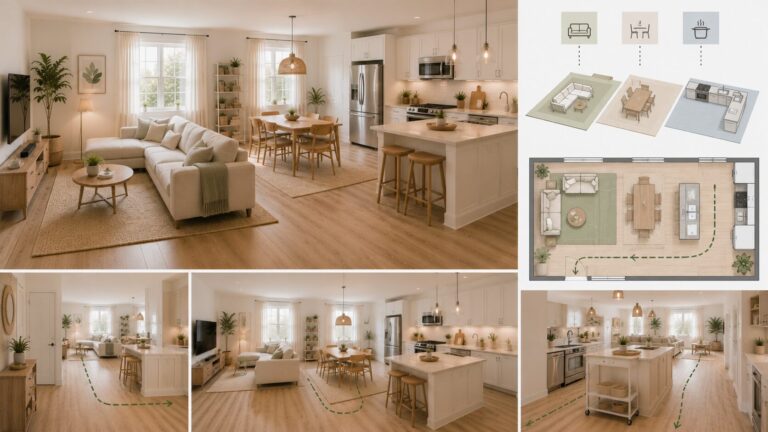
7. Define Zones Without Building Walls
If you live in a studio or open-concept apartment, one of the biggest challenges is making the space feel like it has different “rooms” even though it’s really one room.
Ways to create zones without construction:
- Area rugs — a rug under the bed area and a different one under the seating area visually separates the two
- Open shelving units used as a room divider instead of a solid wall
- Furniture placement — angling a couch or bookshelf away from the wall to create a backside “hallway” effect
This trick matters because a studio apartment without visual zones often feels like one giant, undefined space, which reads as smaller and messier than it actually is.
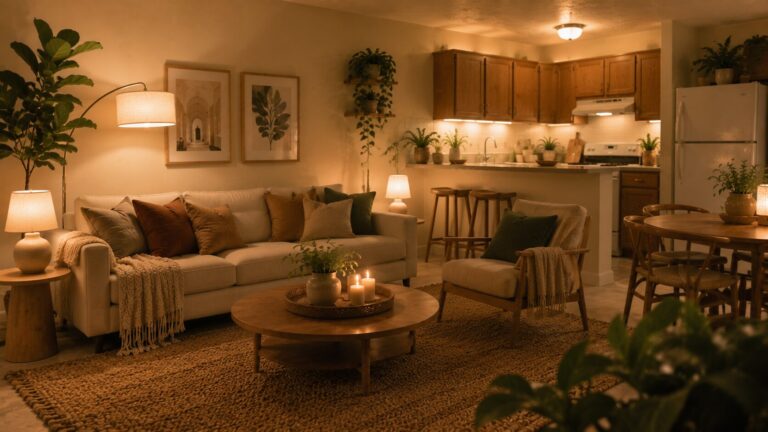
8. Add Layered Lighting Instead of One Overhead Fixture
Overhead lighting alone tends to flatten a room and cast it in one harsh, even glow. Layering light sources adds warmth and makes a space feel more finished.
Aim for:
- A floor or table lamp with warm-toned bulbs
- String lights or a plug-in wall sconce for ambiance
- Dimmable options where possible, since a room that can shift from bright to soft feels more flexible and lived-in
This is one of the most affordable upgrades on this list. A $20 lamp with a warm bulb can change the entire feel of a room in minutes.
9. Use Under-Bed and Behind-Door Storage
Storage is usually the number one complaint in small apartments, and most of it can be solved without buying new furniture.
- Slide flat storage bins or a rolling drawer system under the bed
- Add an over-the-door organizer in closets, bathrooms, or even the kitchen pantry
- Use the back of a door for hanging items like ironing boards, cleaning supplies, or accessories
None of these require permanent changes, which makes them ideal for renters.
10. Choose a Statement Piece Instead of Many Small Ones
It’s tempting to fill a small apartment with lots of small decorative objects, but this often backfires — visual clutter makes a room feel smaller, not more decorated.
Instead, pick one or two statement pieces:
- A bold piece of art
- An interesting light fixture
- A textured accent chair
Let everything else in the room stay simple. One striking item does more for a small space than ten small trinkets competing for attention.
11. Bring in Real (or Realistic) Plants
Plants add life to a room, but in small apartments, size and placement matter.
- Tall, narrow plants (like a snake plant or a fiddle leaf fig) add greenery without eating up floor space
- Hanging plants free up surface area entirely
- If natural light is limited, low-light-tolerant plants or high-quality artificial ones are a practical substitute
A single well-placed plant in a corner often does more visually than several small pots scattered on shelves.
12. Don’t Ignore the Ceiling
Most small-space guides focus entirely on floors and walls, but the ceiling is an overlooked opportunity.
- A pendant light instead of a flush-mount fixture adds vertical interest
- Painting the ceiling a shade lighter than the walls (or the same warm white) keeps the eye moving upward instead of stopping short
- Avoid heavy, dark ceiling fixtures that visually lower the room
This is a small detail, but it’s one of the reasons some small apartments feel taller than others, even with identical square footage.
Putting It All Together: A Realistic Small Apartment Refresh
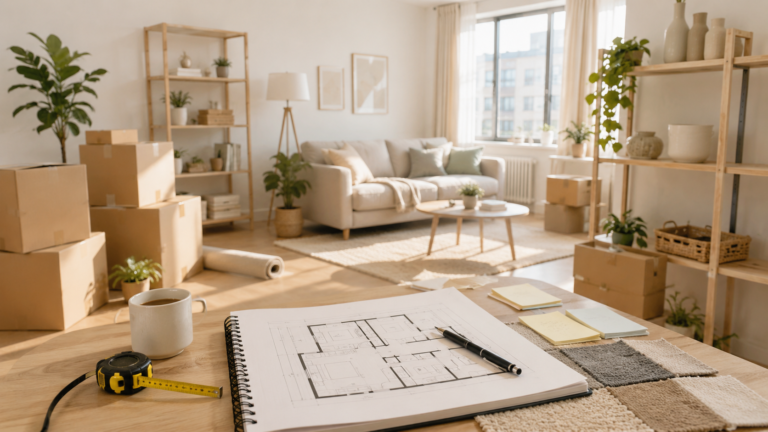
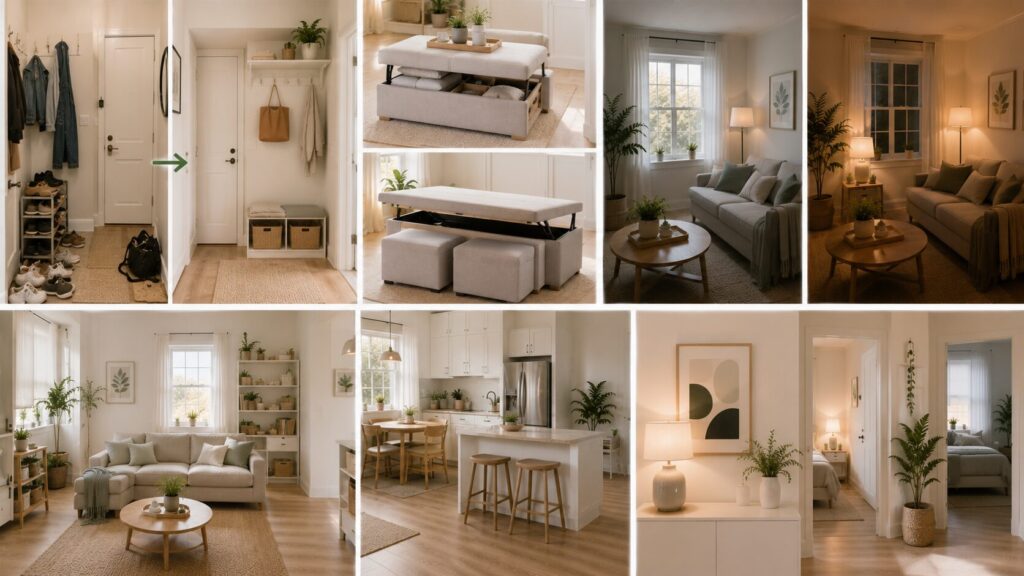
You don’t need to do all of this at once. A realistic starting point looks something like:
- Fix your entryway first — it’s the first impression and the biggest clutter source
- Swap in one or two multi-purpose furniture pieces
- Add layered lighting in your main living area
- Hang curtains higher and let in more light
- Pick one statement piece and simplify the rest
Small changes, done in the right order, add up to a space that feels considered rather than crowded.
Conclusion
Decorating a small apartment isn’t about cramming in space-saving gadgets or painting everything white. It’s about understanding what’s actually making your space feel tight — whether that’s clutter, poor lighting, or furniture that doesn’t fit your life — and solving those specific problems one at a time.
Start small. Fix your entryway, add a lamp with warmer light, or hang your curtains a few inches higher. These changes take an afternoon, cost very little, and often make a bigger visual difference than a full furniture overhaul.
The apartments that feel the biggest usually aren’t the ones with the least stuff — they’re the ones where every piece has a purpose and every corner has been thought through. With the ideas above, you have a practical, room-by-room plan to make that happen in your own space, whatever its square footage.
Frequently Asked Questions:
What colours make a small apartment look bigger?
Light, warm neutrals like soft beige, warm white, and pale gray tend to open up a room the most. All-white isn’t required — one or two repeated accent colours can add warmth without making the space feel smaller.
How do I decorate a small apartment on a budget?
Focus on high-impact, low-cost changes first: raise your curtain rods, add a warm-toned lamp, declutter your entryway, and rearrange existing furniture before buying anything new.
What furniture is best for small apartments?
Multi-purpose pieces work best — storage ottomans, extendable tables, and daybeds all serve more than one function, which matters more in a small footprint than in a larger home.
How can I add storage without built-ins in a rental?
Under-bed bins, over-the-door organizers, and slim console tables all add storage without any permanent changes, making them ideal for renters.
How do I make a studio apartment feel like it has separate rooms?
Use area rugs, open shelving, and furniture placement to create visual zones instead of physical walls. A rug under the bed and a different one under the seating area is a simple way to start.