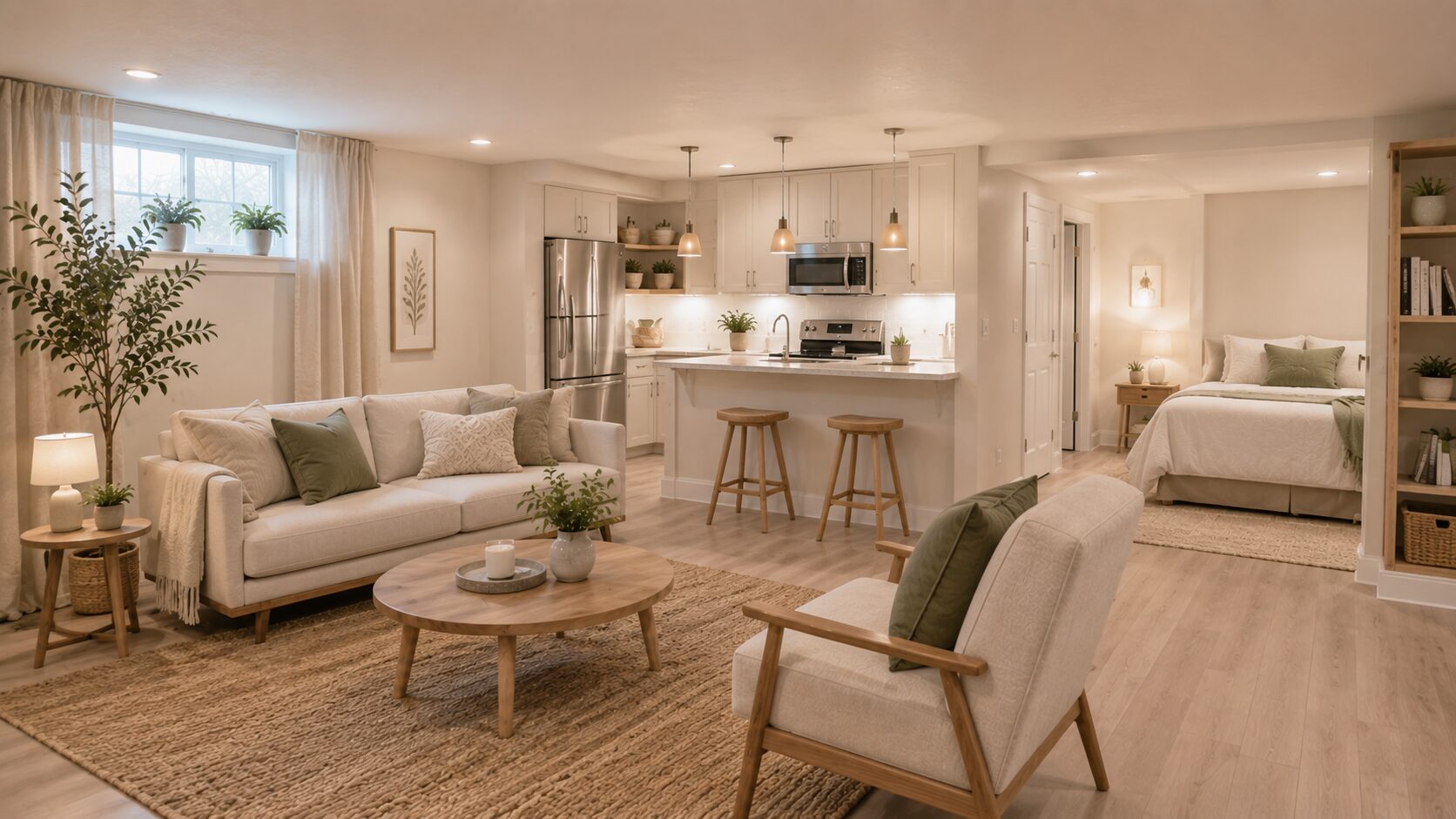
Small Basement Apartment Ideas – Solving the Light, Height, and Damp Problem
A basement apartment comes with a specific set of challenges that most small-space design advice doesn’t actually address. It’s not just about square footage. It’s about working with limited natural light, sometimes lower ceilings, small or high-set windows, and a greater chance of dampness or humidity than any apartment above ground level.
Generic small-space tips — float the furniture, add a mirror, use light paint — still apply, but they’re not enough on their own. A basement apartment needs design decisions that specifically account for the physics of underground or partially underground living: where the light actually comes from and how far it travels, how humidity behaves in a space with less airflow, and how a slightly lower ceiling affects what furniture and layout choices actually work.
The apartments that succeed at this aren’t pretending to be something they’re not. They’re not trying to look like a sunny top-floor unit. They’re working intelligently with what a basement genuinely offers — often more generous square footage per dollar than apartments above ground, more privacy, cooler summer temperatures, and real potential for a warm, cozy character when designed with intention.
This guide covers small basement apartment ideas built specifically around the challenges basements actually present: maximizing what light exists, managing moisture, working with ceiling height, and creating genuine warmth in a space that starts out cooler and darker than most.
Understanding What Makes Basement Apartments Different
Before the specific ideas, it’s worth being precise about what actually distinguishes a basement apartment from any other small space, because the solutions that follow are built around these specific realities.
Light comes from fewer, often smaller windows, frequently positioned high on the wall near the ceiling (letting in light but not necessarily a clear outdoor view), and the available daylight is generally less intense than at ground level or above.
Humidity tends to run higher, because basements are naturally cooler than the air above them, and moisture from the surrounding soil can seep in even with reasonable waterproofing. This affects material choices more than in any other apartment type.
Ceiling height is sometimes, though not always, lower than a standard 8-foot ceiling, particularly in older or converted basement spaces, which changes what furniture and lighting choices work best.
Temperature tends to run cooler, which is a genuine advantage in summer and a design consideration in winter — basement apartments often benefit from warming design choices (color, texture, lighting) more than temperature-neutral apartments do.
Small Basement Apartment Ideas for Maximizing Light
Work the Windows You Have, Aggressively
Whatever natural light exists in a basement apartment is more valuable than it would be in a brighter unit, which means window treatments and placement decisions matter more here than almost anywhere else.
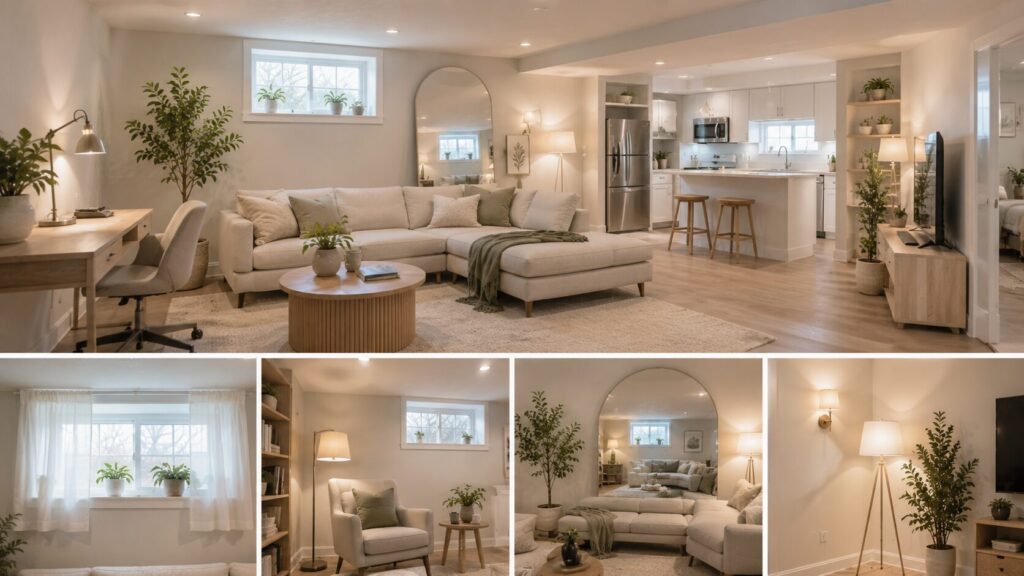
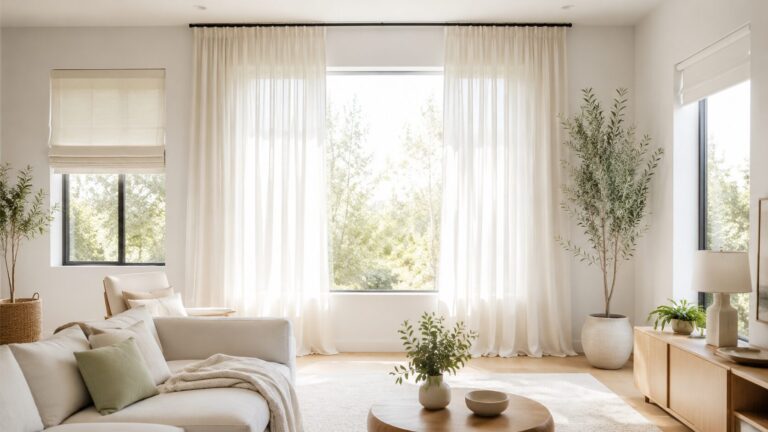
Keep window treatments minimal and light-colored. Sheer curtains rather than heavy drapes, or no treatment at all if privacy allows, let every available bit of daylight into the space. If privacy is a concern given a basement window’s typically low or ground-level position, frosted window film provides privacy while still allowing light through — a better trade-off than heavy curtains that block both privacy concerns and useful light simultaneously.
Clear the area directly around and beneath windows. Furniture or clutter positioned in front of a basement window blocks a disproportionate amount of the room’s total available light, since there’s less light to begin with. Keep window sills and the floor space nearby completely clear.
Position the most-used seating or work areas nearest the windows. In an apartment with uneven light distribution, put the desk, the reading chair, or the primary seating area where the most daylight actually reaches, rather than defaulting to a “logical” layout that happens to place activity zones in the darkest corners.
Maximize Artificial Light to Compensate
Because natural light is inherently limited, artificial lighting needs to do more work in a basement apartment than in almost any other type of small space — this isn’t optional ambiance, it’s functional necessity.
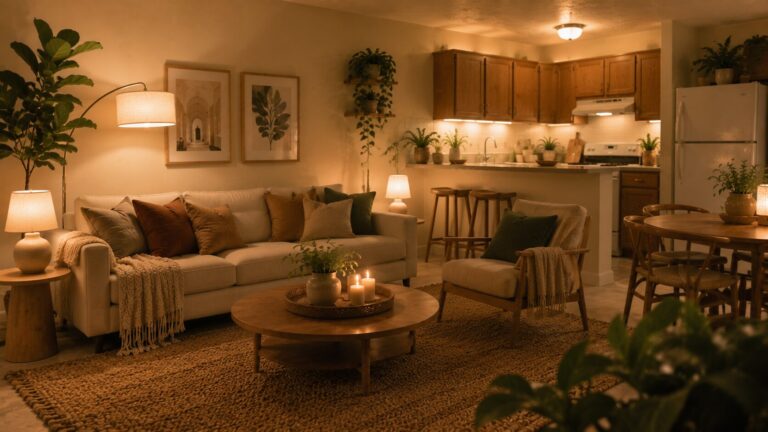
Layer at least three to four light sources per main room — more than the typical small-space recommendation of two to three — since basement apartments need to compensate for what natural light can’t provide throughout the day.
Use warm white bulbs (2700K–3000K) consistently. This matters even more in a basement than elsewhere, because cool-toned light in an already dim, enclosed space reads as sterile and uninviting in a way that compounds the basement’s other challenges rather than offsetting them.
Add uplighting specifically. Floor lamps or wall sconces that direct light toward the ceiling brighten the room’s overall perceived light level more effectively than downlighting alone, and they help counteract any low-ceiling feeling by drawing the eye upward.
Consider full-spectrum or daylight-simulating bulbs for main living areas. These bulbs (marketed as “daylight” or “full spectrum,” generally in the 5000K range) can supplement true natural light in spaces that get very little of it, though they should generally be reserved for daytime-use lighting rather than evening ambiance, since their cooler tone doesn’t suit relaxed evening use the way warm bulbs do.
Mirrors Do More Work Here Than Anywhere Else
In a basement apartment specifically, mirrors aren’t just a nice design touch — they’re one of the most functionally significant additions available, because they redistribute what limited light exists rather than simply reflecting abundant light back into an already bright room.
Position large mirrors directly across from windows, angled if necessary to catch and redirect daylight toward the darkest parts of the room. In basement apartments with only one or two windows, this single design decision can meaningfully change how much of the apartment actually benefits from available daylight.
Small Basement Apartment Solutions for Moisture and Humidity
Choose Materials That Handle Damp Conditions Well
Basement apartments, even well-waterproofed ones, generally run more humid than apartments above ground, which affects what furniture, flooring, and textile choices actually perform well over time.
Avoid solid wood furniture directly on the floor if humidity is a known issue — wood can warp or develop mold in consistently damp conditions. Furniture with a small clearance from the floor (exposed legs, which are already recommended for small-space design generally) allows airflow underneath and reduces this risk.
Choose moisture-resistant flooring options where you have any control — vinyl, tile, or sealed concrete perform better in damp conditions than carpet, which can trap moisture and develop mildew smell over time. Where the existing flooring is carpet and can’t be changed, a dehumidifier (discussed below) becomes even more important.
Select rugs made from synthetic or treated natural fibers rather than delicate natural fibers that are more prone to moisture damage, and lift rugs periodically to check the floor beneath for any moisture buildup.
Run a Dehumidifier as Standard Equipment
For most basement apartments, a dehumidifier isn’t optional decor — it’s functional infrastructure that protects everything else in the space. Excess humidity damages furniture, promotes mold and mildew, and makes the apartment feel colder and less comfortable even at a technically reasonable temperature.
A mid-sized dehumidifier (30–50 pint capacity, depending on the apartment’s square footage) run consistently, particularly in humid seasons, protects the investment made in furniture and textiles while also making the space more comfortable day to day. This is worth budgeting for before other decorating purchases, since it protects everything that comes after it.
Ventilate Actively, Not Just Passively
Use exhaust fans in the bathroom and kitchen consistently — these areas generate the most moisture in daily use, and basement apartments benefit more from active ventilation habits than apartments with more natural airflow.
Crack windows when weather allows, even briefly, to exchange indoor and outdoor air. In basement apartments where windows are limited, even small amounts of active ventilation make a meaningful difference to indoor air quality and humidity levels over time.
Small Basement Apartment Ideas for Low Ceilings
Not every basement apartment has a lower-than-standard ceiling, but many older or converted basement spaces do — sometimes as low as 7 feet, compared to a standard 8-foot ceiling above ground.
Keep Furniture Low-Profile
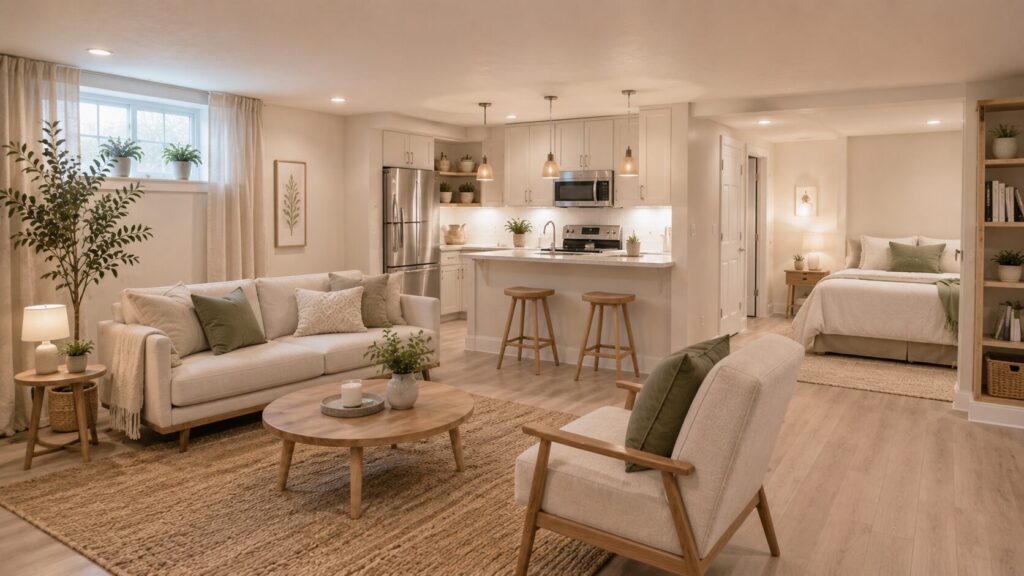
Low-back sofas and chairs, platform beds without tall headboards, and low dressers all keep the furniture’s visual mass below the point where a lower ceiling starts to feel oppressive. Furniture that reaches too close to the ceiling height emphasizes exactly the dimension the room is shortest on.
Use Vertical Lines to Create the Illusion of Height
Floor-to-ceiling curtains, vertically oriented art and shelving, and striped or vertically patterned textiles all draw the eye upward, creating a perceived stretch in the room’s height even though the actual ceiling height doesn’t change. This is one of the most effective low-ceiling compensating techniques available and costs very little to implement.
Avoid Bulky Overhead Fixtures
In a room with genuinely low ceiling clearance, a large chandelier or bulky pendant fixture reduces usable headroom and draws attention to exactly how low the ceiling actually sits. Flush-mount or semi-flush fixtures, which sit close to the ceiling surface, provide adequate lighting without eating into the room’s vertical clearance.
Keep the Ceiling Light and Unified With the Walls
Painting the ceiling the same color as the walls — or a shade or two lighter — removes the visual “lid” effect that a contrasting ceiling color creates, which matters more in a room where the ceiling is already lower than average. A dark or heavily textured ceiling in a low-clearance basement room emphasizes the low height in exactly the way you don’t want.
Creating Warmth in a Naturally Cooler Space
Layer Textiles More Generously Than You Would Above Ground
Basement apartments run cooler year-round, which makes textile layering — rugs, throws, cushions — more functionally important here than in a similarly sized apartment above ground. This isn’t purely a decorating choice; it directly affects how comfortable the space feels physically.
A larger, thicker rug (rather than a thin flatweave) adds genuine warmth underfoot in a basement apartment where the floor itself tends to run cooler than floors above ground level. Layer a thick knit or sherpa throw on the sofa and bed for the same reason — functional warmth that also happens to add visual coziness.
Choose a Warm Color Palette
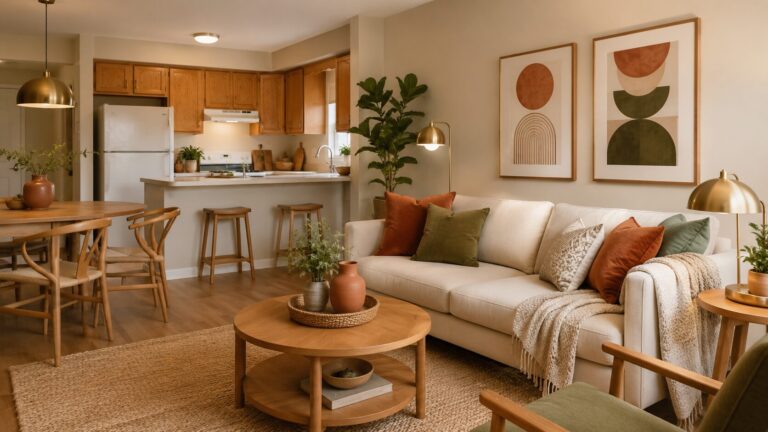
While light, warm neutrals remain the right foundation for maximizing perceived brightness (as covered above), the specific undertone matters more in a basement than elsewhere. Warm off-whites, soft terracottas, warm taupes, and muted warm greens read as cozier than cooler-toned grays or blues, which can compound a basement’s naturally cooler character rather than balancing it.
Use Warm Materials Generously
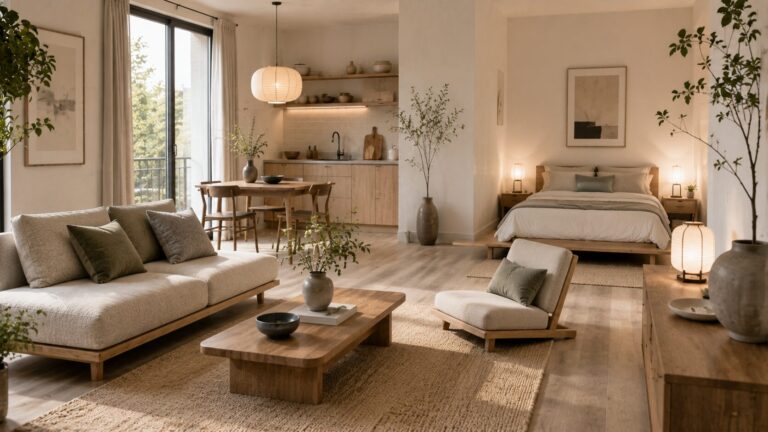
Wood tones, woven textures (rattan, jute, wool), and warm metal finishes (brass, warm brushed gold) throughout the apartment counteract the inherently cooler, more enclosed feeling that basement spaces start with. This is one area where basement apartment design genuinely differs from general small-space advice — the emphasis on warmth needs to be more deliberate and more consistent throughout the space.
Layout and Function for Small Basement Apartments
Position Sleeping Areas Away From Any Known Damp Spots
If any part of the basement has a history of dampness, even minor, position sleeping areas as far from that zone as the layout allows, and prioritize any waterproofing improvements in that specific area before finalizing furniture placement.
Take Advantage of the Extra Privacy and Sound Insulation
Basement apartments typically benefit from more sound insulation from street noise and neighboring units than apartments above ground, and often more privacy from passersby given the typically smaller, higher-set windows. This makes basement apartments genuinely well-suited to home offices, media rooms, or any function that benefits from quiet — worth factoring into how you allocate the apartment’s zones if it has more than one functional area.
Use the Cooler Temperature to Your Advantage in Summer
Basement apartments run noticeably cooler in summer months than apartments above ground, which can meaningfully reduce cooling costs and increase comfort during hot weather. This is a genuine advantage worth acknowledging rather than something to work around — if you have flexibility in furniture placement, positioning a reading nook or a home office in the coolest part of the basement takes advantage of this for warm-weather use.
Quick Reference: Small Basement Apartment Ideas by Challenge
Maximizing light:
- Minimal, light-colored window treatments (or frosted film for privacy)
- Clear space immediately around and beneath windows
- 3–4 layered light sources per room, all warm white (2700K–3000K)
- Uplighting to brighten perceived room light and counteract low ceilings
- Large mirrors positioned to redirect light toward darker areas
Managing moisture:
- Furniture with exposed legs for floor airflow
- Moisture-resistant flooring or rugs where possible
- A dehumidifier (30–50 pint) run consistently
- Active ventilation via exhaust fans and cracked windows when feasible
Working with low ceilings:
- Low-profile furniture throughout
- Vertical lines (curtains, art, shelving) to draw the eye upward
- Flush-mount lighting rather than bulky pendants or chandeliers
- Ceiling painted the same color as walls or slightly lighter
Adding warmth:
- Thick rugs and layered throws for physical and visual warmth
- Warm-toned neutrals rather than cool grays or blues
- Wood, woven textures, and warm metal finishes throughout
Conclusion
Small basement apartment ideas work best when they directly address what makes basement living genuinely different — not just smaller square footage, but specific challenges around light, moisture, ceiling height, and ambient warmth that most general small-space advice doesn’t fully account for.
Maximizing available light matters more here than in almost any other apartment type, which means window treatments, mirror placement, and layered artificial lighting all need more deliberate attention than a standard small-space guide would suggest. Moisture management isn’t optional decorating advice — it’s functional protection for everything else in the apartment, worth budgeting for before other purchases. And warmth, both physical and visual, needs to be built in more generously than in an apartment that doesn’t start out cooler by nature.
None of this makes a basement apartment a lesser option. Done with these specific challenges addressed intentionally, basement apartments offer real advantages — often more space per dollar, genuine privacy, better sound insulation, and cooler summers — that make them a smart choice for the right person, not just a compromise.
Start with light and moisture, since these affect the apartment’s comfort and the longevity of everything else you add. Then layer in the warmth and low-ceiling compensating strategies as you furnish. A basement apartment designed this way stops being defined by what it lacks and becomes defined by how well it’s been thought through.
Frequently asked questions:
How do I make a basement apartment feel brighter?
Maximize what natural light exists by keeping window treatments minimal and light-colored (or using frosted film for privacy instead of heavy curtains), and keeping the area around windows completely clear of furniture and clutter. Beyond natural light, layer three to four artificial light sources per room — more than the two to three typically recommended for above-ground small spaces — all using warm white bulbs (2700K–3000K). Position large mirrors across from windows to redirect available daylight toward the darkest parts of the room. Together, these changes compensate for the naturally limited light a basement receives more effectively than any single fix on its own.
Is it normal for a basement apartment to feel damp, and how do I manage it?
Some degree of humidity is common in basement apartments, even well-waterproofed ones, because basements are naturally cooler than the air above them and can be affected by moisture in the surrounding soil. A mid-sized dehumidifier (30–50 pint capacity depending on square footage) run consistently is the most effective single solution, protecting furniture and textiles from moisture damage while making the space more comfortable. Beyond that, choosing furniture with exposed legs (for floor airflow), moisture-resistant flooring or rugs, and running exhaust fans consistently in the bathroom and kitchen all reduce humidity-related issues over time.
How do I decorate a basement apartment with low ceilings?
Keep furniture low-profile throughout — low-back sofas and chairs, platform beds, low dressers — so nothing draws attention to exactly how low the ceiling sits. Use vertical elements deliberately: floor-to-ceiling curtains, vertically oriented shelving and art, and striped or vertical-pattern textiles all create a perceived stretch in ceiling height. Choose flush-mount or semi-flush light fixtures rather than chandeliers or bulky pendants, which reduce actual headroom in an already low-clearance room. Painting the ceiling the same colour as the walls, or just slightly lighter, removes the visual “lid” effect that a contrasting or dark ceiling colour creates in a low room.
What furniture works best in a small basement apartment?
Furniture with exposed legs (rather than solid bases touching the floor) serves two purposes in a basement specifically: it keeps the floor plane visible for a more open feeling, and it allows airflow underneath that reduces moisture-related risk to the furniture itself. Low-profile pieces — sofas with lower backs, platform beds, low dressers — work better with lower ceiling heights common in many basement apartments. Choose moisture-tolerant materials over delicate natural wood or fabric where humidity is a known concern, and avoid placing any furniture directly against exterior walls, where dampness tends to concentrate, without some airflow clearance.
What are the actual advantages of living in a basement apartment?
Basement apartments typically offer more square footage per dollar than equivalent apartments above ground, since they’re generally priced lower in most rental markets. They also benefit from better sound insulation from street noise and often more privacy, given typically smaller or higher-set windows that limit visibility from outside. Basement apartments run noticeably cooler in summer months, which can meaningfully reduce cooling costs and increase comfort during hot weather. These genuine advantages, combined with intentional design choices around light, moisture, and warmth, make basement apartments a legitimately smart housing option rather than simply the most affordable compromise available.