Small Apartment Decorating Ideas on a Budget: A Room-by-Room Spending Plan
Most budget decorating advice tells you what to buy. It rarely tells you what order to buy it in, or how much to actually spend on each thing relative to everything else.
That gap matters more than it sounds. A common budget decorating mistake isn’t spending too much money overall — it’s spending the right amount of money in the wrong places. Someone buys an expensive statement rug and then can’t afford proper lighting. Someone splurges on decorative objects before addressing the sofa that’s visibly falling apart. The money gets spent, sometimes even a reasonable total amount, but the apartment doesn’t look decorated because the spending wasn’t sequenced with any logic.
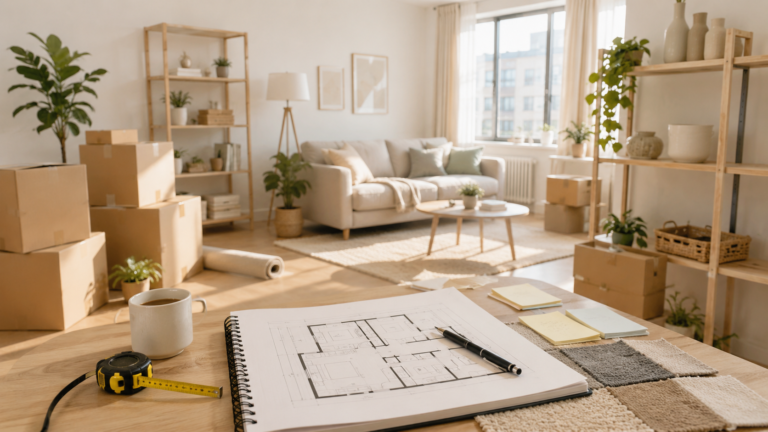
This guide treats small apartment decorating on a budget as a genuine planning problem — not just a list of cheap ideas, but an actual spending plan with priorities, sequencing, and specific dollar guidance for where money makes the biggest visible difference and where it doesn’t.
The approach: figure out your total realistic budget, then allocate it across a priority order that reflects what actually changes how a room looks and feels, room by room. Whether your total budget is $200 or $2,000, the sequence and proportions below scale to fit.
The Budget Planning Framework
Before any specific ideas, here’s the framework that makes budget decorating actually work rather than just feel frugal.
Step 1: Set a Real Number
Decide on a total budget for the apartment, and be honest about what’s realistic rather than aspirational. This number should account for the fact that you’ll likely spend it over weeks or months, not all at once — budget decorating almost always works better as a gradual process than a single shopping trip.
Step 2: Rank Rooms by Impact, Not Size
Not every room deserves equal budget share. The living room and bedroom typically deserve the largest proportion because they’re used the most and seen the most (by you and by guests). The kitchen and bathroom, in a rental especially, usually need less decorating investment because structural elements (cabinets, fixtures) can’t be changed anyway — the money there goes further on smaller, targeted changes.
A reasonable default split for a total decorating budget: 35% living room, 30% bedroom, 15% kitchen/dining, 10% bathroom, 10% entryway and miscellaneous. Adjust based on which rooms you actually spend time in and which currently bother you most.
Step 3: Within Each Room, Follow the Same Priority Order
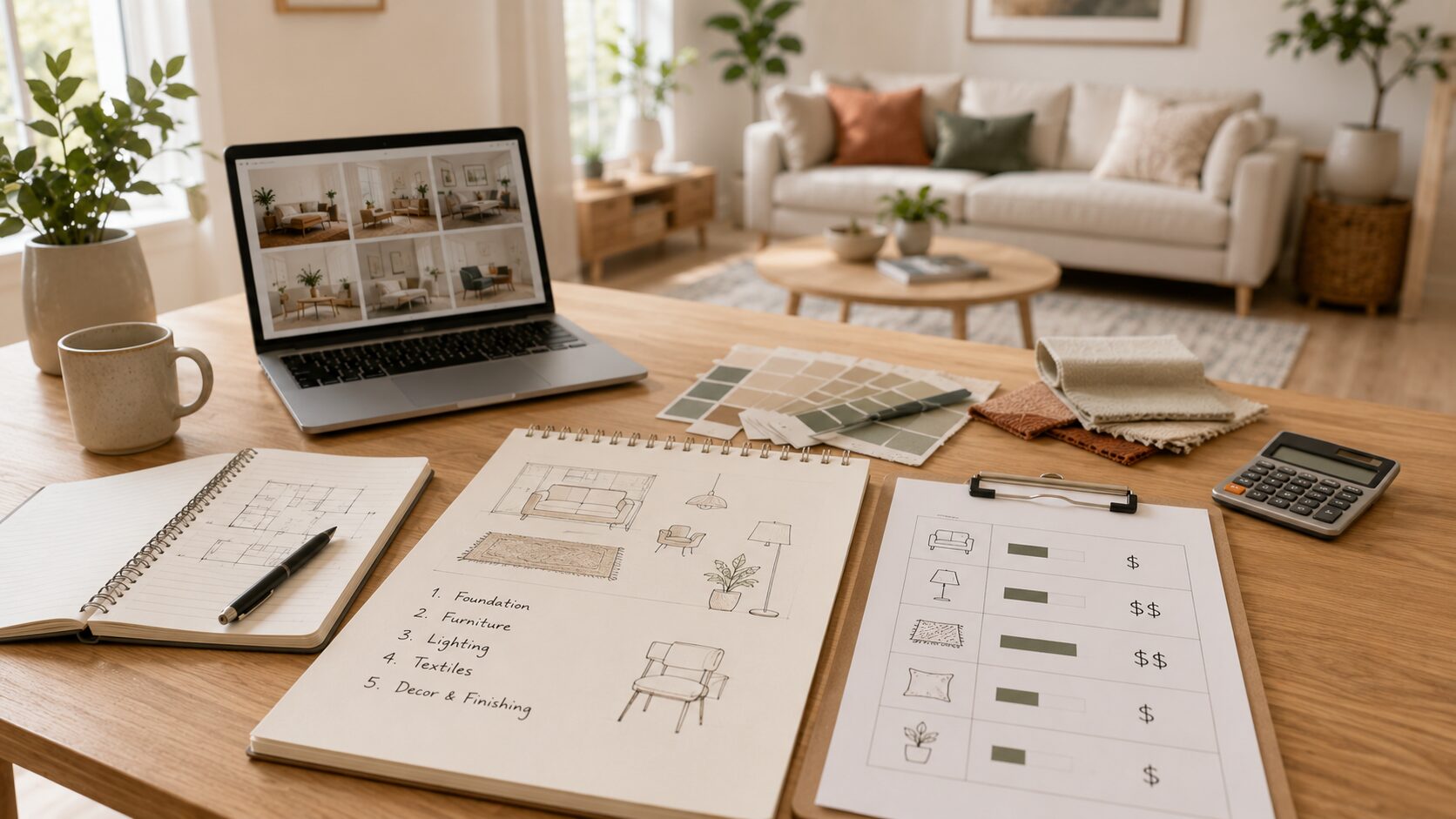
This is the part most budget guides skip. Within any single room, spend in this order for maximum visible impact per dollar:
- Lighting (bulbs first, fixtures second) — changes the entire feel of the room for minimal cost
- The largest textile (rug for living areas, bedding for the bedroom) — the biggest visual surface after furniture itself
- One anchor piece if genuinely needed (a chair, a piece of art, a lamp) — something that gives the room a focal point
- Smaller styling layers (cushions, smaller objects, plants) — the finishing details that most people want to buy first but that have the least impact without the foundation already in place
Buying smaller styling items before the lighting and textiles are addressed is the single most common budget decorating mistake — it’s satisfying in the short term (shopping feels productive) but produces a room that still doesn’t look finished because the foundational elements were skipped.
Small Apartment Decorating Ideas on a Budget: Living Room
Following the priority order above, here’s how it plays out in a living room with a modest budget.
Lighting First: $15–$40
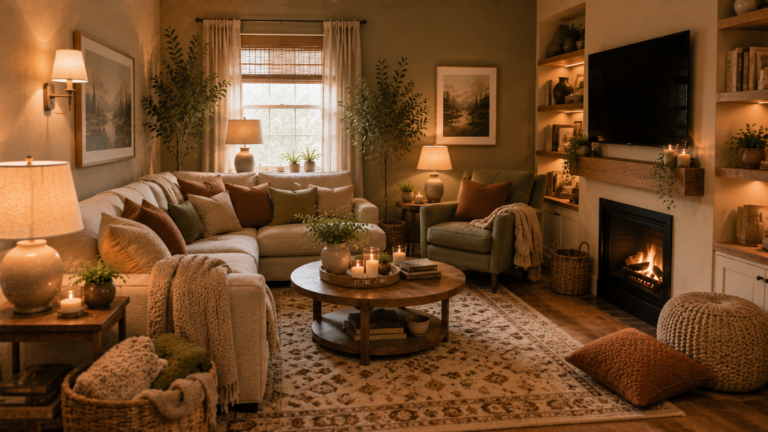
Replace every bulb in the room with warm white (2700K) LEDs. This is genuinely the highest-impact, lowest-cost change available in any room, and it’s the one most people skip because it doesn’t feel like “decorating.” A living room lit by cool white bulbs looks clinical regardless of what furniture is in it; the same room under warm light looks inviting immediately.
If the room has only one overhead fixture, add one affordable floor lamp ($25–$50 at most budget retailers) to create a second light source. Two light sources at different heights transform a room’s atmosphere more than almost any other single change at this price point.
The Rug: $50–$150
A properly sized area rug is the next priority, because it does more to make a living room look “finished” than almost anything else. The mistake to avoid: buying a rug that’s too small because it’s cheaper. A too-small rug looks unfinished regardless of price; a properly sized budget rug looks intentional.
Budget rug sources that deliver good value: IKEA (jute and flatweave options are consistently well-reviewed for the price), Rugs USA during sale periods, and Facebook Marketplace for secondhand rugs in good condition — a genuinely underused source for rugs specifically, since people often sell them in great condition when redecorating.
One Anchor Piece: $0–$200
This is the most flexible line item. If your existing sofa and furniture are functional and just need styling, skip this category entirely and put the money elsewhere. If there’s a genuine gap — no seating for guests, no surface for a lamp — this is where a single, well-chosen piece goes.
Secondhand sourcing does the most work here. A quality secondhand armchair, reupholstered or as-is, frequently costs a fraction of a new equivalent and often has better build quality than budget new furniture. Facebook Marketplace, local buy-nothing groups, and estate sales are the most reliable sources.
Styling Layers: $30–$80
With lighting, rug, and any necessary furniture addressed, the remaining budget goes to cushions (two or three, mixing texture), a throw, and one or two plants. This is where the room gets its personality — but only after the foundation makes that personality visible rather than lost in an unfinished room.
Living room total range: $95–$470, depending on how much furniture is genuinely needed versus how much styling alone can accomplish.
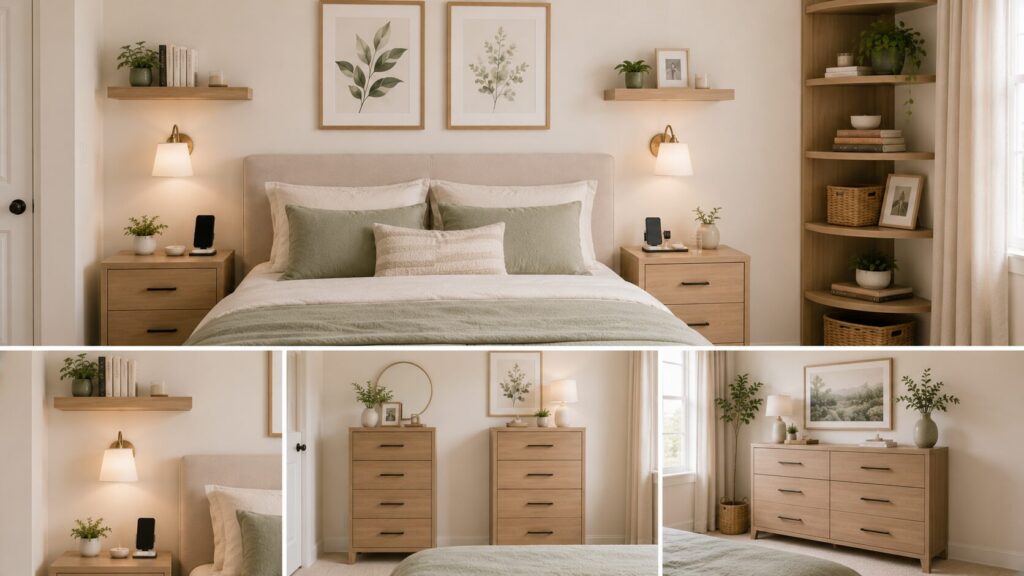
Small Apartment Decorating Ideas on a Budget: Bedroom
The bedroom follows the same logic, with the bed itself taking the place of the rug as the dominant textile investment.
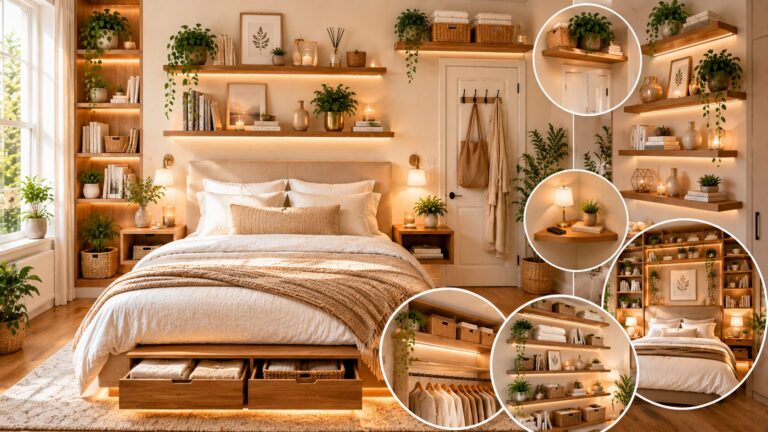
Lighting First: $15–$30
Warm bulbs throughout, plus — if there isn’t one already — a bedside lamp on at least one side of the bed ($15–$25). A bedroom lit only by an overhead fixture never feels restful; a bedside lamp is close to non-negotiable for both function and atmosphere.
The Bed: $40–$100
A properly fitted, good-quality duvet cover in a solid color or subtle texture is the highest-impact bedroom purchase at this budget level. It’s the largest visual surface in the room and the one every other decorating decision responds to. Budget linen-look duvet covers from IKEA, H&M Home, or similar retailers regularly deliver a look well beyond their price point.
Pair the duvet with a folded throw or blanket at the foot of the bed ($15–$30) for texture contrast — this single addition takes a bed from “made” to “styled.”
One Anchor Piece: $0–$150
As in the living room, this category is conditional. A headboard alternative (discussed in earlier guides — a large art piece, a fabric panel, a painted accent behind the bed) falls here if the room currently lacks one. If the bed already has a proper headboard and frame, skip this and redirect the budget.
Styling Layers: $20–$50
Two or three decorative pillows in varied sizes, a small plant or two for the nightstands, and — if budget allows — a small framed print or two for the wall. These finishing touches complete the room once the bed and lighting are handled.
Bedroom total range: $75–$330, with the bed styling ($40–$100) being the one line item that should never be skipped regardless of overall budget size.
Small Apartment Decorating Ideas on a Budget: Kitchen and Dining
Kitchens and dining areas in rentals have real limits on what decorating can achieve — you can’t move cabinets or replace countertops — so the budget here goes toward changes with disproportionate visual impact relative to their structural limitations.
Hardware: $30–$100
New cabinet and drawer pulls are the highest-impact kitchen change available at any budget level. A full kitchen’s worth of hardware (12–20 pieces for a typical small apartment kitchen) runs $30–$100 depending on the style chosen, and the visual transformation is significant enough that it’s worth prioritizing over almost anything else in this room.
Keep the original hardware in a labeled bag for reinstallation at move-out if renting.
Counter Styling: $10–$30
Clearing the counters of everything non-essential costs nothing and improves the kitchen’s look immediately. Beyond that, a small plant, a simple oil and vinegar set in matching bottles, or a wooden cutting board displayed upright add intentional styling to what’s left visible.
The Dining Surface: $15–$40
A table runner and a simple centerpiece (two candlesticks, a small plant, or a low bowl) transform a bare dining table for very little money. This is one of the most disproportionately effective budget decorating moves available — the visual difference between a bare table and a styled one is significant relative to the cost.
Kitchen/dining total range: $55–$170
Small Apartment Decorating Ideas on a Budget: Bathroom
Bathrooms in rentals have the tightest structural constraints of any room, but the budget decorating opportunities that remain are genuinely effective.
Textiles: $20–$50
A new shower curtain (if the bathroom has a tub/shower combo), a bath mat, and one or two hand towels in a coordinated color transform a bathroom’s feel more than almost any other change at this budget level, because textiles are often the only thing in a rental bathroom you fully control.
Small Fixtures: $15–$40
A soap dispenser, a small tray for counter organization, and updated shower curtain hooks (if applicable) round out the styling for very little additional cost. These small, coordinated objects make the bathroom look considered rather than just functional.
Bathroom total range: $35–$90
Small Apartment Decorating Ideas on a Budget: Entryway
Often skipped in budget planning, but genuinely worth a small allocation because it’s the first impression of the entire apartment.
The Essentials: $20–$70
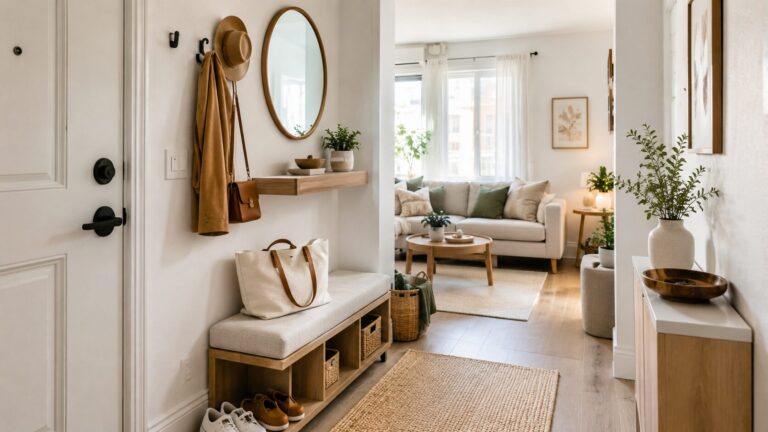
A mirror (thrift stores are the best source — $5–$15 for something with real character), a hook or two for bags and coats ($10–$20), and a small plant ($5–$15) cover the entryway’s essential decorating needs for well under $100 total, often closer to $30–$50 with thrift sourcing.
Entryway total range: $20–$70
Sourcing Strategy: Where Budget Decorating Money Goes Furthest
Prioritize Secondhand for Furniture and Frames
The highest-value budget decorating category, across every room, is secondhand furniture and framed items. New furniture at budget price points is almost always lower quality (particleboard rather than solid wood, thinner fabric, less durable frames) than equivalent secondhand pieces, which were often built to a higher standard even at modest original price points.
Thrift stores, estate sales, and local online marketplaces (Facebook Marketplace, Nextdoor, local buy-nothing groups) consistently deliver the best value-to-quality ratio for chairs, side tables, frames, mirrors, and lamps.
Buy New for Textiles and Lighting
Textiles (rugs, bedding, curtains) and light bulbs are the categories where new budget retail generally makes more sense than secondhand — hygiene and wear considerations for textiles, and simple availability for the specific bulb type and temperature needed for lighting.
IKEA, H&M Home, Target, and similar budget-friendly retailers offer consistently reasonable quality in these categories at accessible price points.
Time Purchases Around Sale Cycles
Major home goods sales cluster around predictable times: January (post-holiday clearance and “New Year, new home” promotions), Memorial Day and Labor Day (US home goods sale weekends), and Black Friday/Cyber Monday. Planning larger purchases (a rug, a piece of furniture) around these windows can meaningfully stretch a decorating budget without changing what you buy — only when you buy it.
What NOT to Spend Budget Decorating Money On
Just as important as knowing where to spend is knowing where budget decorating money is commonly wasted.
Trendy decorative objects with no lasting function. A decorative item that’s purely trend-driven (a specific shape or motif popular for one season) rarely earns its cost relative to something with lasting visual or functional value.
Cheap versions of structural furniture. A budget sofa or bed frame made from low-quality materials often costs more over time than saving slightly longer for a better one, because it wears out and needs replacing sooner. If the budget genuinely can’t stretch to a quality structural piece, secondhand sourcing (discussed above) is almost always the better route than new-and-cheap.
Multiple small decorative items bought impulsively. A collection of small, inexpensive objects purchased one at a time, without a plan, adds up in cost and in clutter without producing the cohesive look that a smaller number of intentionally chosen items would achieve.
Matching sets. Buying an entire matching furniture or decor set (a coordinated bedroom set, a matching living room collection) often costs more than assembling the same rooms piece by piece from varied sources, and the result frequently looks less considered — matching sets read as “furnished,” not “decorated.”
Quick Reference: Small Apartment Decorating Budget Plan
Suggested room allocation (percentage of total budget):
- Living room: 35%
- Bedroom: 30%
- Kitchen/dining: 15%
- Bathroom: 10%
- Entryway: 10%
Priority order within every room:
- Lighting (bulbs, then fixtures)
- Largest textile (rug or bedding)
- One anchor piece, only if genuinely needed
- Styling layers (cushions, plants, small objects)
Approximate total cost by scenario:
- Minimal budget (styling only, existing furniture kept): $200–$400 for the full apartment
- Moderate budget (lighting, textiles, some furniture gaps filled): $500–$900
- Fuller budget (lighting, textiles, one to two furniture pieces per main room): $900–$1,500+
Sourcing by category:
- Secondhand: furniture, frames, mirrors, lamps (bases especially)
- New: textiles (rugs, bedding, curtains), light bulbs
- Sale timing: January, Memorial Day, Labor Day, Black Friday for larger purchases
Conclusion
Small apartment decorating ideas on a budget work best as a plan, not a shopping list. The order money gets spent in — lighting first, then the largest textile, then any genuinely necessary furniture, then styling layers — matters as much as the total amount spent, and following that order is what separates a budget apartment that looks decorated from one that just has some new things in it.
The room-by-room allocation gives structure to a process that otherwise feels overwhelming: rather than trying to decorate the whole apartment at once, work through one room at a time, in priority order, spending only what that room’s allocation supports before moving to the next.
None of this requires a large total budget. A genuinely well-decorated small apartment, built this way, can come together for a few hundred dollars spread thoughtfully — or scale up proportionally with a larger budget without changing the underlying logic.
Start with the room that bothers you most, or the one you spend the most time in. Address its lighting first, even though it feels like the least exciting purchase. Then move through the priority order. By the time you reach the styling layer, the room will already look considerably better — and the smaller decorative choices will finally have a finished foundation to complete rather than compensate for.
Frequently asked questions:
How much does it cost to decorate a small apartment on a budget?
A genuinely well-decorated small apartment on a minimal budget (keeping existing furniture and focusing on lighting, textiles, and styling) typically runs $200–$400 total. A moderate budget that fills some furniture gaps and adds more complete styling across every room runs $500–$900. A fuller budget that includes one or two new furniture pieces per main room typically runs $900–$1,500 or more. The specific total matters less than the allocation — spending in the right order (lighting, then textiles, then furniture, then styling) produces a better result than the same total spent without a sequence, regardless of which budget tier you’re working within.
What should I prioritize when decorating a small apartment on a tight budget?
Lighting first, always — warm white bulbs (2700K) throughout cost $15–$30 for a full apartment and produce the highest visible impact per dollar of any decorating change. After lighting, the largest textile in each main room (a properly sized area rug for the living room, a quality duvet cover for the bedroom) does more to make a room look finished than any other single purchase. Only after these two categories are addressed should budget go toward furniture gaps or smaller decorative styling — buying decorative objects before lighting and textiles are handled is the most common reason a decorated room still doesn’t look finished.
Is it cheaper to buy furniture new or secondhand for a small apartment?
Secondhand is almost always the better value for furniture, frames, mirrors, and lamps specifically. Budget new furniture typically uses lower-quality materials (particleboard rather than solid wood, thinner fabric) than equivalent secondhand pieces, which were often built to a higher original standard even at modest prices when new. Thrift stores, estate sales, and online marketplaces like Facebook Marketplace consistently deliver better quality-to-cost ratios than new budget retail for these categories. The exception is textiles (rugs, bedding, curtains) and lighting components like bulbs, where new budget retail generally makes more sense for hygiene, wear, and availability reasons.
How do I decorate a small apartment without buying a lot of things?
Focus spending on foundational elements — lighting and the largest textile in each room — rather than accumulating many smaller decorative objects. A room with excellent lighting, a properly sized rug or well-styled bed, and just two or three carefully chosen accent pieces (a plant, a throw, one piece of art) looks more considered than a room with many inexpensive objects scattered across every surface. “Shopping your own home” — moving existing items between rooms to find better placements — also reduces the total number of new purchases needed while still producing visible improvement.
What decorating mistakes waste money in a small apartment?
The most common budget-wasting mistakes are: buying smaller decorative objects before addressing lighting and the room’s largest textile (which means the foundation is still missing even after spending money); choosing trendy items with no lasting function or appeal; buying cheap versions of structural furniture (a budget sofa or bed frame) that wear out and need replacing sooner than a better-made secondhand equivalent would have; and purchasing matching furniture or decor sets, which often cost more than assembling pieces individually and tend to look less personal and considered than a room built piece by piece from varied, intentional sources.