10×10 Bedroom Layout Ideas: 12 Smart Ways to Arrange a Small Square Room
A 10×10 bedroom is exactly 100 square feet. That sounds like it might be workable — until you put a bed in it and realize the bed alone eats up roughly a quarter of the floor space.
This is the defining challenge of a 10×10 room: it’s square. Not narrow, not awkwardly shaped, just an honest square. And squares are actually harder to work with than most people expect. There’s no obvious “long wall” to anchor furniture against. Every wall is the same length. The room resists the default bedroom layout — bed centered on one wall, dresser opposite — because that arrangement often leaves you with almost no usable floor space and a path from door to closet that’s an obstacle course.
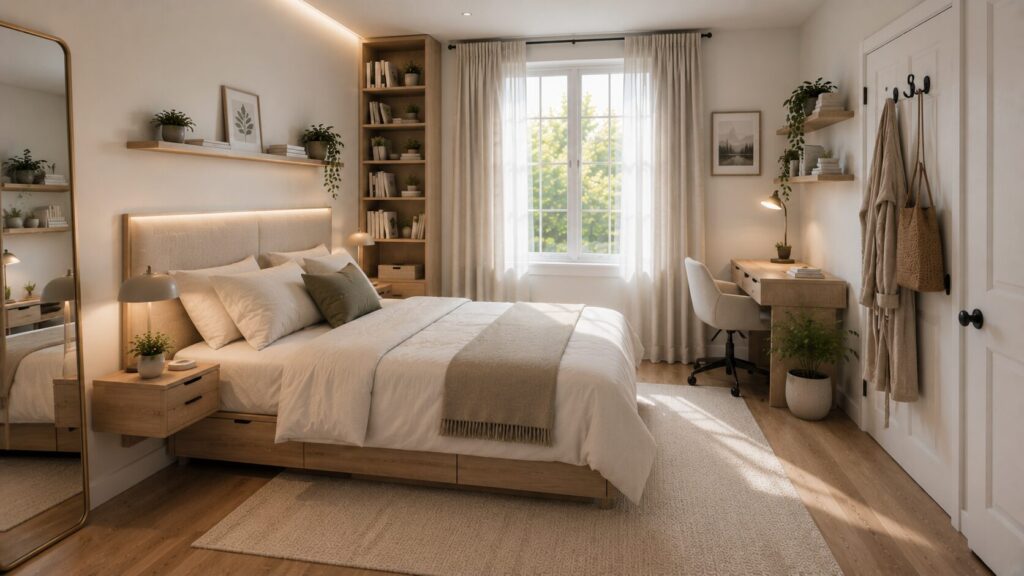
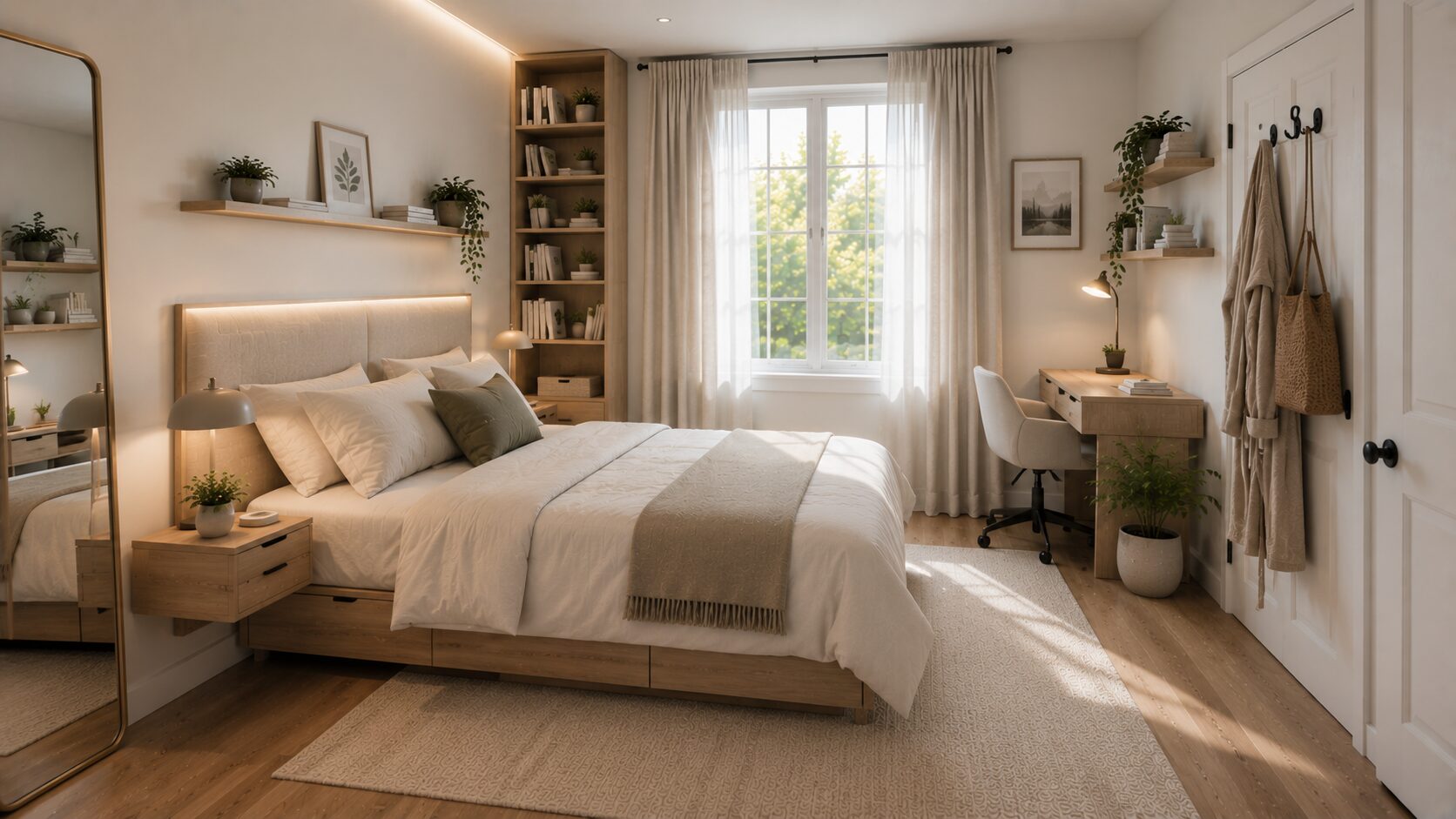
The good news is that a 10×10 bedroom layout, done deliberately, can be genuinely comfortable and functional. People live well in smaller spaces than this. The key is making intentional decisions about what goes in the room, where it goes, and how much space you leave clear.
This guide covers 12 layout ideas and design strategies specifically for 10×10 bedrooms — from bed placement options to vertical storage solutions to the furniture choices that work in a square room and the ones that don’t.
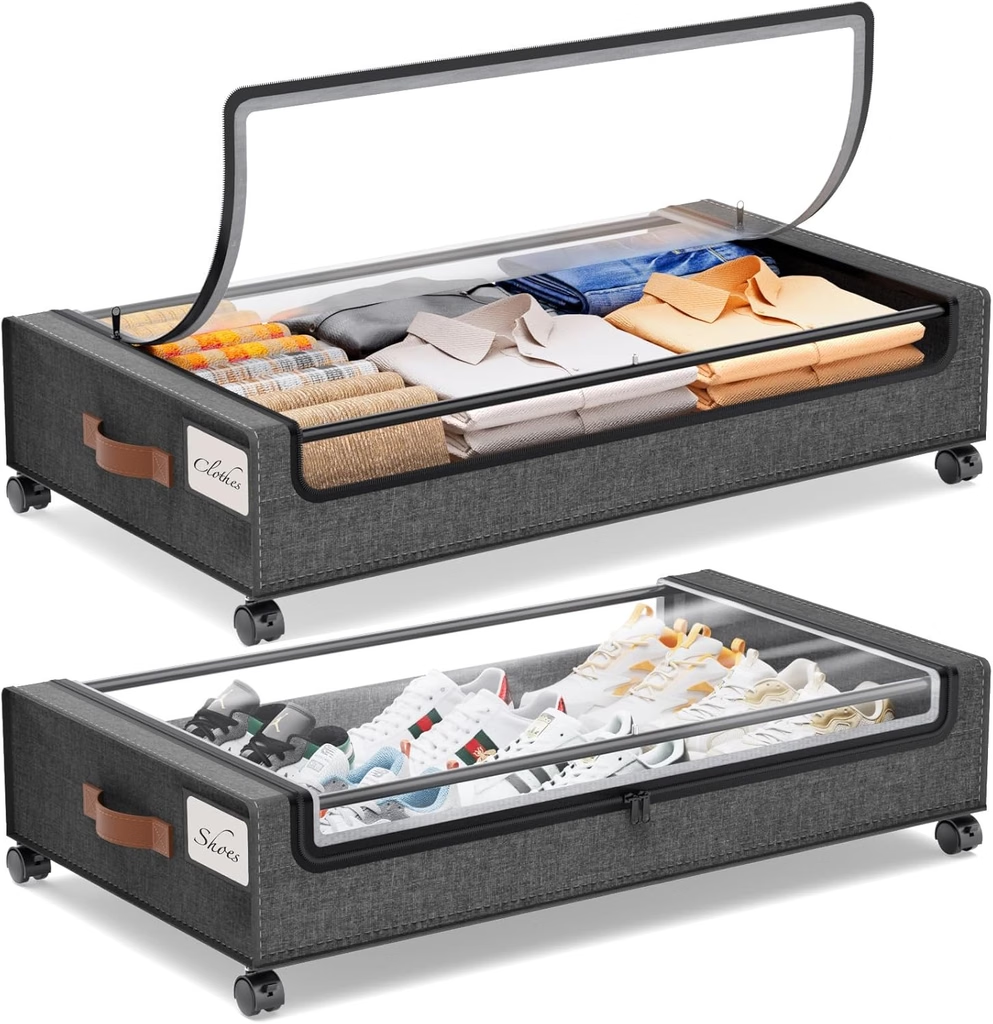
Yecaye Under Bed Storage with Wheels
Pack of 2 Under Bed Storage organizers for shoes, clothes, blankets etc.
Understand Your Room Before You Rearrange Anything
A 10×10 room sounds straightforward to measure, but the real dimensions that matter go beyond the floor area.
Before you plan any layout, note:
- Door swing direction and clearance — a standard interior door needs at least a 30-inch arc. If the door swings into the room, it immediately limits where furniture can go on that wall.
- Window placement and height — windows determine where natural light enters and where you can (and can’t) push tall furniture.
- Closet location and type — a sliding-door closet requires clear access across its full width at all times. A hinged door needs swing clearance. Built-in wardrobes with no door are the most layout-flexible.
- Outlet and switch locations — these affect where lamps, devices, and bedside tables can realistically go.
- Ceiling height — standard 8-foot ceilings are fine. Lower ceilings (7 feet) change what vertical storage is practical.
Sketch a rough floor plan on paper with these elements marked before you start moving furniture. Even a simple hand-drawn sketch saves a lot of physical lifting later.
10×10 Bedroom Layout Ideas: 12 Approaches That Work
Layout 1: Corner Bed Placement
Placing the bed in a corner — head of the bed against one wall, one side against an adjacent wall — frees up the maximum amount of open floor space in the center and opposite corners of the room.
This is the most space-efficient layout for a 10×10 bedroom, but it comes with one trade-off: one side of the bed is against the wall, which means someone sleeping on the inside has to climb over the outside person to get out. It works best for single sleepers or couples who don’t mind the arrangement.
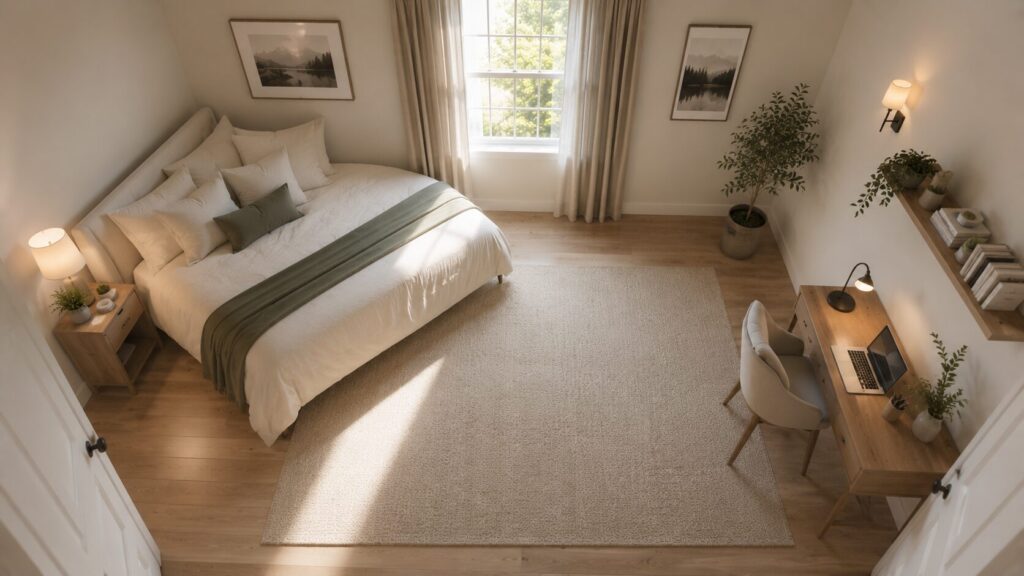
The corner placement opens up space for a small desk, a dresser, or a reading chair in the diagonal corner — uses you simply don’t have in a more traditional centered layout.
Layout 2: Centered Bed on the Main Wall
The most traditional approach places the bed centered against the wall opposite the door, with matching nightstands on each side. In a 10×10 room with a full or queen bed, this usually leaves about 3 feet of clearance on each side, which meets the minimum recommended walking clearance of 24–36 inches.
This layout works cleanly when the closet is on one of the side walls. It becomes problematic when the door and closet are both on the same wall as the bed — the traffic path through the room gets complicated.
For this layout to succeed in a 10×10 room, the bed size matters a lot. A full bed (54 inches wide) leaves more side clearance than a queen (60 inches wide). A king bed (76 inches wide) simply doesn’t work in a centered layout in a 10×10 room without leaving uncomfortably narrow passes on each side.
Layout 3: Bed Along the Long Diagonal
This is less conventional but highly effective in square rooms: angling the bed in a corner at 45 degrees rather than flat against a wall. The head of the bed sits in the corner, angled outward into the room.
This creates an interesting focal point and opens up two corner zones on either side of the bed that work well for small nightstands or floor lamps. It’s a more design-forward approach that makes the room feel less rigid and more intentional.
The main limitation is that a diagonal placement uses more floor space than a corner or wall-aligned placement, so it works best when you’re prioritizing aesthetic impact over maximum floor clearance.
Layout 4: Loft Bed for the Full 100 Square Feet
A loft bed raises the sleeping surface 5–6 feet off the ground on a sturdy frame, leaving the full floor space beneath it for a desk, dresser, seating, or all three.
In a 10×10 bedroom, a loft bed is the only way to truly have two functional zones — sleeping and working, or sleeping and dressing — without compromising either. The floor beneath becomes its own room.
This is the go-to layout for children’s rooms, college students, and young adults who need a home office in their bedroom. For adults, the ceiling height matters: you need at least 7.5 feet to sit up in a loft bed comfortably; 8+ feet is more comfortable for most people.
The visual caveat: loft beds raise the visual center of the room and require solid construction. A wobble at 5 feet off the ground is not something you want. Invest in a quality metal or solid wood frame rather than a budget flat-pack option.
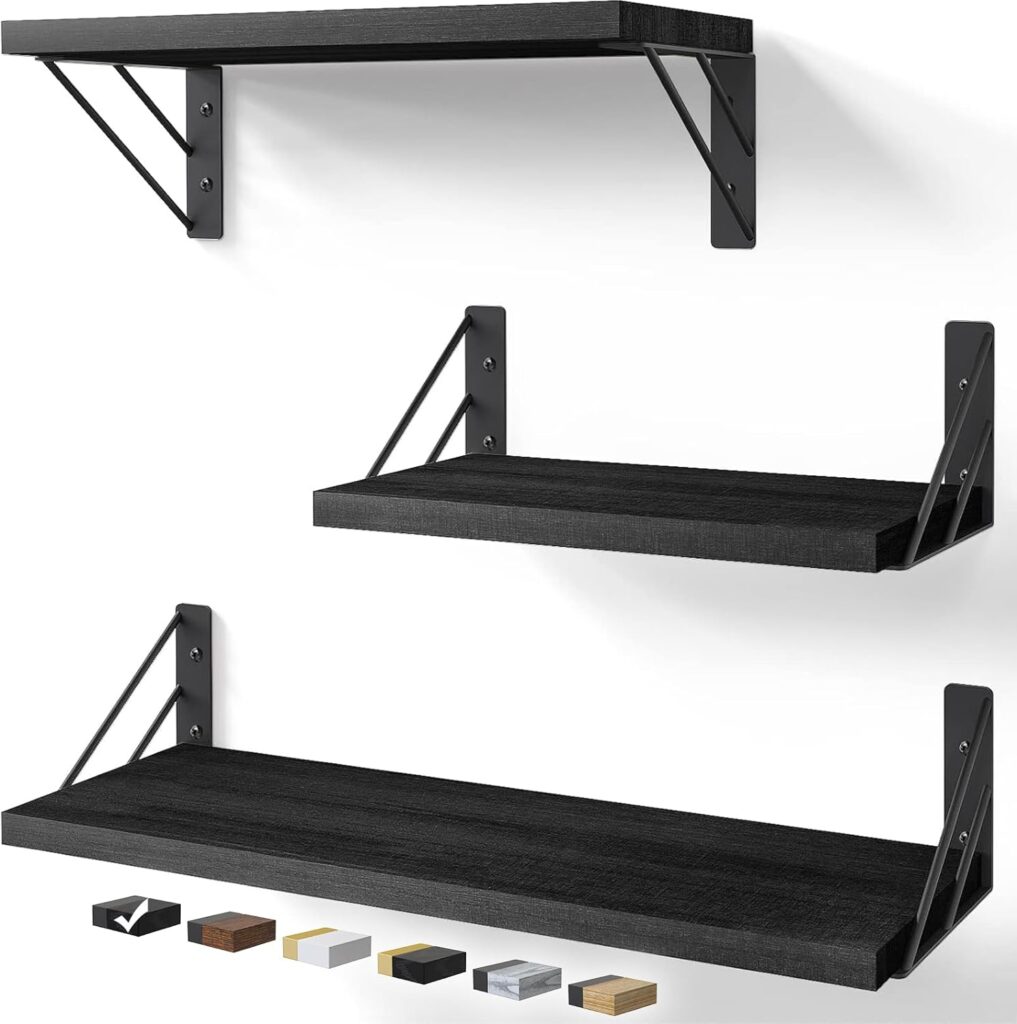
BAYKA Wall Mounted Floating Shelves
Floating Display & Storage Shelf, Holds Up to 40 lbs, Rustic Wood Wall Shelf, Bathroom Organizer Sets, Hanging Bookshelf
Layout 5: Murphy Bed for Maximum Daytime Space
A Murphy bed (wall bed) folds flat against the wall when not in use, converting the bedroom into a usable daytime space for work, exercise, or just open floor area.
In a 10×10 room, this is genuinely transformative. When the bed is folded up, the room functions like a home office or sitting room. When it folds down, it becomes a bedroom. The same 100 square feet does double duty.
Modern Murphy bed systems often include integrated shelving or a desk on the cabinet face that remain usable even when the bed is down. These built-in versions are the most practical choice — standalone Murphy frames without integrated storage don’t solve the storage problem that comes with a small bedroom.
The investment is higher than other options (quality systems start around $1,000–$3,000 installed), but for a room that needs to serve multiple functions, few solutions come close to the impact.
Layout 6: Daybed or Sleeper Sofa for Dual-Function Rooms
If the 10×10 bedroom needs to double as a guest room, home office, or reading room, a daybed or sleeper sofa is worth considering instead of a traditional bed frame.
A twin daybed pushed against the wall reads as a sofa during the day and converts to a sleeping surface at night. It takes up significantly less floor space than a full or queen bed and frees up the center of the room for a desk or seating area.
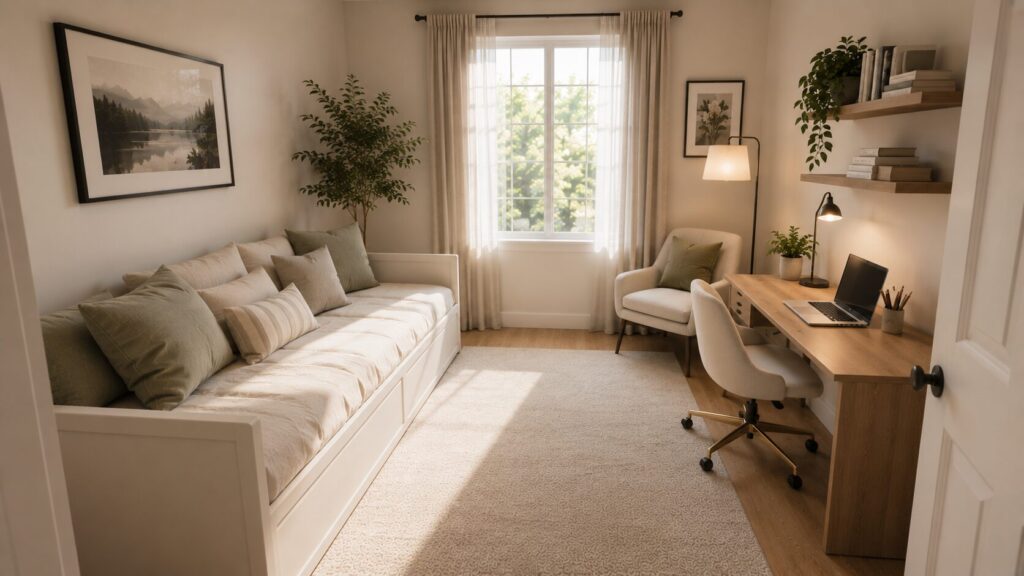
A quality daybed with a good mattress is genuinely comfortable for a single adult sleeper. For couples or primary sleeping use, it’s a compromise — but as a dual-purpose piece in a room that serves multiple roles, it’s one of the smartest small room layout choices available.
Layout 7: Bed Under the Window
Placing the bed under the window is a layout choice that frees the walls for storage furniture — a dresser, bookcase, or wardrobe can go on the wall opposite the window without blocking light.
The hesitations people have about this placement are usually about light or drafts. In practice, a window with good weatherproofing poses no real draft issue. Natural light from above and behind the bed is actually pleasant for reading. Blackout curtains solve any early-morning sun issue.
The one legitimate concern is a low windowsill — if the sill is lower than the top of the headboard, the window won’t open fully. Measure before committing.
Furniture Selection for a 10×10 Bedroom
Layout is half the equation. Furniture choice is the other half. The wrong pieces will make even a well-planned layout feel cramped.
Bed Size: What Actually Fits
Here’s how each standard bed size plays in a 10×10 room:
- Twin (38″ × 75″) — leaves the most clearance; ideal for children’s rooms or single sleepers who want maximum floor space
- Full/Double (54″ × 75″) — the most versatile option for a 10×10 room; comfortable for single adults, workable for couples who don’t mind closeness
- Queen (60″ × 80″) — fits, but clearances on each side are tight (around 24 inches on each side with a centered placement). Choose carefully.
- King (76″ × 80″) — does not work well in a 10×10 room with a standard layout. Clearances become too narrow to be functional.
Choose a Platform Bed or Storage Bed
Two bed types work especially well in small rooms:
Platform beds sit low to the ground. A lower visual profile makes the ceiling feel higher and the room feel more open. Many platform beds also have a clean, minimal aesthetic that suits small rooms better than ornate four-poster or sleigh designs.
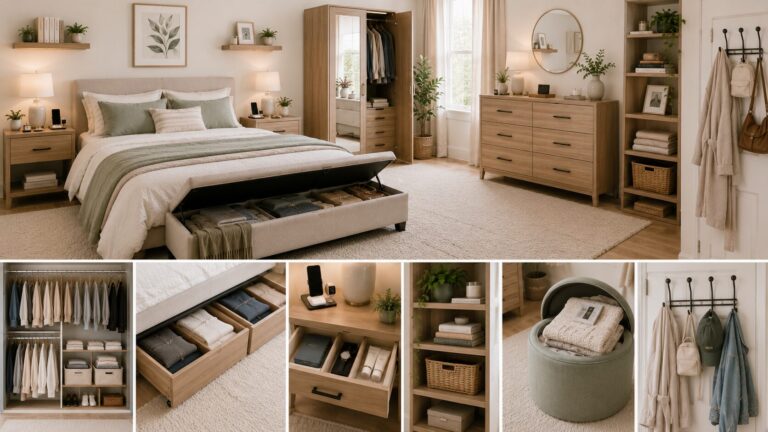
Storage beds (also called ottoman beds) have a lift-up base that reveals large storage space for bedding, seasonal clothing, and anything else that would otherwise need a separate piece of furniture. In a 10×10 room, replacing the need for a dresser or storage ottoman with an integrated storage bed is a significant space-saving move.
Nightstands: Slim or Floating
A full-size nightstand on each side of the bed in a 10×10 room takes up floor space you may not have to spare. Two alternatives:
Floating wall-mounted nightstands — mounted at bed height, these take up zero floor space and can be positioned at exactly the height you want. They also create a cleaner, more open look at floor level.
Narrow slim nightstands (12 inches or less in depth) — these fit in tighter clearances than standard 18–20 inch deep nightstands and are sufficient for a lamp, a phone, and a glass of water.
Skip the Dresser — Or Rethink It
A standard 6-drawer dresser (typically 30″ wide × 18″ deep × 48″ tall) is a significant floor footprint in a 10×10 room. Consider these alternatives:
- A tall, narrow chest of drawers — same storage capacity, much smaller floor footprint
- A storage bed that handles clothing storage so the dresser isn’t needed
- A wardrobe with internal drawers — consolidates hanging and folded storage into one footprint
- Under-bed storage drawers or bins — free-standing drawers on wheels that roll under the bed
The goal is to handle your clothing storage without a piece of furniture that dominates the room.
Vertical Space: The Most Underused Dimension in a 10×10 Room
When floor space is genuinely limited, vertical space becomes your best option. Most 10×10 bedrooms have walls that go unused from about 5 feet up to the ceiling.
Floor-to-Ceiling Shelving
A narrow floor-to-ceiling shelving unit (12 inches deep, 24–30 inches wide) stores an enormous amount without occupying meaningful floor space. Books, baskets, folded items, decor — all of it moves off furniture surfaces and onto walls.
This works in corners especially well. A corner shelf unit uses a space that’s otherwise dead — the corner itself — and doesn’t interrupt the flow of the room.
Wall-Mounted Storage Above the Bed
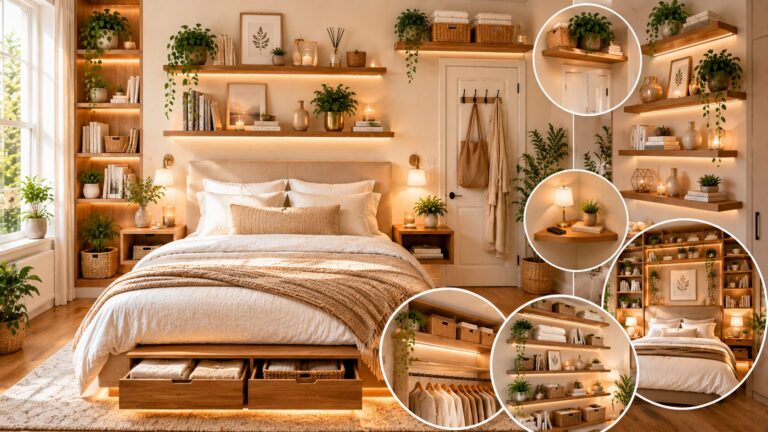
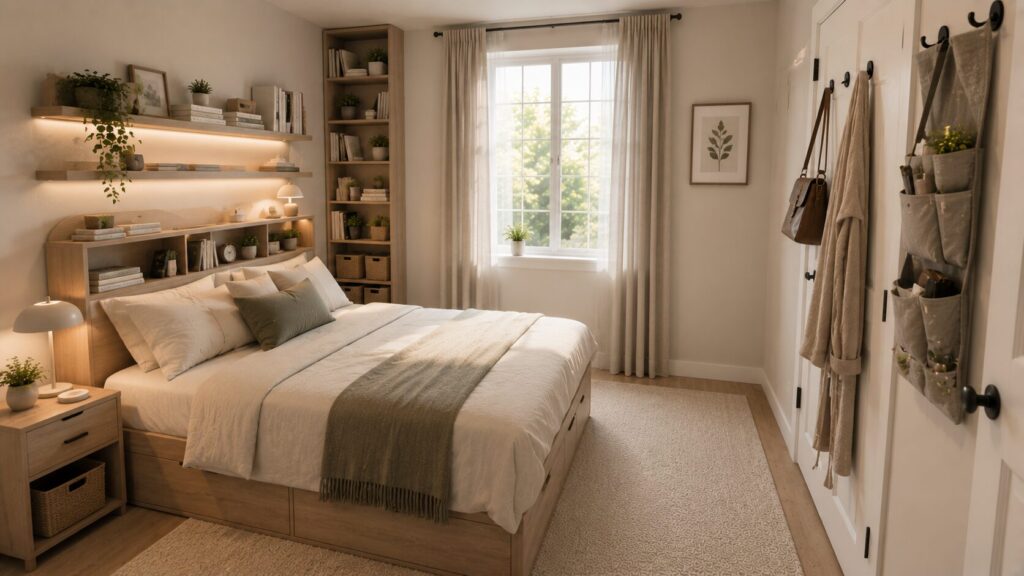
The wall above the bed is frequently blank and completely wasted. A floating shelf or two above the headboard — kept to a manageable height so they don’t pose a hazard — adds a nightstand surface worth of storage on each side without using any floor space.
A full headboard shelf unit (a headboard with integrated shelving) combines the headboard and storage into a single piece, which is one of the most efficient furniture choices for a small bedroom.
Hooks and Over-Door Organizers
The back of the bedroom door, the inside of the closet door, and any blank wall near the entry can hold hooks for bags, tomorrow’s outfit, robes, and accessories. These hold items that would otherwise pile on chairs or the floor without using any furniture footprint.
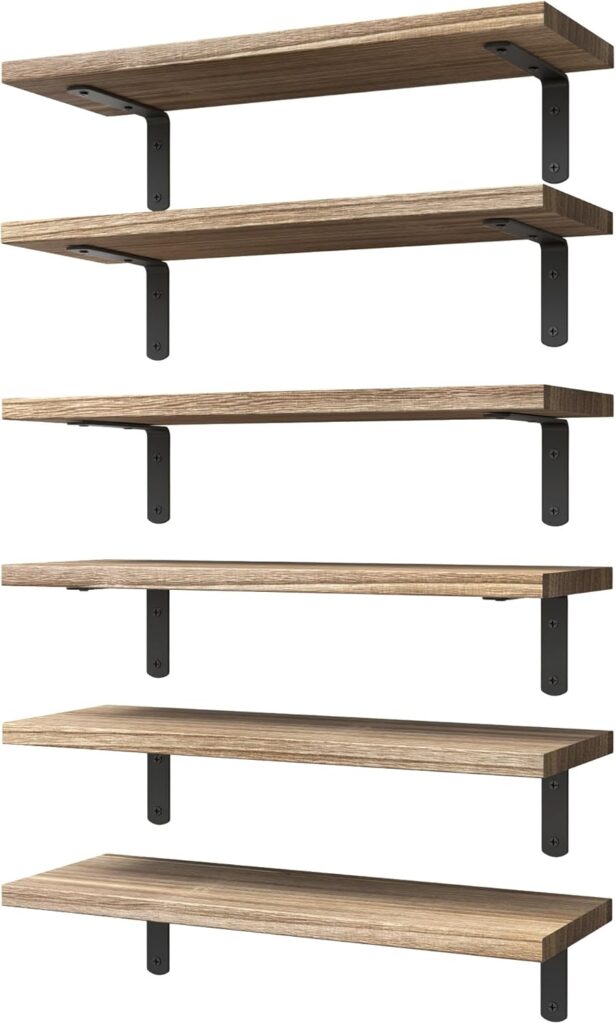
Floating Shelves Set of 6 for Wall Decor & Storage, Black
Wood Farmhouse Book Shelves for Bedroom, Bathroom, Living Room, Kitchen, Office, Laundry Room, Study Room Display, 16.5”
10×10 Room Design: Color, Light, and Visual Tricks
Getting the layout and furniture right is the foundation. Color and light are the finish layer that determines whether the room feels comfortable or claustrophobic.
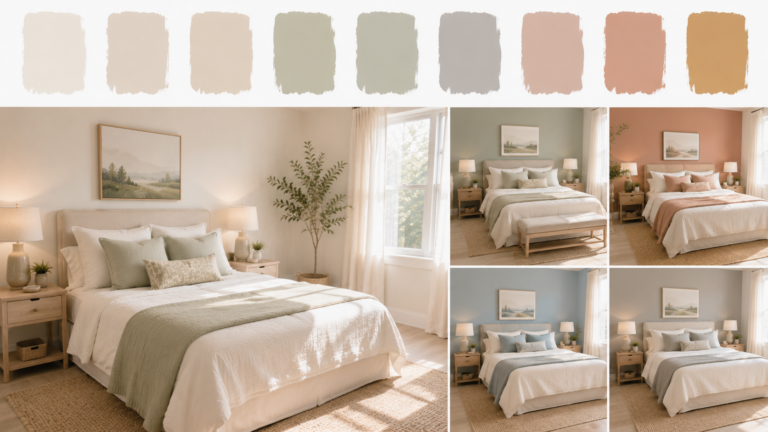
Keep the Palette Simple and Light
In a small square room, too much color contrast creates visual boundaries that define and emphasize the room’s edges. The eye bumps from the dark accent wall to the bright duvet to the warm wood floor and registers each as a separate, close plane.
A simple, low-contrast palette in light, warm neutrals keeps the eye moving through the room without stopping. The room feels more continuous and — by perception — more spacious.
One accent color is fine, kept to pillows, a throw, or small decorative objects rather than entire walls or large furniture pieces.
Use the Ceiling Strategically
A white ceiling in a small room creates a sharp contrast with the walls that draws attention to how low it is. Painting the ceiling the same color as the walls (or just slightly lighter) softens that boundary and makes the room feel taller.
If you want to add visual interest, a subtle ceiling treatment — a simple geometric detail, a mural-style treatment, or even a nice light fixture — draws the eye upward and turns the ceiling from an afterthought into part of the room’s design.
Maximize Natural Light
In a 10×10 room, daylight is the most effective tool for making the space feel open. Anything that blocks it makes the room feel smaller.
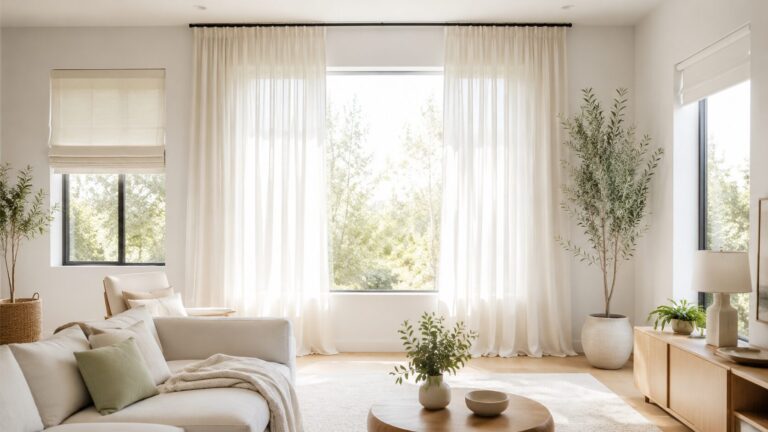
Keep window treatments simple and light-colored. Sheer curtains that let light through even when drawn are ideal for daytime privacy without sacrificing brightness. Hang curtain rods at ceiling height and let panels fall to the floor — this elongates the window visually and makes the ceiling feel higher.
A well-placed mirror facing the window doubles the natural light in the room and creates a sense of depth on the wall it’s mounted to.
Practical Takeaways: Quick Reference for 10×10 Bedroom Layouts
Bed placement options (best to most situational):
- Corner placement — maximum floor space, best for single sleepers
- Centered on main wall — most traditional, requires careful sizing
- Under window — frees walls for storage furniture
- Loft bed — maximum floor function, requires ceiling height
- Murphy bed — maximum dual-use flexibility, higher investment
Furniture that works in a 10×10 room:
- Platform bed or storage bed (twin, full, or carefully chosen queen)
- Floating wall-mounted nightstands
- Tall, narrow chest rather than wide dresser
- Wardrobe with internal organization rather than separate pieces
- Multi-functional ottoman (storage + seating)
Space-creating design moves:
- Light, low-contrast wall color
- Ceiling painted same shade as walls
- Ceiling-height curtain rods with floor-length panels
- Large mirror facing window
- Floor-to-ceiling shelving in corners
- Under-bed storage for out-of-season items
Conclusion
A 10×10 bedroom layout works best when every decision is made with intention — the bed size, the placement, the furniture choices, and even the color on the walls. Nothing in a 100-square-foot room is incidental.
The most important insight is that a square room doesn’t have one correct layout. Corner placement, loft beds, Murphy beds, under-window placement — each one opens up different possibilities depending on who’s using the room and what it needs to do. There’s no universally right answer, but there are wrong ones, and they mostly involve oversized furniture, too many pieces, or layouts that block the natural traffic path through the space.
Start with what the room has to do and who it’s for. Then choose the bed size and placement that serves those needs while leaving functional clearance. Build out from there with furniture that earns its floor space — storage beds, floating nightstands, vertical shelving — and finish with color and light choices that keep the room feeling open.
A well-designed 10×10 bedroom isn’t a compromise. It’s a room that’s been thought through — and that thinking makes all the difference.
FAQ:
What size bed fits best in a 10×10 bedroom?
A full (double) bed is the most practical choice for a 10×10 bedroom. It measures 54 inches wide by 75 inches long, which leaves functional clearance on all sides without dominating the space. A twin works if you want maximum floor space or you’re designing for a child. A queen (60 inches wide) is possible but leaves tight clearances in a centered layout — around 24 inches on each side, which is workable but snug. A king bed is not practical in a 10×10 room under most layout configurations.
How do I fit a desk in a 10×10 bedroom?
The most effective options are: a wall-mounted fold-down desk that tucks flat when not in use, a small corner desk that uses the dead corner space a standard layout ignores, or — if you use a loft bed — a full desk setup beneath the raised bed. Avoid freestanding desks larger than 40 inches wide in this size room; they take up too much floor space and leave you with nowhere to push out your chair. A floating wall desk at the right height with a small shelf above it handles most work-from-bedroom needs efficiently.
Should I put my bed in the corner of a 10×10 room?
Corner placement is the most space-efficient layout for a 10×10 bedroom — it opens up more usable floor space than any other arrangement. The trade-off is that one side of the bed is against the wall, making it less convenient for two people. For single sleepers, it’s often the best layout in the room. For couples, it depends on personal preference. If one person is a lighter sleeper or gets up frequently at night, the inside position against the wall becomes a real inconvenience.
How do I make a 10×10 bedroom feel bigger?
The highest-impact changes are: use light wall colors that reflect rather than absorb light; choose furniture with exposed legs so the floor plane is visible beneath pieces; hang curtains at ceiling height rather than at the window frame; place a large mirror where it reflects the window; eliminate any furniture piece that doesn’t earn its floor space; and use vertical wall space (floating shelves, wall-mounted nightstands, hooks) rather than adding more floor furniture. Together, these don’t change the room’s dimensions — they change how the eye reads those dimensions.
What is the minimum clearance needed around a bed in a small bedroom?
The general guideline is 24 inches (2 feet) minimum on sides you walk along regularly, and 36 inches (3 feet) where the path is more active — such as between the bed and the dresser or between the bed and the door. At 24 inches, the clearance is functional but tight. At 18 inches or less, movement starts to feel genuinely restricted. If your layout leaves less than 18 inches on either side of the bed, consider going down a bed size or switching to a corner placement to reclaim that walking space.