Small Apartment Ideas for Guys – A Practical Guide to a Space That Works
There’s a specific kind of small apartment that a lot of guys end up living in: functional, a little sparse, decorated mostly by accident. A TV, a couch that came from somewhere, maybe some art that’s still leaning against the wall six months after moving in. It works, technically. It’s just not quite finished.
The gap between “this apartment functions” and “this apartment actually feels good to be in” usually isn’t about spending more money or hiring a designer. It’s about making a handful of intentional decisions instead of letting the space accumulate by default.
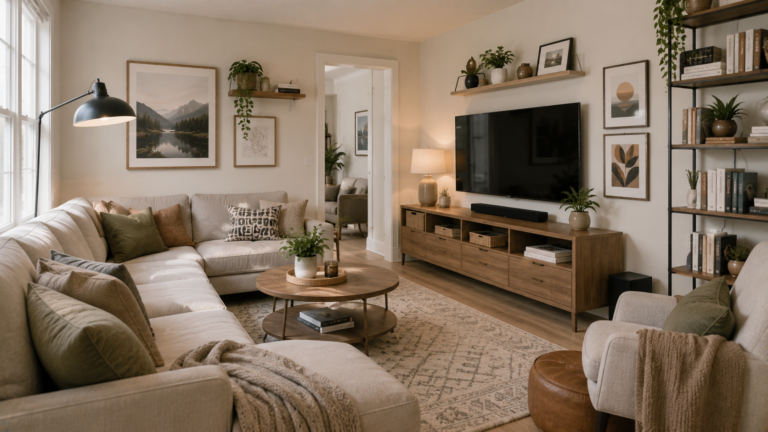
This guide covers small apartment ideas built around what tends to matter most for a lot of guys furnishing a compact space: low-maintenance materials, a workable entertainment setup, smart storage that doesn’t require constant tidying, and a look that feels put-together without requiring hours of decorating research. None of this is about following a rigid “masculine decor” formula — it’s about practical, good-looking choices that hold up to real daily use and don’t take a huge time investment to maintain.
Whether you’re furnishing a first apartment from scratch or finally getting around to fixing up a place you’ve lived in for a while, these ideas apply directly to small footprints where every decision has to earn its space.
Start With What the Room Actually Needs to Do
Before any specific furniture or color decisions, get clear on function — this matters more in a small space than a large one because there’s no room for anything that doesn’t earn its place.
Do you mostly watch sports and movies, or do you host people regularly? Do you work from home and need a real desk setup, or does a laptop on the coffee table cover it? Do you cook enough that kitchen storage matters, or is the kitchen mostly a coffee-and-cereal operation? Is gaming a real priority that needs its own setup, or an occasional activity that can share space with everything else?
The answers determine what actually needs a dedicated spot in a small apartment and what doesn’t. A room designed around an accurate read of how you actually live works better than one built around an idealized version of your routine.
Furniture That Works Hard and Looks Good
The Sofa: Priority Number One
In most small apartment living rooms, the sofa gets more daily use than any other piece of furniture, which makes it worth the largest share of the furniture budget even in a tight overall spend.
For durability and low maintenance, look for:
Performance fabric or leather. Both hold up significantly better than standard cotton or linen upholstery to daily wear, spills, and general use. Performance fabrics (stain-resistant, easy-clean weaves designed for heavy use) have become widely available at mid-range price points and don’t sacrifice comfort for durability the way older stain-resistant options sometimes did. Leather — genuine or a quality faux — ages well, wipes clean easily, and gets better-looking with use rather than showing wear the way some fabrics do.
A darker or mid-tone color. Not because light colors don’t work, but because darker tones (charcoal, deep navy, warm brown) show less visible wear and staining over time in a piece of furniture that gets heavy daily use. This is a practical maintenance decision as much as a style one.
Correct sizing for the room. A sofa between 72 and 84 inches wide fits most small living rooms without overwhelming them. Measure the room and the door/hallway path it needs to travel through before buying — a sofa that doesn’t fit through the door is a genuinely common and entirely avoidable problem.
The Entertainment Setup
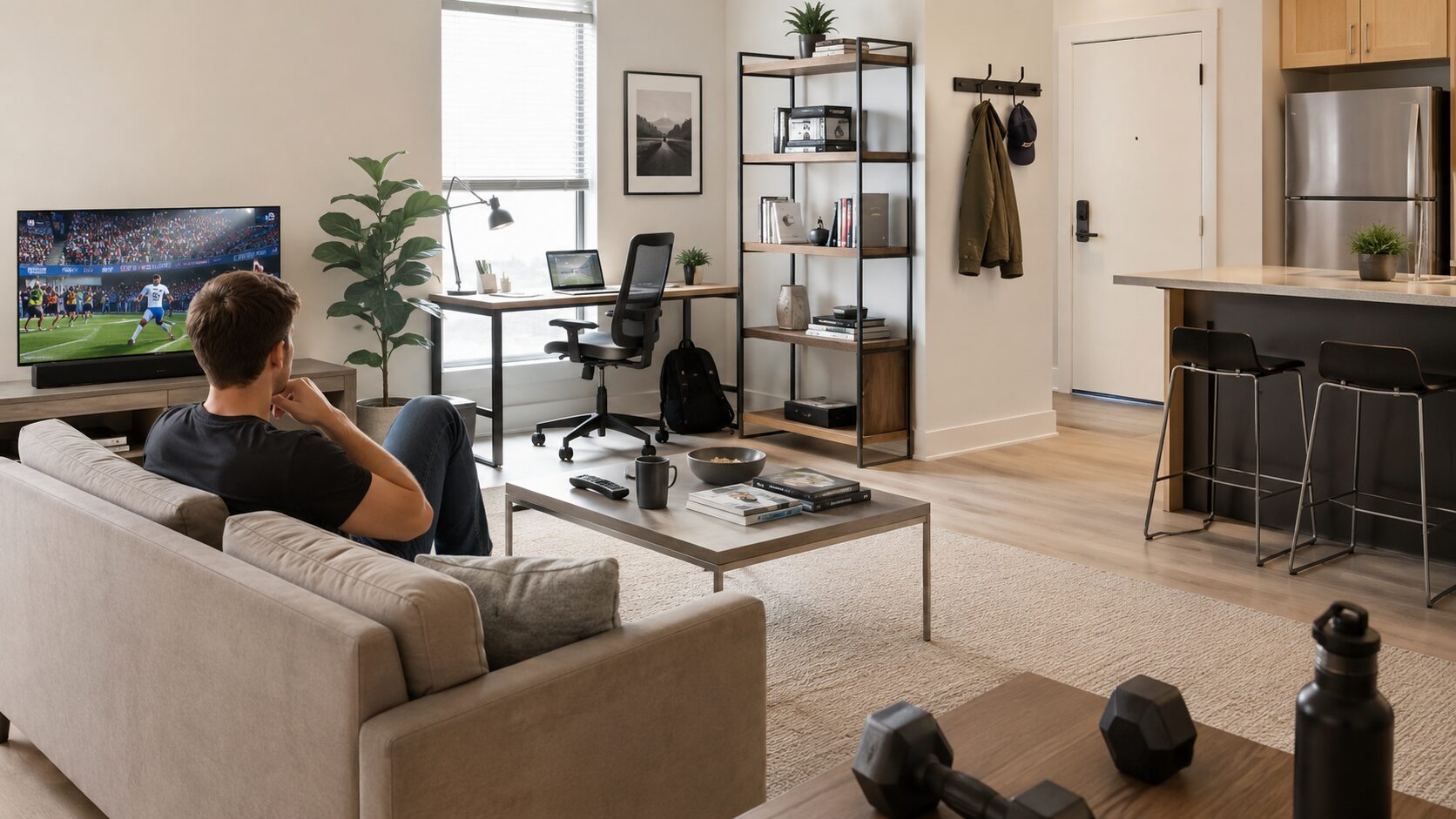
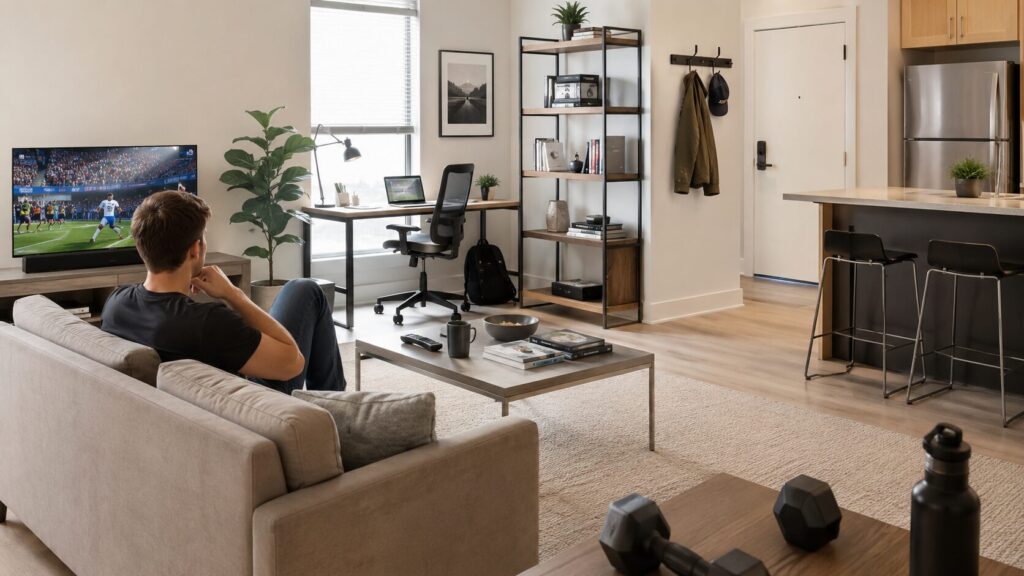
For a lot of small apartments, the TV and media setup is a real focal point, and getting it right matters both functionally and visually.
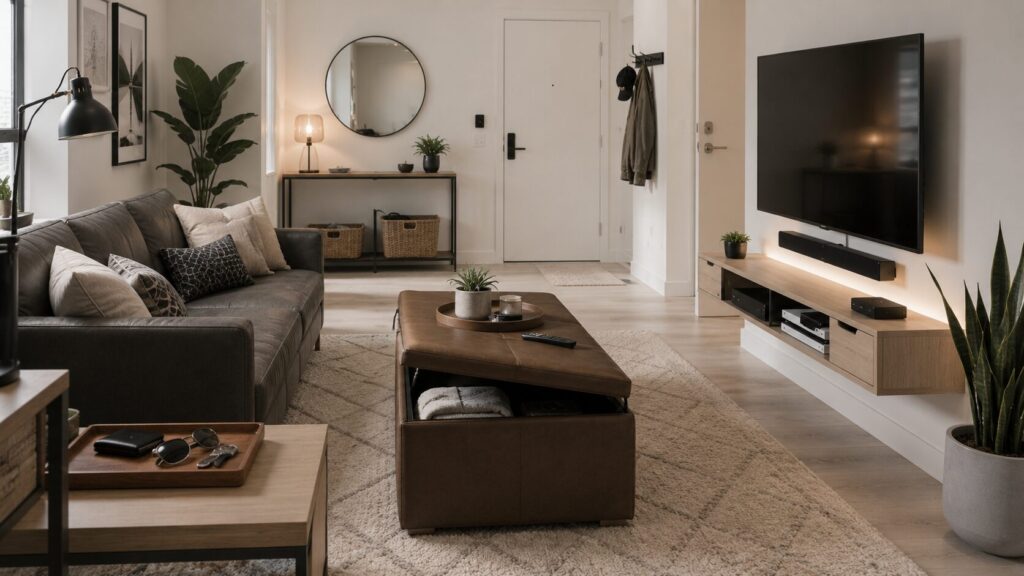
Wall-mount the TV. This single decision eliminates the media console’s floor footprint (typically 20+ inches deep) and lets you set the optimal viewing height regardless of furniture below. A simple tilting or fixed mount costs $30–$80 and takes under an hour to install.
Use a slim console or floating shelf beneath it for equipment, not a bulky media cabinet. A soundbar, a streaming device, maybe a game console — most of this fits on a shelf 10–14 inches deep. A large media cabinet designed for an old-style CRT TV and a stack of DVDs is oversized for what most setups actually need now.
Manage the cables. A cable management sleeve or raceway (a channel that runs cords down the wall from the mounted TV to an outlet or power strip) costs under $20 and makes a genuinely significant visual difference. Exposed cable spaghetti behind a nicely mounted TV undercuts the whole setup.
Storage Furniture That Doesn’t Look Like Storage
A storage ottoman as the coffee table. Handles remotes, gaming controllers, cables, and blankets while still functioning as a normal coffee table and extra seating when people are over. This is one of the most functionally efficient pieces available for a small living room.
A bench or console with drawers by the entry. Keys, wallet, a watch, sunglasses — the daily-carry items that otherwise end up scattered across the kitchen counter get a dedicated spot, which does more for keeping a small apartment looking put-together than almost any decorative choice.
Closed cabinet storage over open shelving for anything visually messy. Open shelving looks good when it’s curated; it looks cluttered fast when it’s holding chargers, mail, and random accumulated stuff. For those categories, closed storage (a cabinet, a drawer, a covered basket) keeps the visual field cleaner without requiring constant tidying discipline.
Small Apartment Ideas: Colour and Materials That Age Well
A Palette That’s Easy to Live With
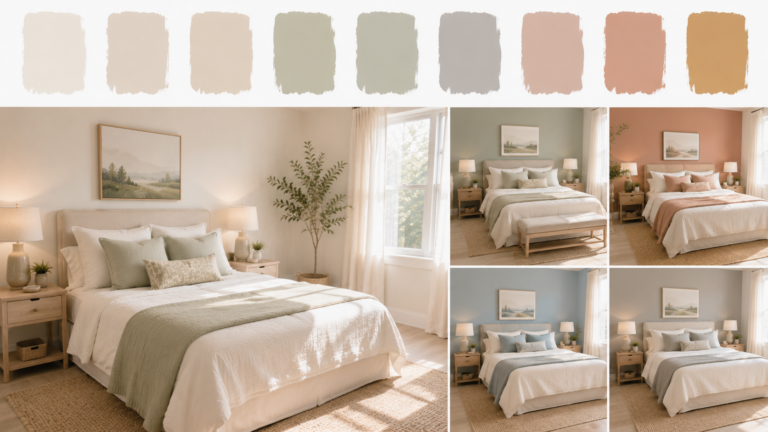
A neutral base — warm grays, charcoal, deep navy, or a warm off-white — paired with natural materials (wood, leather, raw metal) creates a look that’s genuinely low-maintenance to decorate around, because almost anything you add later fits into it without a major rethink.
This doesn’t mean the space needs to be lifeless. One or two deeper accent colors — a forest green, a burnt orange, a deep burgundy — used in smaller doses (a throw, a piece of art, a lamp shade) add real personality without requiring the whole room to be reconsidered if your taste shifts later.
Materials That Don’t Show Wear
Leather and performance fabric, as covered above, for anything that gets regular contact.
Solid wood or metal furniture frames over particleboard or laminate — not just for longevity, but because they genuinely look better as they age rather than looking worn out. A scratch on solid wood can often be sanded and refinished; a scratch on laminate is permanent.
Matte black or brushed metal hardware and fixtures hide fingerprints and daily wear better than polished chrome or brass, which show smudges more visibly.
Darker or patterned rugs in high-traffic areas hide dirt and wear far better than pale, solid-colored rugs, which show every mark within weeks of regular use.
Small Apartment Solutions for the Bedroom
Keep It Simple, But Not Empty
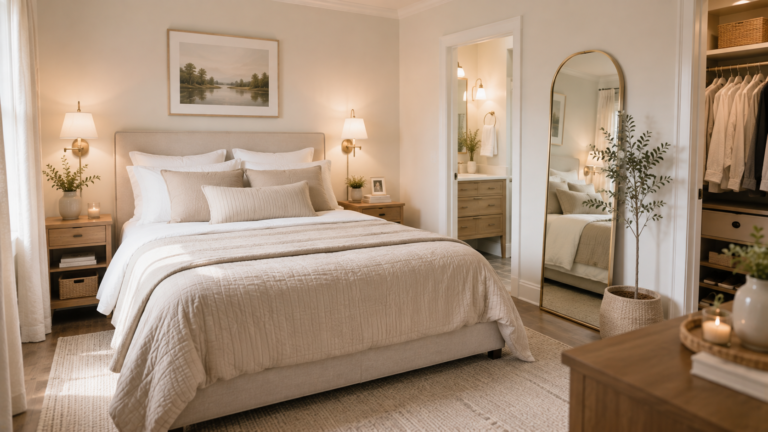
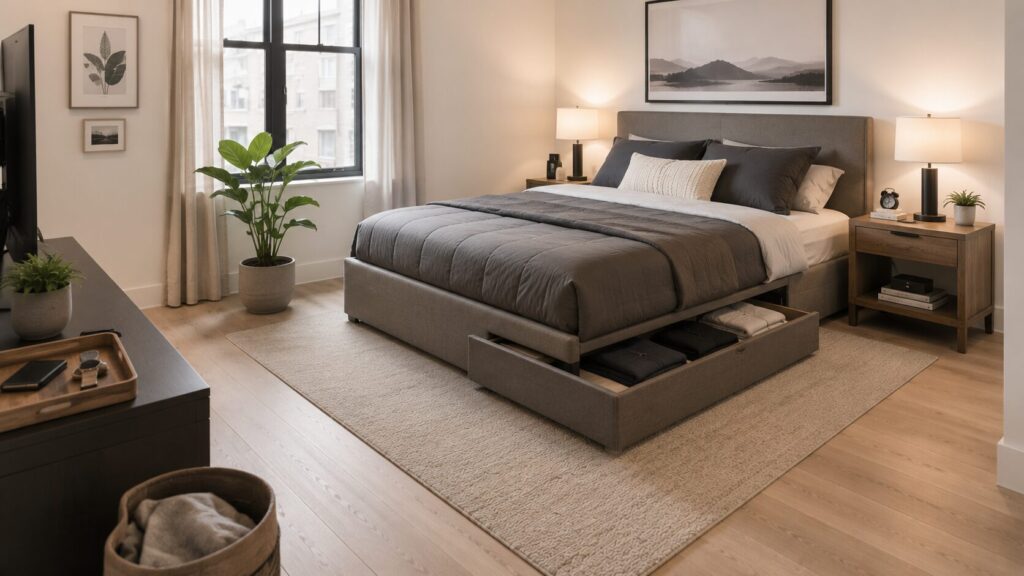
A common small apartment bedroom mistake — for guys specifically, based on what tends to get skipped — is treating the bedroom as purely functional: a mattress, maybe a frame, nothing else. This works, but it doesn’t feel finished, and it’s genuinely easy to fix with minimal effort.
A real bed frame with a headboard (or a headboard alternative — discussed in other guides, like a large piece of art or a simple wood panel) gives the room a visual anchor it doesn’t have with just a mattress and box spring against the wall.
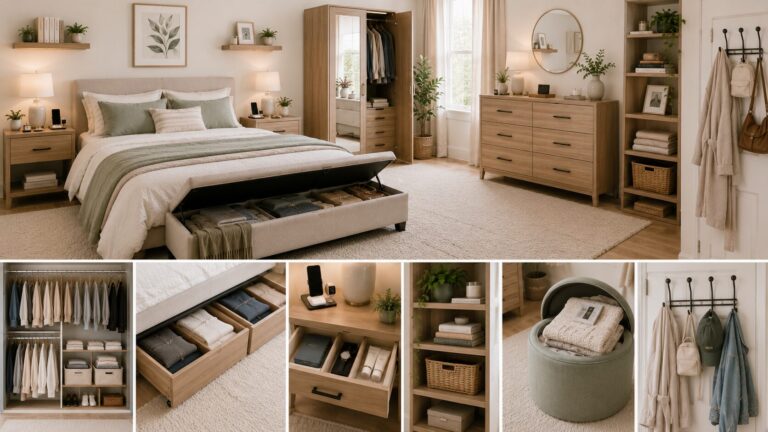
At least one nightstand with a lamp. A phone charging on the floor next to a mattress is a small detail that undercuts an otherwise decent room. A simple nightstand and lamp — even a budget version — solves this completely.
Proper bedding, chosen once and reused. A quality duvet or comforter in a solid, durable color (navy, charcoal, warm gray) looks intentional and requires zero ongoing decision-making once it’s bought — no seasonal swapping, no matching a rotating color scheme. Buy one good set and be done deciding about it.
Storage That Doesn’t Require a Dresser
If the bedroom is tight, a storage bed (with drawers or a lift-up base) handles clothing storage without needing a separate dresser competing for wall space. This is particularly useful in small apartment bedrooms where floor space for a full dresser genuinely isn’t available without cramping the room.
Small Apartment Ideas for Friends: Making the Space Work for Guests
If the apartment regularly hosts friends — for games, for watching sports, for just hanging out — a few specific decisions make a real functional difference.
Flexible, Stackable Seating
Beyond the sofa, having a couple of stackable stools or a folding chair or two (stored in a closet, pulled out when needed) means you can accommodate more people without permanently dedicating floor space to seating that sits empty most of the time.
A Real Setup for Watching Something Together
If sports or gaming with friends is a regular thing, prioritize a TV sized appropriately for the room’s actual viewing distance (roughly, screen size in inches should be about half the viewing distance in inches — a 55-inch TV works well from about 7–9 feet away) and decent audio. A budget soundbar ($100–$200) makes a bigger difference to the shared viewing experience than most other single purchases in the room.
A Drink and Snack Station
A simple bar cart or a designated shelf with glasses, basic mixers, and snacks means you’re not scrambling through cabinets when people come over. This doesn’t need to be elaborate — a small cart or even a single well-organized shelf handles it.
Clear the Floor Before People Arrive
This costs nothing and matters more than almost any purchase: a floor that’s clear of shoes, gym bags, and general accumulated stuff makes a small apartment feel considerably more put-together the moment people walk in, regardless of what else has or hasn’t been decorated.
Practical Systems That Keep a Small Apartment Looking Good
The Five-Minute Nightly Reset
Small apartments show mess faster than larger ones because there’s less space for it to spread into before it’s visible everywhere. A five-minute pass before bed — dishes into the sink or dishwasher, clothes into a hamper, surfaces cleared — keeps the apartment from accumulating the kind of clutter that eventually requires a much bigger cleanup effort.
One Landing Spot for Daily Items
Keys, wallet, phone charger, sunglasses — designate one specific spot (a tray by the door, a bowl on a console, a drawer in an entry bench) and use it consistently. This single habit prevents the scattered-across-every-surface problem that makes small apartments look messier than they actually are.
Laundry and Cleaning Supplies With a Real Home
A small over-the-door hamper or a designated laundry basket keeps dirty clothes from becoming a floor pile. Cleaning supplies stored in one specific spot (under the sink, in a small caddy) rather than scattered means cleaning actually happens because the supplies are easy to grab.
Quick Reference: Small Apartment Ideas for Guys
Furniture priorities:
- Sofa: performance fabric or leather, 72–84 inches, sized to fit through doorways
- Wall-mounted TV with slim console/shelf beneath, cables managed
- Storage ottoman as coffee table
- Entry bench or console with drawers for daily-carry items
Color and materials:
- Neutral base (warm gray, charcoal, navy) with solid wood or metal furniture frames
- One or two deeper accent colors in small doses (throw, art, lamp)
- Matte black or brushed metal hardware; darker/patterned rugs in high-traffic zones
Bedroom:
- Real bed frame with headboard or headboard alternative
- At least one nightstand with a lamp
- One quality duvet set in a durable, solid color
- Storage bed if floor space is tight
Hosting-friendly additions:
- Stackable or foldable extra seating stored in a closet
- Appropriately sized TV and a budget soundbar
- Simple drink/snack station (cart or shelf)
Daily maintenance systems:
- Five-minute nightly reset
- One consistent landing spot for keys/wallet/charger
- Dedicated home for laundry hamper and cleaning supplies
Conclusion
Small apartment ideas for guys, at the core, aren’t really different from good small-space design generally — durable materials, furniture that’s correctly scaled and multi-functional, smart storage, and a color palette that’s easy to live with over time. What shifts is the emphasis: low-maintenance materials that hold up to daily use without babying, an entertainment setup that actually works well, and storage systems that don’t require constant tidying discipline to stay functional.
None of this requires an interior design background or a large budget. It requires making the handful of decisions — the sofa fabric, the TV mount, the entry storage, the bedroom nightstand — that turn a functional-but-unfinished apartment into one that actually feels good to spend time in and easy to host in when people come over.
Start with the sofa and the entertainment setup, since those get the most daily use and the most visual attention. Then handle entry storage, since that single decision does more for keeping the apartment looking put-together day to day than almost anything else. Finish with the bedroom basics — a real headboard, a nightstand, one good duvet — since these are easy to skip but make a real difference to how finished the space feels.
A small apartment set up this way isn’t a stopgap. It’s a place that works for how you actually live, looks good doing it, and doesn’t demand hours of upkeep to stay that way.
Frequently asked questions:
What furniture should I prioritize first in a small apartment?
The sofa and the entertainment setup, since they get the most daily use and the most visual attention in a typical small living room. For the sofa, prioritize durable materials — performance fabric or leather — in a mid-to-dark tone that won’t show wear as visibly as lighter colors will over time. For the entertainment setup, a wall-mounted TV with a slim console or floating shelf beneath it (rather than a bulky media cabinet) uses significantly less floor space. After these two, entry storage (a bench, console, or tray for keys and daily-carry items) makes the biggest difference to how organized the apartment looks day to day.
How do I make a small apartment look put-together without spending a lot of money?
Focus on a few specific, low-cost changes: warm white light bulbs throughout ($15–$25) instead of cool white or a single dim overhead fixture, a properly sized area rug rather than a too-small one, and a consistent landing spot for daily items like keys and wallet so they don’t scatter across every surface. Clearing the floor of shoes, bags, and accumulated items before anyone visits costs nothing and has an outsized effect on how finished the apartment looks. A five-minute nightly reset — clearing surfaces, putting dishes away — prevents the kind of clutter buildup that eventually requires a much bigger cleanup effort.
What colors work best for a small apartment guys tend to want low-maintenance?
A neutral base — warm gray, charcoal, deep navy, or warm off-white — paired with natural materials like wood, leather, and metal creates a look that’s genuinely easy to maintain and decorate around over time. These tones also show less visible wear on frequently used furniture like sofas than very light or very pale colors do. Adding one or two deeper accent colors (forest green, burnt orange, deep burgundy) in smaller doses — a throw, artwork, a lamp shade — adds personality without requiring the whole room’s palette to be reconsidered if preferences shift later.
How do I set up a small apartment for hosting friends regularly?
A few specific additions make a real difference: stackable stools or folding chairs stored in a closet provide extra seating without permanently using floor space; an appropriately sized TV (roughly half the viewing distance in inches, so a 55-inch TV works well from 7–9 feet away) paired with a budget soundbar improves the shared viewing experience more than most other purchases; and a simple drink and snack station — a small cart or a single organized shelf — means you’re not scrambling through cabinets when people arrive. Beyond furniture, clearing the floor before guests come over does more for how the space feels than almost any purchase.
What’s the biggest mistake to avoid when furnishing a small apartment?
Treating the space as purely functional and skipping the finishing details that make it feel complete — a bedroom with just a mattress and no headboard or nightstand, a living room lit only by a single overhead bulb, an entryway with no dedicated spot for keys and daily items. These are usually the first things skipped because they don’t feel urgent, but they’re also the details that separate an apartment that functions from one that actually feels good to live in. None of them require a large investment; a real bed frame, one lamp, warm light bulbs, and a tray by the door collectively cost well under $150 and address most of this gap directly.