Small Guest Bedroom Decorating Ideas That Feel Both Stylish and Restful
Decorating a guest bedroom comes with a specific creative tension that other rooms don’t have. It’s your space to design, but it’s not really designed for you — it’s designed for a rotating cast of people you’re hosting, each with their own taste, and the room needs to feel good to all of them without being so neutral it has no character at all.
That balance is trickier than it sounds. A guest bedroom decorated purely to your own strong aesthetic preferences might feel wonderful to you and slightly off to a guest whose taste runs differently. A guest bedroom decorated with zero personality — beige walls, generic art, nothing that expresses any point of view — technically offends no one but also doesn’t feel like anywhere in particular. It reads as a hotel room without a hotel’s budget for genuinely nice hotel amenities.
The better approach sits between those two extremes: a considered palette, a few genuinely well-chosen decorative elements, and styling choices calibrated to feel warm and restful to a broad range of people rather than narrowly tailored to one specific taste.
This guide covers small guest bedroom decorating ideas across color, wall treatments, styling themes, and the specific visual techniques that make a compact guest room look considered rather than like an afterthought — while keeping the room genuinely comfortable for whoever’s staying in it.
Choosing a Colour Palette That Works for Everyone
Why Guest Room Colour Decisions Differ From Your Own Bedroom
In your own bedroom, color choices can reflect your specific personality — a bold, saturated wall color, an unconventional palette, anything that genuinely resonates with you personally. A guest room benefits from a somewhat different calculation, because the room needs to feel comfortable to people whose preferences you don’t know in advance.
This doesn’t mean the room needs to be beige. It means choosing colors that skew toward broadly calming and restful rather than narrowly personal or trend-specific, saving the more individual expression for smaller, easily-changed decorative elements rather than the large surfaces (walls, bedding, major furniture) that are harder to swap out.
Colors That Consistently Work Well
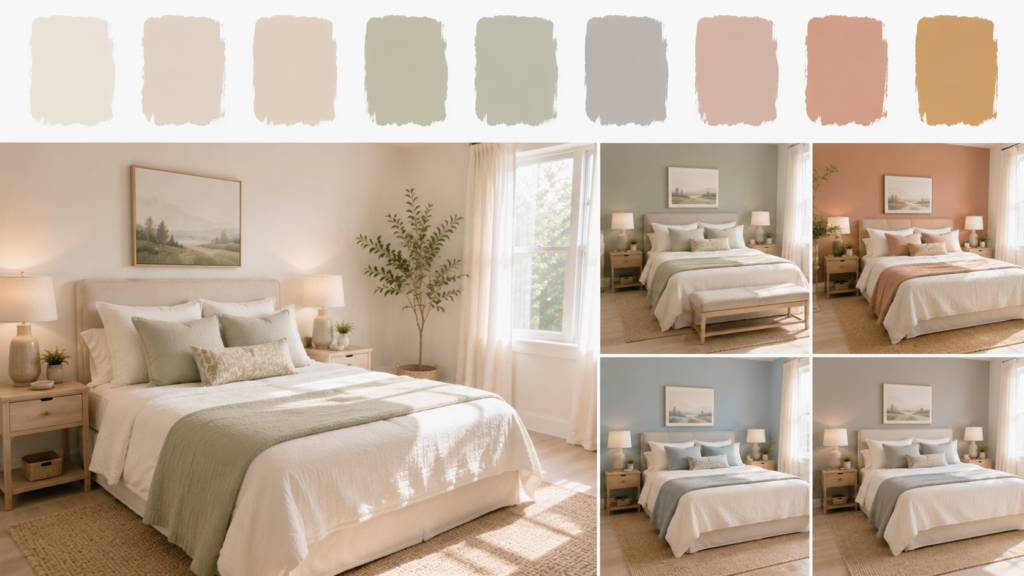
Soft, warm neutrals — warm white, pale greige, soft oatmeal — create a calm backdrop that suits almost any decorative style layered on top of it and photographs well regardless of lighting conditions, which matters if guests are taking photos during their stay.
Muted sage or soft blue-green tones read as restful and slightly more distinctive than a pure neutral without venturing into territory that’s likely to clash with a guest’s own taste or belongings.
Warm gray splits the difference between a stark, cool gray (which can feel cold in a room meant to feel welcoming) and a full neutral, offering a bit more visual sophistication while remaining broadly comfortable.
Dusty or muted versions of stronger colors — a soft terracotta, a muted rose, a gentle ochre — bring in more personality than a pure neutral while staying gentle enough not to overwhelm or clash. These work particularly well as an accent wall behind the headboard rather than across all four walls, giving the room character without full commitment.
What to Avoid
Very bold, saturated colors across large surfaces (walls, a large area rug, major bedding) risk clashing with whatever a guest brings or simply not suiting their taste for an extended stay — reserve bold color for smaller, more easily adjusted elements like a single throw pillow or a piece of art.
Trend-specific colors that feel very “of the moment” age out of relevance faster than more timeless choices, which matters more in a room you’re not actively redecorating on a regular cycle the way you might refresh your own bedroom.
Wall Treatment Ideas for Small Guest Bedrooms
A Single Accent Wall for Character Without Commitment
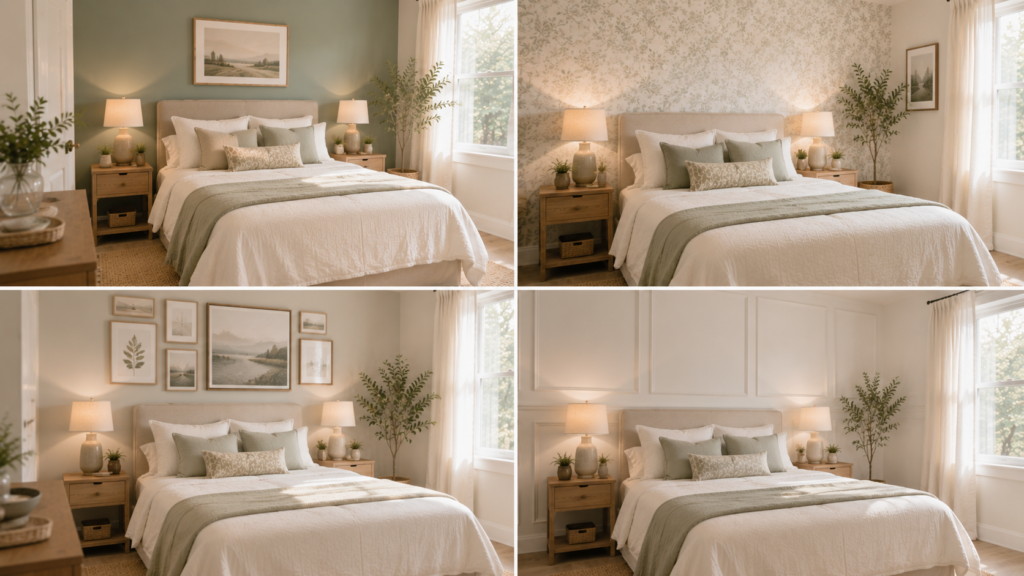
Rather than committing an entire small room to a bold color or pattern, treating just the wall behind the headboard as an accent — in a deeper or more distinctive color than the rest of the room — adds visual interest and a genuine focal point without overwhelming a compact space or risking guest discomfort with an all-over bold choice.
This works particularly well in small guest bedrooms because it gives the room a clear identity in photographs (which matters if the room doubles as a rental listing photo or simply gets shared online by a guest) while keeping the majority of the room in the calmer, broadly appealing palette discussed above.
Removable Wallpaper for Renters or Frequent Refreshers
Peel-and-stick wallpaper has become sophisticated enough in recent years to offer genuinely attractive patterns — subtle botanicals, linen textures, soft geometric prints — that add character to a guest room’s accent wall without the commitment or lease complications of paint. Since guest bedrooms are typically decorated once and left alone for longer stretches than more frequently used rooms, this is a good candidate for a slightly more distinctive pattern choice than you might use elsewhere, since you’re not living with the daily exposure a primary bedroom would involve.
Gallery Wall as a Guest-Friendly Focal Point
A curated gallery wall — using art, prints, or photography chosen for broad appeal rather than deeply personal significance — gives the room visual richness and a clear point of interest without requiring guests to interpret or relate to highly personal imagery. Landscape prints, botanical illustrations, and abstract art in the room’s color family all work well here, since they’re broadly appealing without needing to mean anything specific to a visitor.
Simple Molding or Paneling for Texture
For guest rooms where a bolder wall treatment feels like too much, simple wall molding (picture frame molding, shaker-style panel detailing) painted in the wall’s existing color adds architectural texture and a more finished, considered look without introducing any additional color or pattern decisions at all. This is a particularly good option for guest rooms in older or more traditional homes, where the molding style can complement existing architectural character.
Styling Themes for Small Guest Bedrooms
The Calm Retreat
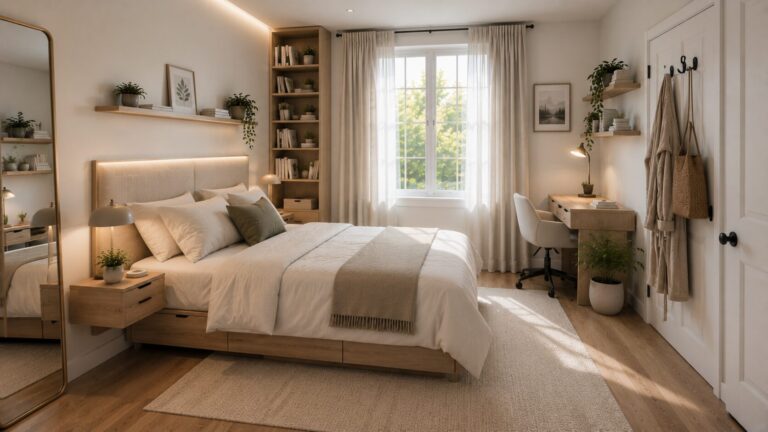
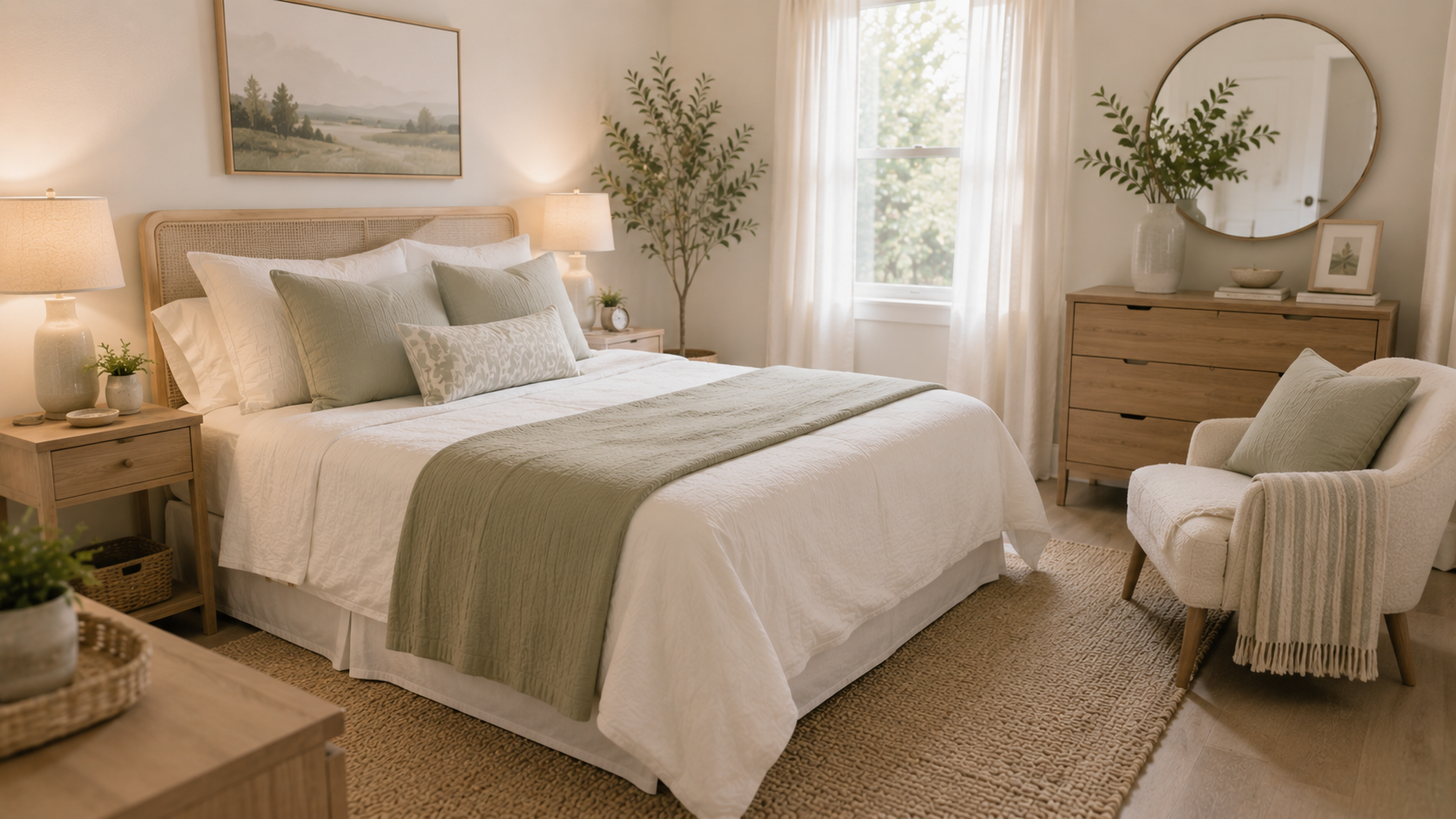
Built around soft neutrals, natural materials (linen, light wood, woven textures), and minimal visual clutter, this approach prioritizes restfulness above all else. Layered soft textiles — a linen duvet, a chunky knit throw, a natural fiber rug — provide warmth and texture without introducing bold pattern or color. This theme works particularly well for guest rooms where the primary goal is genuine relaxation, since it removes visual stimulation that might interfere with a guest settling in and sleeping well.
The Warm Traditional
Leaning into classic, timeless choices — a proper headboard, warm wood furniture, soft patterned textiles in a restrained palette (a subtle floral or stripe rather than a bold graphic print) — this theme reads as considered and welcoming without feeling trend-driven or likely to date quickly. It suits guest rooms in homes with a more traditional overall aesthetic and tends to feel broadly comfortable across a wide range of guest tastes, since it draws on decorating conventions most people find familiar and pleasant.
The Modern Minimal
A more pared-back approach using clean lines, a restrained color palette (often built around one or two neutrals plus a single accent color), and very selective decorative choices — one piece of art, one plant, minimal surface clutter. This theme works especially well in genuinely small guest rooms, since the restraint itself supports the room feeling more spacious rather than adding visual complexity to an already compact footprint.
The Eclectic Collected Look
For guest rooms in homes with a more layered, personality-forward overall style, a guest room that incorporates a few interesting vintage or collected pieces — alongside the broadly comfortable bedding and palette principles covered above — gives the room genuine character while still respecting the underlying need for the space to feel comfortable to a range of visitors. The key here is applying the “collected” aesthetic to smaller, easily-appreciated details (a vintage lamp, an interesting frame, a unique small object) rather than committing the room’s major elements to a strong, potentially polarizing aesthetic.
Small Guest Bedroom Decorating: Making the Bed the Visual Centerpiece
Layer Bedding for Visual Richness, Not Just Comfort
Beyond the comfort-focused bedding layering covered in hospitality-specific guides, the visual composition of the bed matters significantly for how “decorated” the room feels overall, since the bed occupies the largest visual footprint in almost any bedroom.
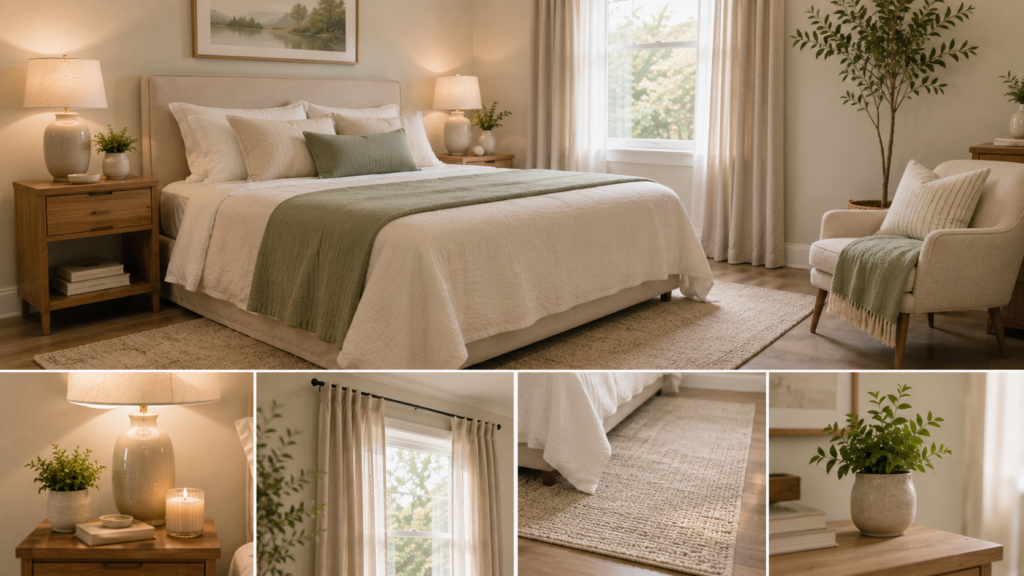
A duvet in a solid or subtly textured neutral, layered with one or two decorative pillows in a complementary but slightly more expressive color or pattern, and a folded throw in a contrasting texture at the foot of the bed creates visual layering without requiring bold pattern choices on the largest surfaces. This mirrors the broader palette principle — keep the largest elements calm, let smaller accents carry more personality.
A Headboard Adds Polish Even in a Small Room
A guest bedroom without a headboard — just a mattress against the wall — reads as noticeably less finished than one with even a simple, affordable headboard. If a full bed frame with headboard isn’t in the budget, the alternatives covered in other small-bedroom guides (a large piece of art at headboard height, a painted accent behind the bed, a hung textile panel) apply directly here and are especially worth prioritizing in a guest room specifically, since the completed look matters more when you’re not living with the room daily and adjusting your perception to its unfinished state over time.
Styling Details That Elevate a Small Guest Bedroom
A Curated Nightstand Vignette
Rather than a bare nightstand or one crowded with too many objects, a simple, intentional arrangement — a lamp, one or two books, a small plant or a candle — creates a styled moment that photographs well and feels genuinely welcoming without requiring much space or expense.
Window Treatments as a Decorating Opportunity
Floor-length curtains, even simple and affordable ones, elevate a small guest room significantly more than basic blinds alone. Hanging them at ceiling height (regardless of the actual window’s height) stretches the room’s proportions and adds a layer of softness that a bare or minimally dressed window doesn’t provide.
A Small Rug for Warmth and Definition
A soft area rug beside the bed — even a small one, given the room’s size — adds warmth underfoot and visual definition to the room, particularly in guest rooms with hard flooring. This is a relatively low-cost addition that meaningfully improves both the room’s comfort and its finished appearance.
Fresh or Faux Greenery
A single plant, whether real (choosing a low-maintenance variety that won’t need attention during the stretches between guest visits) or a high-quality faux option, adds life and color to the room without introducing any risk of a strong style choice that might not suit every guest.
Decorating a Small Guest Bedroom on a Budget
Prioritize the Bed’s Visual Layer First
If the decorating budget is limited, concentrate spending on the bed’s visual presentation — a quality duvet cover in a solid, calming color, and one or two well-chosen decorative pillows — since this is the room’s largest visual surface and delivers the most noticeable transformation relative to cost.
Use Removable, Affordable Wall Solutions
Peel-and-stick wallpaper on a single accent wall, or an affordable large-format art print, both deliver meaningful visual impact for relatively modest cost compared to a full room’s worth of paint and multiple pieces of framed art.
Thrift and Secondhand for Accent Furniture and Frames
A guest bedroom’s secondary furniture — a nightstand, a small chair, decorative frames — is an excellent candidate for secondhand sourcing, since these pieces don’t need to match a strong personal aesthetic the way primary bedroom furniture might, and thrift finds often carry more character than new budget equivalents at a similar price point.
Warm Lighting Over Expensive Fixtures
As in every other room covered across small-space decorating guides, warm white bulbs (2700K) throughout the guest room’s fixtures cost very little and meaningfully improve the room’s atmosphere — genuinely more impactful than spending the same budget on a more expensive light fixture with the wrong bulb temperature.
Quick Reference: Small Guest Bedroom Decorating Ideas
Color palette:
- Warm neutrals, muted sage/blue-green, warm gray, or dusty accent colors on large surfaces
- Save bold, saturated color for small, easily-changed accents only
- Avoid heavily trend-specific colors that age out of relevance quickly
Wall treatments:
- Single accent wall behind the headboard for character without full commitment
- Removable wallpaper for a distinctive but low-risk pattern choice
- Gallery wall with broadly appealing (not deeply personal) art
- Simple molding or paneling for texture without adding color
Styling themes:
- Calm Retreat (neutrals, natural materials, minimal visual clutter)
- Warm Traditional (classic furniture, restrained pattern, timeless feel)
- Modern Minimal (clean lines, restrained palette, selective decor)
- Eclectic Collected (vintage character in small, curated doses)
The bed as centerpiece:
- Layer bedding with a calm base and smaller expressive accents
- Prioritize a headboard or headboard alternative for a finished look
Finishing details:
- A curated, uncluttered nightstand vignette
- Floor-length curtains hung at ceiling height
- A small rug for warmth and definition
- A single plant, real or high-quality faux
Conclusion
Small guest bedroom decorating ideas work best when they hold two goals at once: genuine visual character, and broad comfort for people whose taste you can’t predict in advance. The palette does most of the heavy lifting here — keeping the large surfaces calm and warm, then letting smaller, easily-changed accents carry more personality and color.
An accent wall, a well-chosen gallery arrangement, or a considered styling theme gives the room real character without risking a guest feeling like they’re sleeping inside someone else’s very specific, very personal aesthetic statement. And the details that elevate a small guest room the most — a proper headboard, floor-length curtains, a curated nightstand, warm lighting — tend to be modest in cost relative to the visual improvement they deliver.
None of this requires an unlimited decorating budget or abandoning your own taste entirely. It requires calibrating the room’s boldest choices toward broad appeal while still making deliberate, considered decisions rather than defaulting to complete neutrality out of uncertainty.
Start with the color palette and the bed’s visual layer, since these have the most impact. Add wall interest through one accent element rather than trying to do everything at once. Finish with the small styling details — curtains, a rug, a plant, a nightstand vignette — that make the room feel genuinely finished. A small guest bedroom decorated this way looks considered and feels welcoming, regardless of who’s staying in it next.
Frequently asked questions:
What colours work best for decorating a small guest bedroom?
Warm neutrals (soft white, pale greige, warm oatmeal), muted sage or blue-green tones, and warm gray all work well as the room’s dominant palette, since they read as calming and restful to a broad range of people rather than reflecting one narrow, personal taste. Dusty or muted versions of stronger colors — a soft terracotta, a gentle ochre — work well as an accent, typically on just the wall behind the headboard, giving the room character without full commitment. Reserve genuinely bold, saturated colours for small, easily-changed elements like a single throw pillow or piece of art, rather than large surfaces like walls or major bedding, since those are harder to adjust if the choice doesn’t suit a particular guest’s taste.
How do I add personality to a guest bedroom without making it too personal?
Concentrate personality in smaller, easily-appreciated details rather than the room’s largest elements — a distinctive accent wall (paint or removable wallpaper) behind the headboard, a curated gallery wall using broadly appealing art (landscapes, botanicals, abstract pieces) rather than deeply personal imagery, or a few interesting vintage or collected objects on a nightstand or shelf. Keep the bed’s primary bedding, the wall color on the room’s other three walls, and the major furniture in a calmer, broadly comfortable palette, and let these smaller, more contained choices carry the room’s actual character and personality.
Should a guest bedroom have a headboard even if the room is small?
Yes — a headboard, or a headboard alternative if a full bed frame isn’t in the budget, meaningfully improves how finished a guest room looks, and this matters more in a guest room specifically than in your own bedroom, since you’re not living with the space daily and gradually adjusting your perception of its unfinished state over time. If a proper headboard isn’t feasible, effective alternatives include a large piece of art positioned at headboard height, a painted accent shape directly on the wall, or a hung textile panel — all of which create the same visual anchor a headboard provides at a fraction of the cost and without requiring new furniture.
What’s the best way to decorate a small guest bedroom on a limited budget?
Prioritize the bed’s visual layer first, since it’s the room’s largest surface and delivers the most noticeable transformation relative to cost — a quality duvet cover in a calming solid color, plus one or two well-chosen decorative pillows, meaningfully changes how the room looks. After that, a single accent wall using affordable peel-and-stick wallpaper or one well-chosen large art print adds meaningful visual interest for relatively modest cost. Warm white light bulbs (2700K) throughout the room’s fixtures cost very little and improve the room’s atmosphere more than spending the same budget on a more expensive fixture with the wrong bulb temperature. Secondhand sourcing for accent furniture (a nightstand, a small chair, decorative frames) rounds out a limited budget effectively, since guest room secondary furniture doesn’t need to match one strong personal aesthetic.
How formal or casual should a small guest bedroom feel?
Somewhere in the middle generally works best — a guest room that feels too formal (matched furniture sets, overly polished styling) can feel impersonal or even slightly intimidating to relax in, while one that feels too casual (mismatched or worn furniture, minimal styling effort) can read as an afterthought rather than a genuinely welcoming space. The styling themes covered in this guide — Calm Retreat, Warm Traditional, Modern Minimal, Eclectic Collected — each strike this balance differently depending on your home’s broader aesthetic, but all avoid both extremes. The goal is a room that feels cared for and considered without feeling stiff or overly precious, since guests generally relax more easily in a space that feels genuinely lived-in and welcoming rather than showroom-perfect.