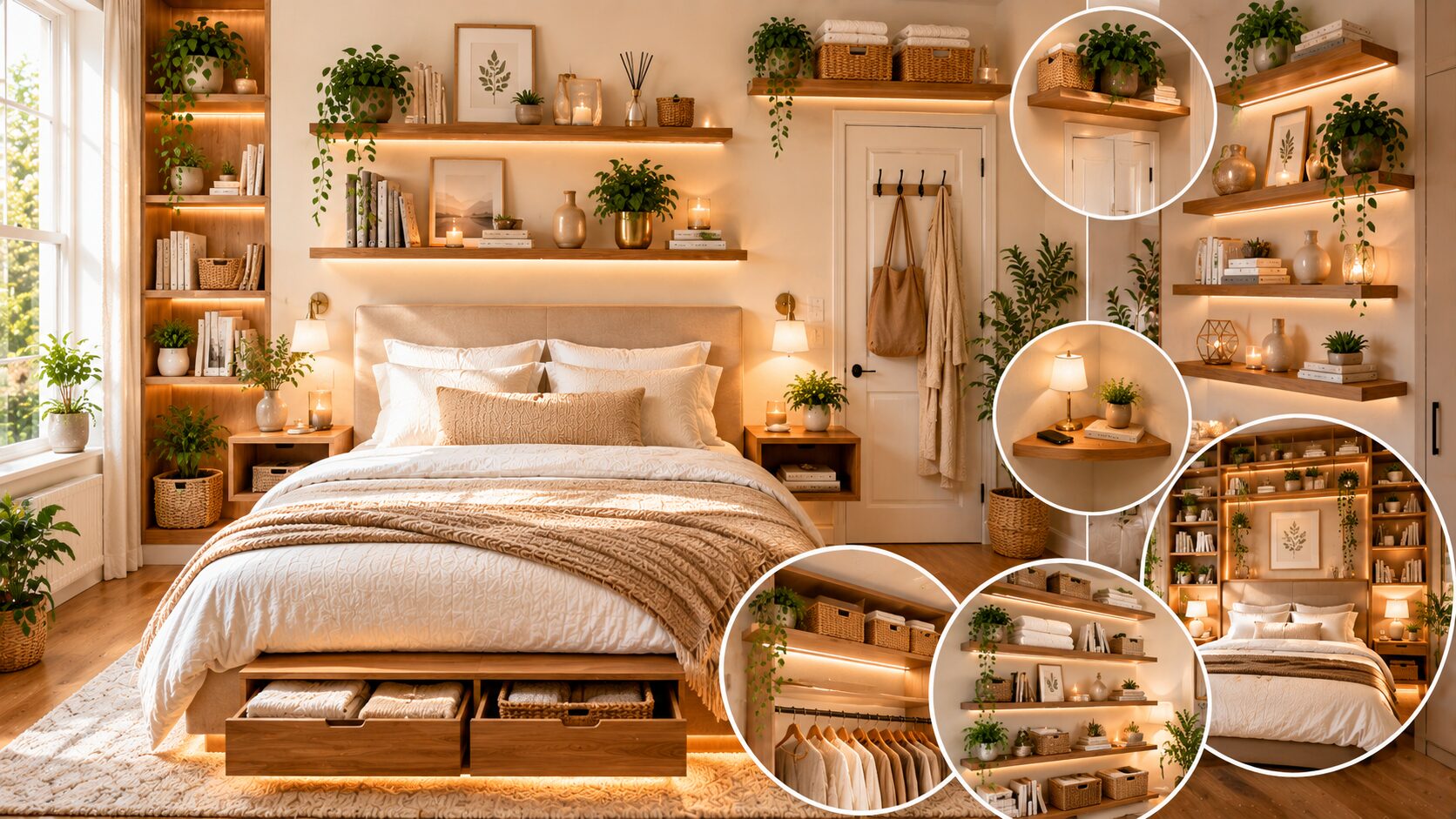
Bedroom Shelves Ideas: 16 Ways to Add Storage Without Sacrificing Style
Most bedroom storage problems aren’t really about storage. They’re about floor space.
Add another dresser and the room feels cramped. Buy a bigger wardrobe and you lose the only clear wall. The floor fills up, the surfaces overflow, and the room starts feeling more like a storage unit than somewhere you actually want to sleep.
Shelves fix this in a way that floor furniture simply can’t — because shelves use vertical space. The walls above your eye line, the corners that nothing else touches, the stretch of wall above the bed that usually holds nothing but a few inches of painted drywall. All of that is usable square footage that most bedrooms completely ignore.
Good bedroom shelves ideas solve two problems at once: they add meaningful storage and, when designed well, they add something to the room aesthetically. A well-styled shelf above the headboard isn’t just a storage solution — it becomes the focal point of the room. A corner shelf unit that goes to the ceiling transforms dead space into something architectural.
This guide covers 16 bedroom shelf ideas across every style, budget, and room size — from small bedroom shelf hacks to more considered built-in options — along with the practical details that make them actually work.
Floating Shelves: The Most Versatile Bedroom Shelf Option
Floating shelves — wall-mounted shelves with no visible brackets or supports — are the most popular bedroom shelf choice, and for good reason. They’re clean-looking, endlessly configurable, and work in almost every style of room.
Above the Bed
The wall above the headboard is one of the most consistently wasted spaces in bedrooms. A pair of floating shelves here — one or two at different heights, centered on the wall — creates a built-in look without the built-in price tag.
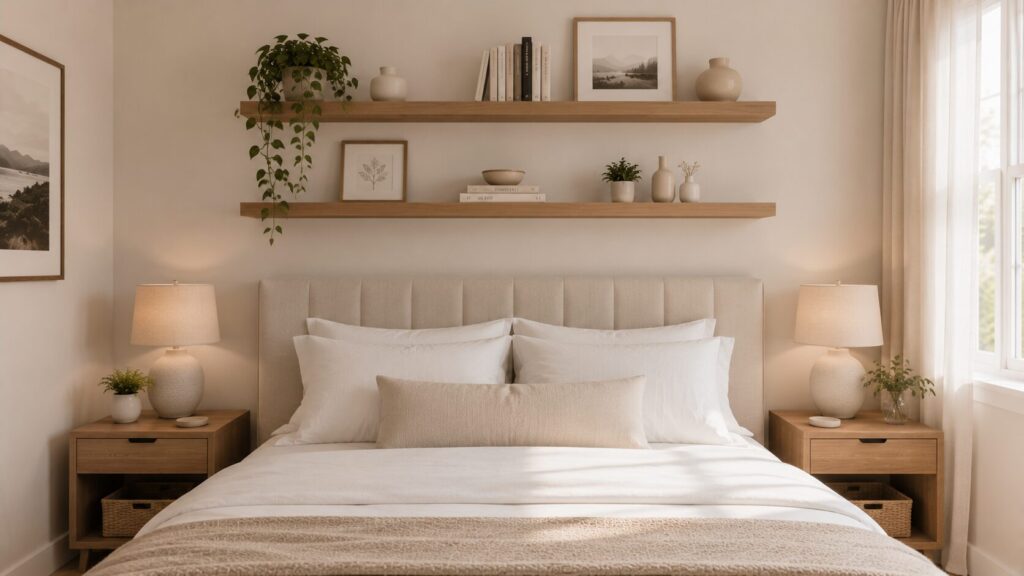
Keep the shelves relatively shallow (8–10 inches is plenty) and position the lowest one at a height where it won’t feel like a hazard — at least 18–24 inches above the top of the pillows. This leaves room for a bedside lamp, a small plant, books, and a few personal objects without crowding the sleeping space.
One styling note: symmetry matters above the bed more than elsewhere in the room. Two shelves of equal length, centered on the wall, feel deliberate and finished. Asymmetric groupings work in other spots but tend to look accidental above the headboard.
Floor-to-Ceiling Floating Shelf Systems
A single wall of floor-to-ceiling floating shelves transforms that wall from a blank surface into the room’s organizational backbone. This approach works particularly well on the wall opposite the bed — you wake up looking at it, so it becomes a built-in design statement.
Use deeper shelves (12 inches) at lower levels for bins and baskets, medium shelves (10 inches) in the middle for books and folded items, and shallower shelves (6–8 inches) at the top for display. This graduated approach keeps the heaviest items low and the decorative ones visible at eye level and above.
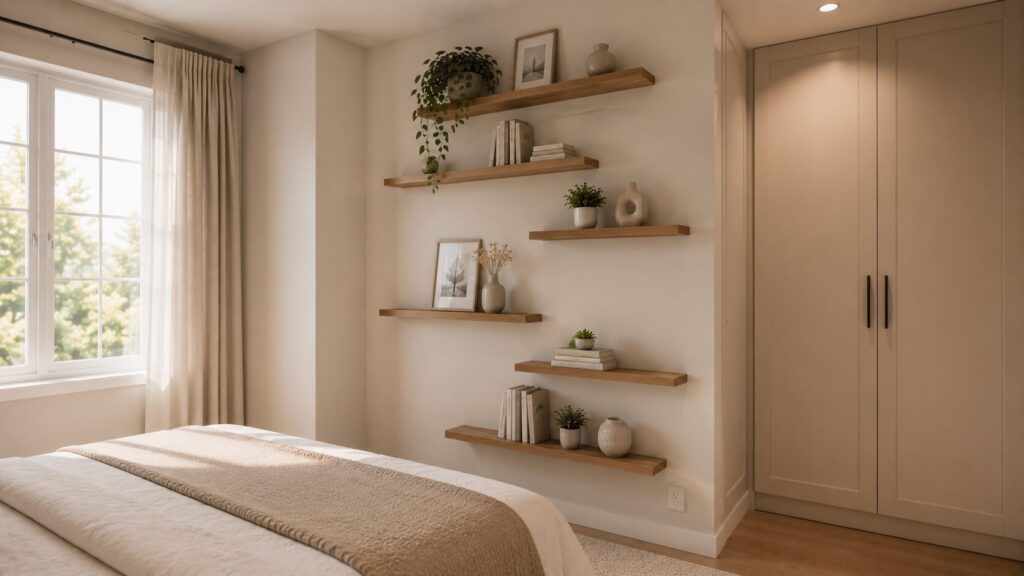
Staggered Floating Shelves as Wall Art
Instead of aligning shelves in a straight grid, staggered arrangements — varying lengths and heights across a section of wall — create something that reads more like gallery art than storage. This works well on narrow walls beside wardrobes or in the space between a door and a corner.
The key to making staggered shelves look intentional rather than random: keep the same shelf depth throughout (mixing depths creates visual chaos), leave generous space between shelves, and don’t overcrowd each one.
Bedroom Shelves Ideas for Above and Around the Bed
The bed occupies the most square footage of any piece of furniture in the room. Building shelving into the space around it is one of the most efficient bedroom shelf design strategies available.
Integrated Headboard Shelves
A headboard with built-in shelving — either purchased as a single unit or constructed from a simple shelf system positioned at headboard height — replaces two pieces of furniture with one and handles several storage needs simultaneously.
A typical integrated headboard shelf unit holds: a lamp on each side (or a built-in USB port for phone charging), books, a glass of water, small plants, and personal items — everything normally spread across a separate headboard plus two nightstands. The visual profile is tidier, and the floor stays clear of nightstand legs.
These units range from simple plywood DIY builds to designer versions with integrated lighting and charging stations. The basic function — a shelf at headboard height with side panels — can be built from a few boards and wall brackets for under $100.
Alcove Shelving on Either Side of the Headboard
If the bed sits between two walls (or in a recessed alcove), building shelving into the side spaces creates a fitted, architectural look that’s genuinely impressive for the effort involved.
Even if there’s no true alcove, placing two narrow shelf towers on either side of a freestanding bed creates the same visual effect — the bed appears to be built into the room rather than just sitting in it. Use shelves that are roughly the same height as the headboard on each side, and the whole arrangement reads as one integrated unit.
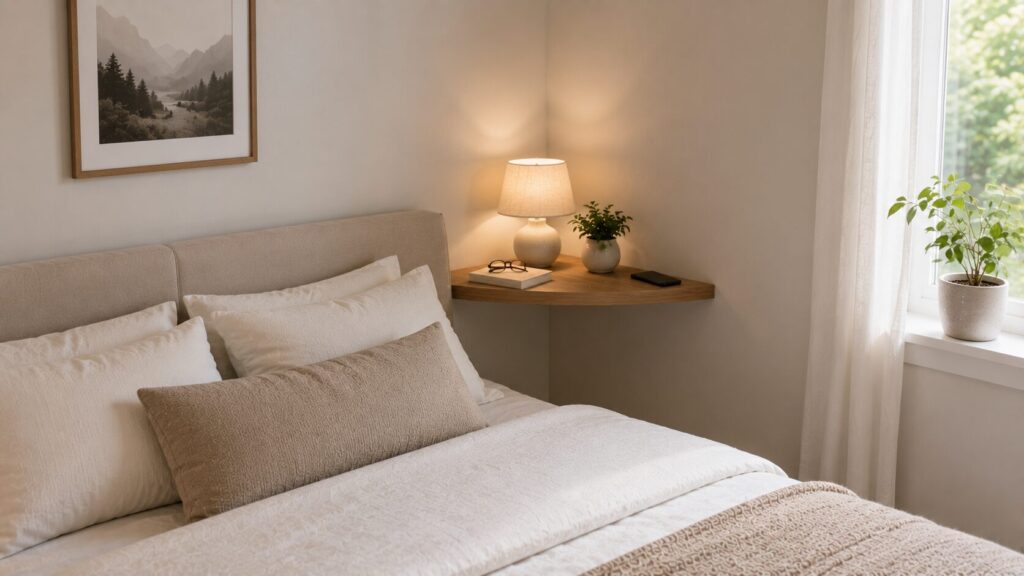
Corner Shelves at Bed Height
For rooms where the bed sits in or near a corner, a small corner shelf mounted at nightstand height — right in the corner behind the bed — acts as a bedside table for one or both people sleeping there without occupying any floor space at all.
Corner shelves for this purpose don’t need to be large. A triangle-shaped floating shelf 12–14 inches on each side is enough for a lamp, a phone, and a book.
Small Bedroom Shelves Ideas That Maximize Tight Spaces
Small bedrooms call for shelf solutions that are deliberate about every inch. The goal in a tight room isn’t just storage — it’s storage that doesn’t make the room feel more crowded.
Narrow Ledge Shelves Along One Full Wall
A picture ledge shelf — the kind with a small lip that prevents items from falling off — can run the full length of a wall at a single height. At 4–5 inches deep, it holds framed photos, small plants, candles, and books without projecting far enough into the room to feel intrusive.
Running one continuously across the full width of a wall rather than using multiple separate shelves makes the room feel longer. This is one of the simplest and most affordable small bedroom shelf hacks: picture ledges cost very little, install with just a few screws, and have an outsized effect on how the room looks and feels.
Over-Door Shelving
The space above the bedroom door is almost always empty. A shallow shelf (6 inches deep) mounted above the door frame uses space that has zero competition from other uses. It’s ideal for items you access infrequently — extra bedding, seasonal accessories, books in rotation — kept in labeled baskets that look neat from below.
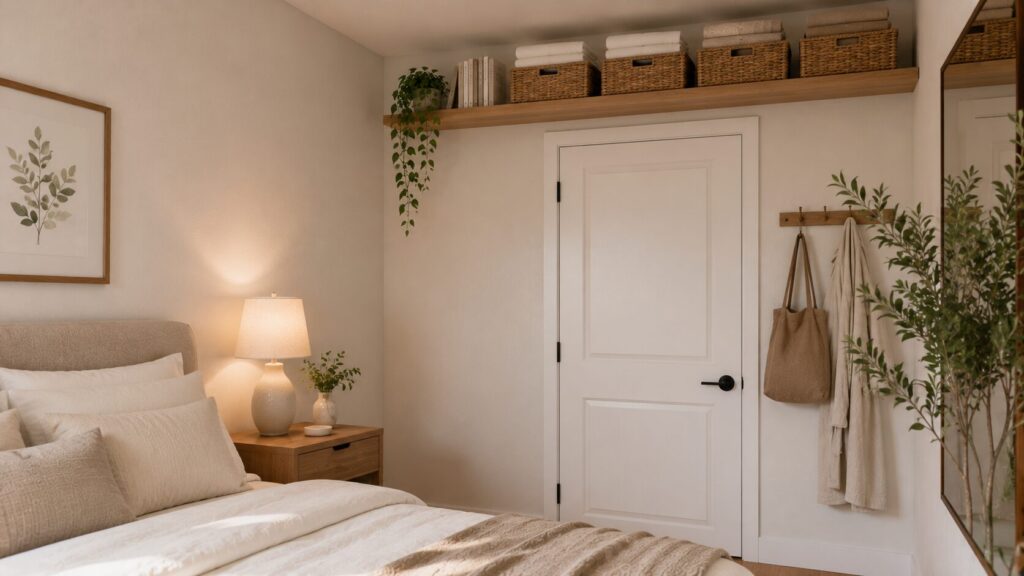
This works in all room sizes but has the biggest impact in small bedrooms where every other wall has something competing for it.
High Shelves All the Way Around the Room
Installing shelves at 6–7 feet high, running continuously around two or more walls like a picture rail, creates enormous storage for books, baskets, and display objects without touching any of the lower wall space needed for furniture.
This approach is known in design circles as a “library rail” arrangement and it’s more achievable than it sounds. Simple brackets at a consistent height, shelves cut to the same depth throughout, and a small step stool for access is all it takes. In small bedrooms especially, moving storage this high removes it visually from the daily experience of the room while keeping it accessible.
Shelf Above the Closet Bar
If your bedroom has a reach-in closet with a standard rod-and-shelf configuration, the space above the existing shelf (often 18–24 inches between the shelf top and the ceiling) is almost always wasted. A second shelf installed in that gap — ideally the full width of the closet — doubles the closet’s storage capacity for folded items, bins, and boxes.
This isn’t technically in the bedroom itself, but it directly reduces what needs to be stored in the bedroom, which is the same outcome.
Built-In and Architectural Shelf Ideas for Bedrooms
For bedrooms where you want something more permanent and considered, built-in shelving options offer storage solutions that look like they were always part of the room.
Recessed Niche Shelves
A recessed shelf — cut into the wall between studs — sits flush with the wall surface rather than projecting out from it. This means it takes up zero floor space and zero room depth, making it one of the most space-efficient shelf options available.
Recessed niches work best in non-load-bearing walls and are easiest to install during renovation rather than retrofit. The most common placement in bedrooms: a tall, narrow niche beside the bed functioning as a built-in nightstand, or a recessed bookshelf on a wide blank wall.
The finished look is genuinely high-end — recessed niches look custom and architectural even when built on a modest budget. Painting the interior of the niche in an accent color adds depth and definition.
Fireplace Alcove Shelving
In older homes or apartments where the bedroom has a disused fireplace with flanking alcoves, those alcoves are natural shelf locations. Floor-to-ceiling fitted shelves in the alcoves on either side of the chimney breast are a classic treatment that maximizes storage while preserving the period character of the room.
If only one alcove is usable, a wardrobe or fitted cabinet in one and open shelving in the other creates a balanced, symmetric arrangement.
Bookcase Headboard (Built-In Style)
A bookcase-style headboard — floor-to-ceiling shelving on the wall behind the bed, with the bed pushed against it — is a dramatic design statement that also happens to be one of the highest-storage bedroom solutions short of a full built-in wardrobe.
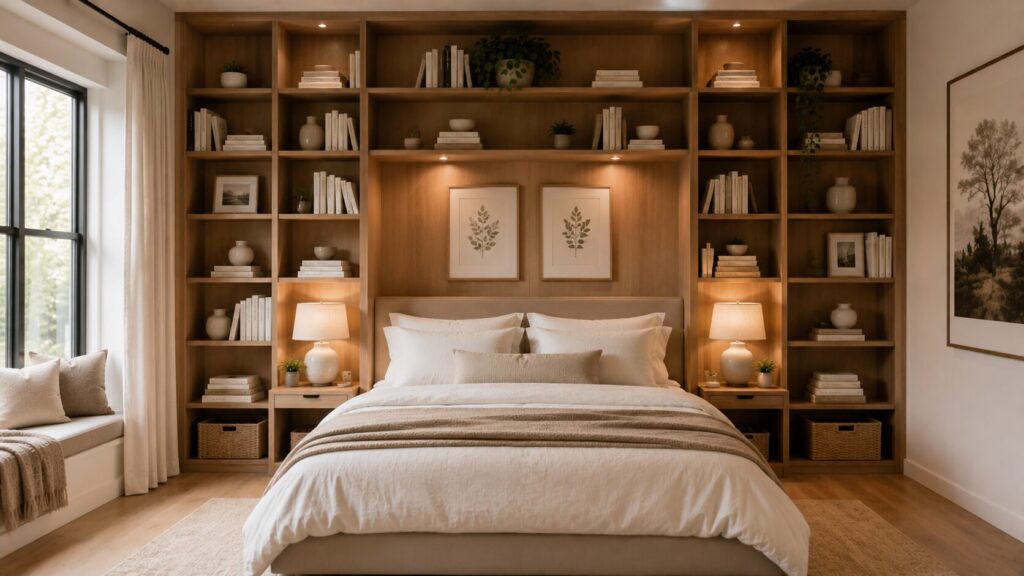
The bed appears to float in front of the shelving. The shelves extend from floor to ceiling, providing storage and display space far beyond what any standard headboard offers. This works best in rooms with enough ceiling height (8 feet minimum) and enough wall width to frame the bed generously on each side.
Styling Bedroom Shelves: Making Storage Look Good
A shelf that’s purely functional — packed tightly with identical items, no variation, no breathing room — tends to read as cluttered even when it’s technically organized. A little attention to how shelves are styled makes a significant difference in how the room feels overall.
The 60/40 Rule for Open Shelves
A useful guideline for open shelves in bedrooms: fill about 60% of the shelf with purposeful objects (books, plants, storage baskets, framed photos) and leave about 40% open. That open space isn’t wasted — it’s what makes the 60% look intentional rather than crammed.
Shelves that are too full read as cluttered. Shelves that are too empty look unfinished. The 60/40 ratio is the comfortable middle that most designers land on naturally.
Mix Object Types for Visual Interest
A shelf with only books is a bookshelf. A shelf with books, one small plant, a framed photo, and a decorative object is a designed shelf. The variety of textures, heights, and types keeps the eye moving across the shelf and makes it feel considered.
Odd numbers of grouped objects (three items, five items) tend to look more natural than even numbers. A plant next to a stack of two or three books next to a small sculpture is a classic grouping that works in almost any style of bedroom.
Use Baskets and Bins for the Practical Stuff
For shelves storing genuinely utilitarian items — extra cables, medications, miscellaneous household things — woven baskets or matching bins with lids contain the clutter without exposing it. On an open shelf, a row of matching baskets looks as tidy as a closed cabinet.
Natural materials (wicker, seagrass, water hyacinth) work in most bedroom aesthetics and age well. Matching them across a shelf — same material, same size — creates cohesion even if the contents are varied.
Don’t Forget Lighting
A small LED strip light mounted inside a shelf unit, or a battery-operated puck light on the underside of a shelf, transforms a utilitarian storage solution into a feature. It creates warmth in the room during evenings and makes the shelf’s contents more visible.
For bookshelves that sit in darker corners, this is particularly effective — the shelf stops being a dark zone and becomes a lit focal point.
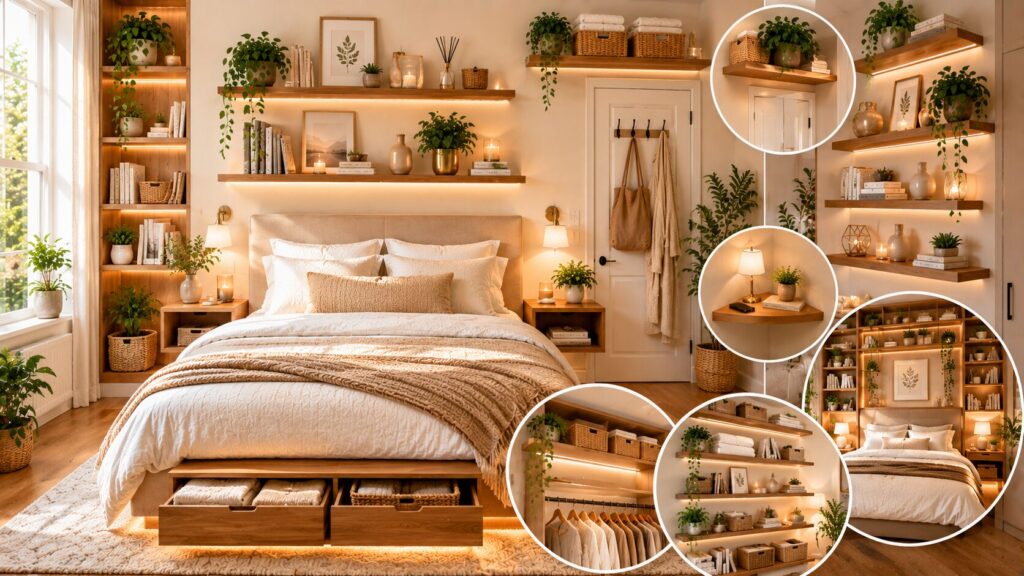
Bedroom Shelves Design: Quick Reference by Room Size and Need
For small bedrooms (under 120 sq ft):
- Picture ledge shelves running the full length of one wall
- High shelves (6–7 feet) running around two or more walls
- Floating shelves above the bed (keep shallow, 8–10 inches)
- Over-door shelf for infrequent-access storage
- Corner shelf at nightstand height to free up floor space
For medium bedrooms:
- Floor-to-ceiling floating shelf system on one feature wall
- Integrated headboard shelf unit replacing nightstands
- Alcove shelving flanking the bed on each side
- Recessed niche beside the bed as built-in nightstand
For larger or primary bedrooms:
- Bookcase headboard (floor-to-ceiling shelving behind the bed)
- Full built-in alcove shelving flanking a chimney breast
- Library rail (continuous high shelf) as architectural feature
Styling essentials regardless of size:
- 60/40 fill ratio (60% objects, 40% open space)
- Mix of textures and object heights
- Matching baskets or bins for practical items
- Consider shelf lighting for evening warmth
Conclusion
Bedroom shelves ideas work because they solve the right problem. Bedrooms don’t usually lack storage — they lack vertical storage. The walls above the furniture line, the corners behind the door, the space above the closet, the stretch of wall above where you sleep — all of it is available, and most of it is empty.
The best bedroom shelf solutions don’t just add storage. They add structure to the room — a clear visual logic that makes the space feel more considered. A well-executed floating shelf above the headboard, a full wall of floor-to-ceiling shelves opposite the bed, or a recessed niche beside the bed all do the same thing: they make the room look like it was designed, not assembled.
Start with the wall that bothers you most. The space above the bed, the blank wall across from it, the corner that’s collecting things it shouldn’t. Pick one shelf solution from this guide that fits your budget and your room’s needs, install it well, and style it thoughtfully.
Once you see how much one well-placed shelf changes the room — both functionally and aesthetically — the rest of the decisions get easier. Most people find they want more shelves after the first one. And in a bedroom, that’s almost always a good thing.
Where is the best place to put shelves in a bedroom?
The most universally useful locations are above the bed (where the wall is often completely blank), on either side of the bed replacing nightstands, along a full wall opposite the bed for a floor-to-ceiling system, and high on walls (6–7 feet) running around the perimeter for items accessed less frequently. In small bedrooms, the space above the door and inside corners are also worth using. The best spot depends on your room layout — prioritize walls where there’s no competing furniture and where access is practical.
How deep should bedroom shelves be?
It depends on what you’re storing. For books, 10–12 inches is the standard. For folded clothes or baskets, 12–14 inches gives you more options. For decorative display or a picture ledge, 4–6 inches is enough and keeps the shelf from projecting far into the room. Above the bed, keep shelves on the shallower side (8–10 inches) so they don’t feel physically intrusive over the sleeping space. As a general rule, shallower shelves look less heavy on the wall and work better in smaller bedrooms.
How do I style bedroom shelves without them looking cluttered?
Use the 60/40 rule: fill roughly 60% of the shelf with objects and leave 40% open. Mix object types — books alongside a small plant, a framed photo, and one or two decorative pieces — rather than filling the shelf with one category. Vary heights within a grouping so there’s visual movement. Use matching baskets or bins for anything utilitarian so it doesn’t create visual noise. And resist the urge to fill every inch — empty space on a shelf reads as intentional breathing room, not wasted space.
Can I put floating shelves above my bed safely?
Yes, with two conditions: they need to be properly anchored into wall studs (not just drywall anchors), and they need to be positioned high enough that they’re not a hazard if someone sits up quickly. A minimum of 18–24 inches above the top of the pillows is a reasonable clearance. Keep items on these shelves relatively light and secure — heavy books on an improperly anchored shelf above a bed are a genuine risk. If you’re unsure about wall anchoring, consult a handyman or follow manufacturer guidelines for the specific hardware you’re using.
What type of shelves work best in a small bedroom?
Floating shelves win in small bedrooms because they have no visible base or frame, which keeps them looking light on the wall. Picture ledge shelves running the full length of a wall are another strong option — at 4–5 inches deep, they barely project into the room. Corner shelves use dead space that nothing else competes for. High shelves (above 6 feet) store items without using any of the visual space you actually occupy in the room. The key in a small bedroom is to keep shelves shallow, keep them off the floor, and style them with restraint so they add storage without adding visual weight.