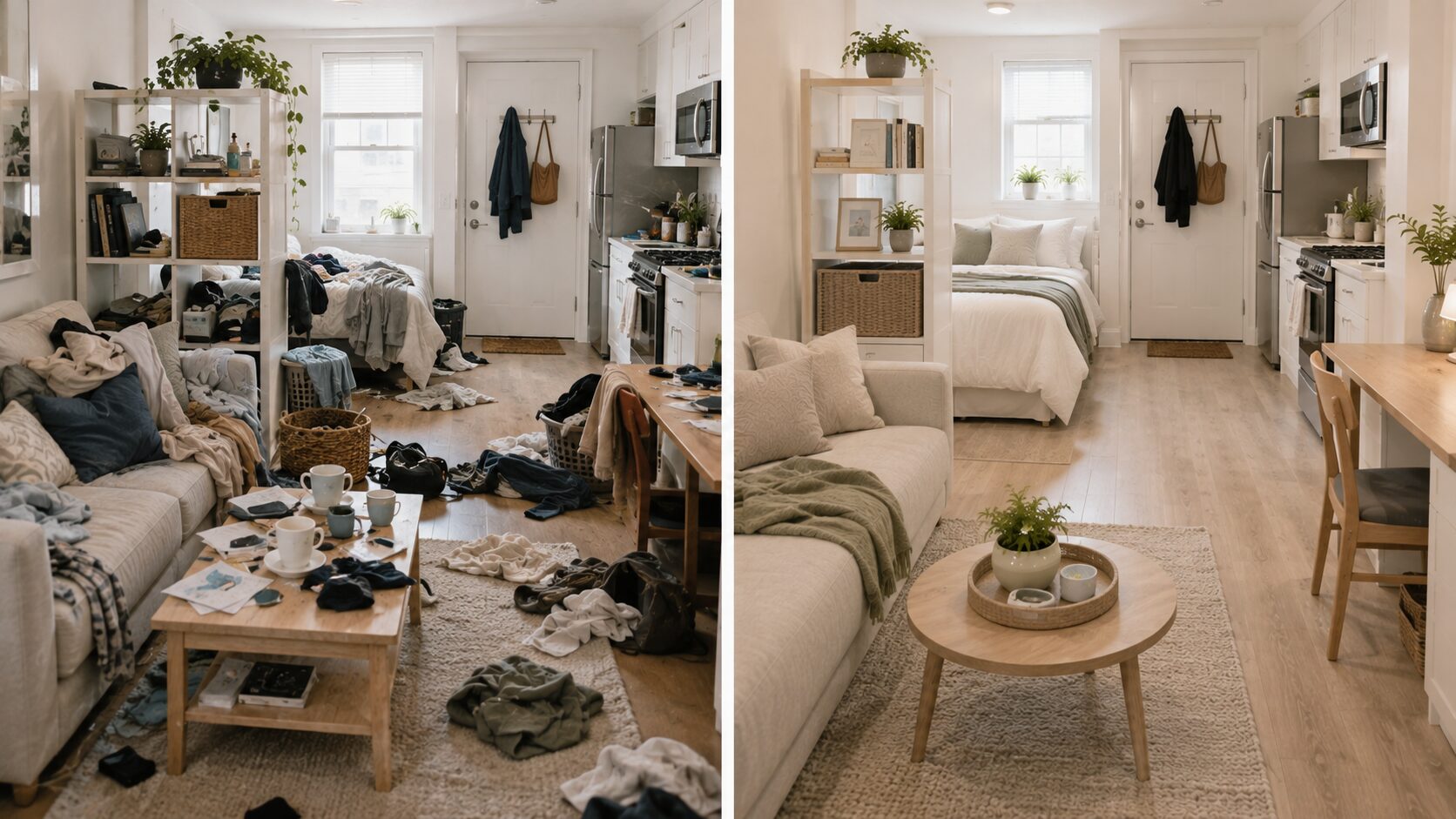
How to Declutter a Small Apartment
Decluttering advice usually falls into one of two camps. There’s the extreme version — get rid of almost everything, live with the bare minimum — which works for some people and feels genuinely impossible for most. And there’s the vague version — “just declutter regularly!” — which offers no actual method for doing it.
Neither approach accounts for what makes decluttering a small apartment specifically different from decluttering a house. In a house, clutter accumulates in spare rooms, garages, and basements — spaces you can close the door on and deal with later. In a small apartment, there’s no spare room to absorb the overflow. Every item you own is either actively stored somewhere functional or visibly in the way, which means clutter shows up faster and more obviously than it would in a larger home.
That’s actually useful information. It means small apartment decluttering doesn’t require a dramatic minimalist overhaul — it requires a specific, repeatable system that matches how quickly a small space shows disorder, and how quickly a good system can fix it.
This guide walks through exactly that: a room-by-room decluttering process, the decision-making framework that makes “should I keep this” faster to answer, and — critically — the maintenance habits that keep a small apartment from sliding back into clutter within a few weeks of the big cleanout.
Why Small Apartment Decluttering Needs Its Own Approach
Before the specific process, it’s worth understanding what makes this genuinely different from decluttering advice written for larger homes.
There’s no room to hide overflow. A house with a garage or a spare bedroom can absorb a certain amount of “I’ll deal with this later” without it affecting daily life. A small apartment has nowhere for that overflow to go — it either gets dealt with or it becomes visible clutter in the space you actually live in.
Every square foot is multi-functional. The surface that would hold decorative clutter in a larger home might be the same surface you need clear for actual daily use in a small apartment — a dining table that’s also a desk, a dresser top that’s also the only counter space in a studio kitchenette. Clutter in a small apartment doesn’t just look bad; it actively blocks function.
The visual impact compounds faster. Because rooms are closer together and often visible from multiple angles simultaneously in an open-plan small apartment, clutter in one area affects the perceived state of the whole apartment in a way it wouldn’t in a house where each room is a separate, closed-off experience.
This means the decluttering process for a small apartment needs to be faster, more systematic, and paired with genuinely sustainable maintenance habits — because the cost of letting clutter build up again is higher here than almost anywhere else.
The Decision-Making Framework: How to Actually Decide What Stays
Most decluttering attempts stall not because people can’t physically move things, but because they can’t make quick decisions about individual items. Having a clear framework in advance speeds this up dramatically.
The Three-Question Test
For any item, ask these three questions in order, and stop as soon as you get a clear answer:
Have I used this in the last year? Not “might I use this” — have you actually used it. Seasonal items get a pass here (a winter coat in July still counts as “used” within the last year), but genuinely dormant items — the kitchen gadget bought for one recipe two years ago, the exercise equipment that’s become a clothes rack — usually fail this test honestly.
Does this serve a function I don’t already have covered? Duplicates are one of the biggest sources of small apartment clutter. If you own three sets of measuring cups, two phone chargers of the same type, or four black t-shirts in nearly identical condition, most of those duplicates aren’t adding function — they’re just adding volume.
Would I buy this again today, at this price, knowing what I know now? This question cuts through sentimental attachment and sunk-cost thinking faster than almost any other. It’s not asking whether the item has value — it’s asking whether it has value to you, right now, in the apartment you’re actually living in.
The “Maybe” Box Method
For items that don’t get a clear answer from the three-question test, a labeled “maybe” box with a genuine expiration date (30–90 days is typical) resolves indecision without forcing an immediate, possibly regretted decision. Items go in the box, the box gets sealed and dated, and if the box isn’t opened by the expiration date, everything in it gets donated without re-evaluation.
This method works because it removes the pressure of a permanent decision in the moment while still creating forward motion — the item leaves the visible space either way, and the eventual disposition gets decided by whether you actually needed it during the waiting period, not by how you felt about it during a stressful decluttering session.
How to Declutter a Small Apartment: The Room-by-Room Process
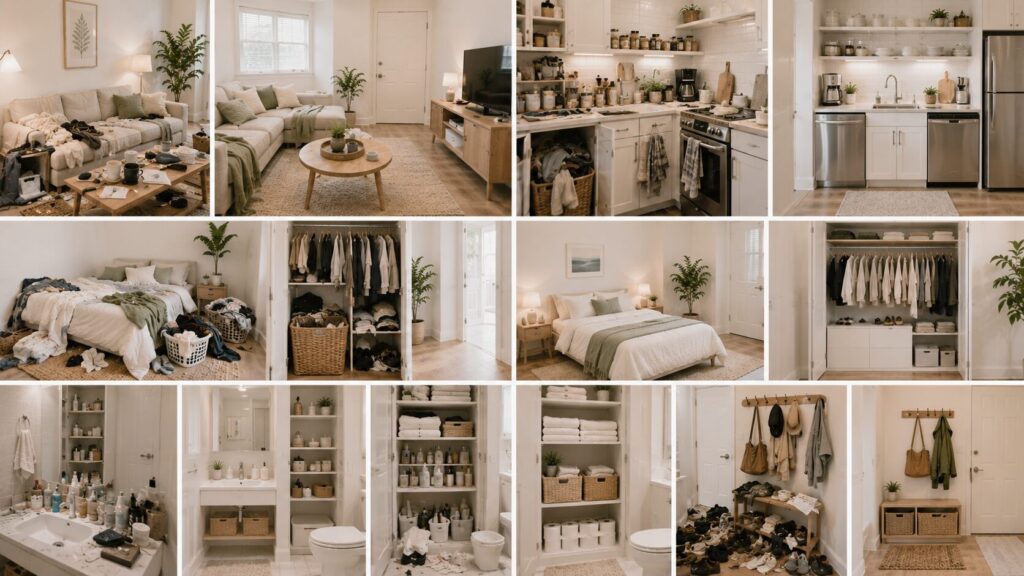
Start With the Highest-Impact Room, Not the Easiest One
The instinct is often to start with whatever room feels least overwhelming. The more effective approach: start with whichever room affects your daily experience of the apartment the most — usually the living room in an open-plan studio, or the entryway if it’s the first thing you see every time you come home.
Tackling the highest-impact room first means the visible improvement happens fastest, which creates the motivation to continue into less urgent areas. Starting with a low-impact closet, by contrast, can produce a technically completed task with very little felt improvement to the apartment overall.
The Living Room
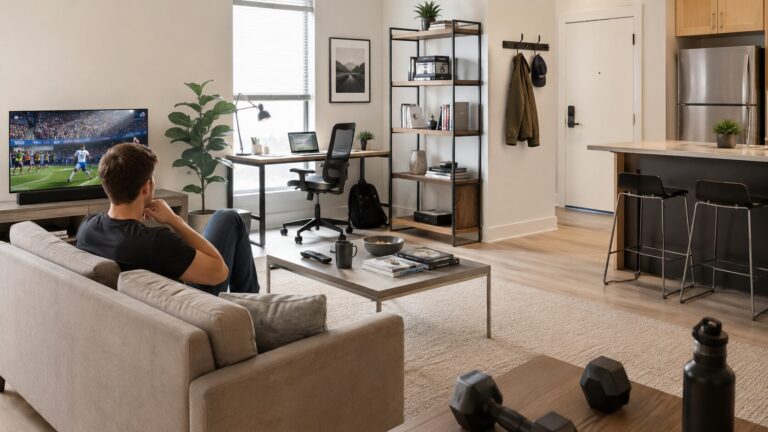
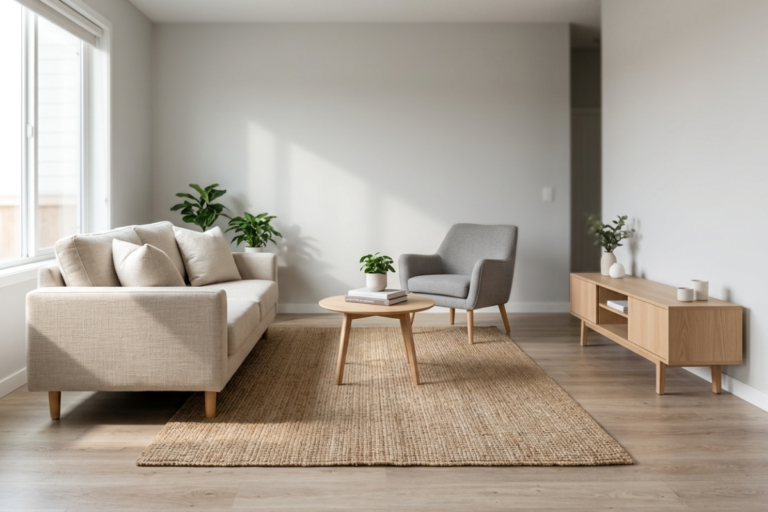
Clear every surface completely first, then decide what genuinely belongs back on each one. Coffee tables, console tables, and shelves accumulate items gradually and invisibly — clearing everything at once and reintroducing only what earns its place (functional or genuinely enjoyed, per the earlier framework) resets the surface faster than trying to edit item by item while everything else stays put.
Address the media and cable situation. Loose cables, remotes without clear homes, and gaming or streaming accessories are one of the most common living room clutter sources in a small apartment. A cable management box or a designated tray for remotes solves this at the source rather than requiring repeated tidying.
Evaluate throw pillows and blankets honestly. It’s easy to accumulate more decorative textiles than a small sofa can reasonably display. Two to three cushions and one throw per seating piece is generally the functional maximum before it starts working against the room rather than for it.
The Kitchen
Pull everything off the counters, exactly as with the living room surfaces, and evaluate what actually needs to live there versus what can move into a cabinet or get donated. Appliances used less than weekly are strong candidates for cabinet storage rather than permanent counter placement, freeing up prep space that matters disproportionately in a small kitchen.
Go through cabinets by category, checking for duplicates and expired items simultaneously — expired spices, pantry items past their useful life, and the duplicate kitchen gadgets mentioned earlier tend to hide in the back of cabinets specifically because they’re rarely used, which is exactly what makes them candidates for removal.
Edit dishware to household size. As covered in other small-kitchen guides, a full 12-piece dish set is often more than a solo or two-person household needs, and reducing to a right-sized set frees meaningful cabinet space in a kitchen that likely doesn’t have much to spare.
The Bedroom
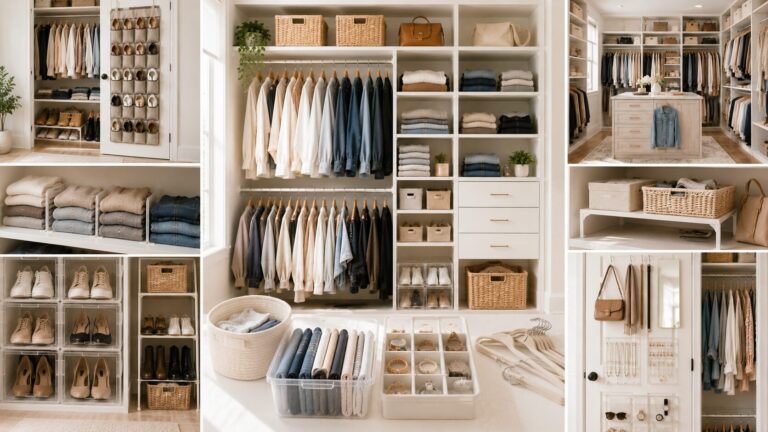
Start with the closet, since it’s usually the single most cluttered storage zone in the apartment. Pull every item of clothing out, sort using the three-question framework, and pay particular attention to duplicates and items that no longer fit or suit your current life — these are two of the most common categories people hold onto without an active reason.
Check under the bed. This space becomes a default storage zone that often accumulates items nobody actively decided to store there — it just became the path of least resistance. A genuine review of what’s under the bed, rather than assuming it’s all intentional storage, frequently surfaces items that belong in the “maybe” box or the donate pile.
Edit the nightstand. Nightstands accumulate small items — old receipts, expired medication, forgotten chargers — faster than almost any other surface in the apartment, simply because they’re within arm’s reach of where you spend unfocused time before sleep.
The Bathroom
Check expiration dates on everything. Cosmetics, medications, and some skincare products have genuine expiration windows, and bathroom clutter frequently includes items that are not just unused but actually past their useful or safe life.
Consolidate near-empty products. Combining two nearly finished bottles of the same product, or committing to using up a product before buying a replacement, reduces the accumulated backlog of partially used items that tends to build up in bathroom cabinets specifically.
Edit towels and linens to what you actually use in rotation. A reasonable towel rotation for a small apartment is typically two to three sets per person — beyond that, additional towels are usually taking up linen closet space without adding functional value.
The Entryway
Address the daily-carry pile. Keys, mail, bags, and shoes accumulate at the entry faster than almost anywhere else in a small apartment, simply because it’s the transition point between outside and inside. A dedicated system here — covered in more depth in a separate entryway-focused guide — prevents this specific clutter source from recurring.
What to Do With Everything You’re Removing
Sort Into Clear Categories as You Go
Rather than one undifferentiated “stuff to deal with” pile, sort removed items into distinct categories from the start: donate, sell, recycle/dispose, and relocate (items that belong in a different room or storage location within the apartment). This prevents the removed items from simply becoming a new, differently located pile of clutter.
Donate Promptly, Not Eventually
Bags set aside “to donate eventually” frequently sit in a small apartment for weeks or months, effectively becoming a new clutter category rather than a completed task. Schedule the donation drop-off (or a pickup service, where available) within a few days of sorting, ideally on the same day if the schedule allows.
Sell Selectively
Reserve reselling efforts for items genuinely worth the time investment — higher-value furniture, electronics, or clothing in excellent condition. For lower-value items, the time cost of photographing, listing, and coordinating a sale frequently exceeds the money recovered, making donation the more time-efficient choice for the majority of decluttered items.
Making Decluttering Stick: Maintenance Habits for Small Apartments
The initial decluttering process matters less than what happens in the weeks and months after it, since a small apartment’s compressed clutter timeline means disorganization returns faster without ongoing habits to prevent it.
The One-In, One-Out Rule
For every new item that enters the apartment, one existing item leaves. This applies most directly to clothing, kitchen items, and decorative objects — categories that tend to accumulate gradually rather than through single large purchases. The rule doesn’t require rigid enforcement for every single item, but treating it as a general habit prevents the slow creep back toward clutter that a one-time decluttering session doesn’t address on its own.
The Five-Minute Nightly Reset
A short, consistent reset — clearing surfaces, returning items to their designated spots, dealing with the day’s mail — prevents the daily accumulation that compounds into a larger problem within a week or two. This matters more in a small apartment than a larger home specifically because there’s less space for a few days of accumulated mess to remain invisible.
A Weekly or Biweekly “Hot Spot” Check
Certain areas of any home — the entryway table, the kitchen counter nearest the door, a specific chair that becomes the “clothes chair” — tend to become recurring clutter magnets regardless of the initial decluttering effort. A regular, brief check of these specific known hot spots (rather than a full apartment review) catches the recurring pattern before it becomes a larger problem.
Give Every Category a Genuine, Designated Home
Clutter often isn’t really about having too many things — it’s about things not having a clear, designated place to go. Mail, keys, shoes, chargers, and any other frequently-handled category needs an actual assigned spot, not just “wherever there’s room.” When every category has a real home, putting things away becomes a faster, lower-friction habit than leaving them out.
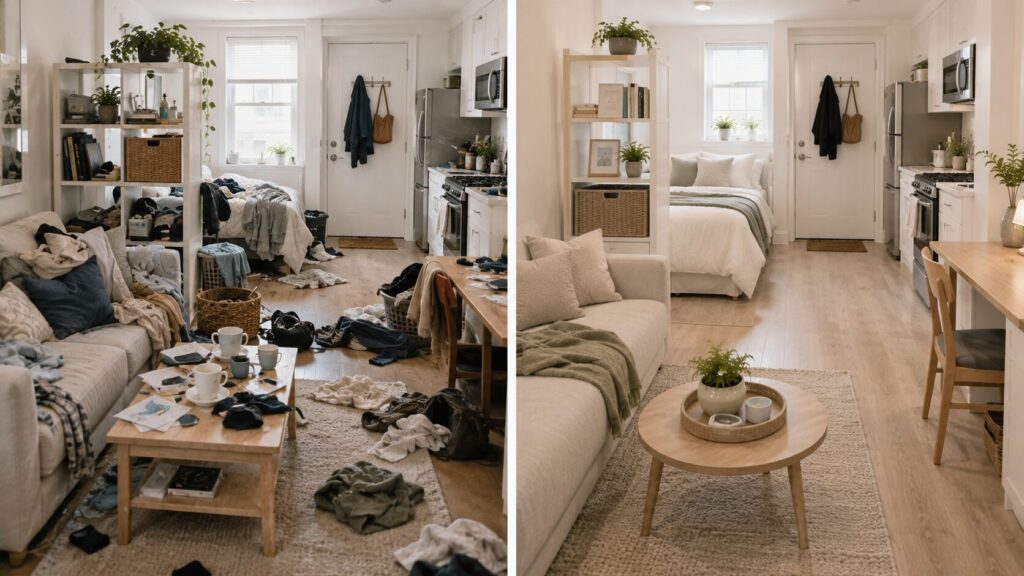
Quick Reference: How to Declutter a Small Apartment
Before starting:
- Use the three-question test (used in the last year? unique function? would buy again?) for quick decisions
- Set up a “maybe” box with a genuine 30–90 day expiration for uncertain items
- Sort removed items into donate/sell/recycle/relocate from the start
Room order (highest impact first):
- Living room or entryway (whichever affects daily experience most)
- Kitchen (counters first, then cabinets by category)
- Bedroom (closet first, then under-bed, then nightstand)
- Bathroom (expiration dates, near-empty product consolidation)
Maintenance habits that make it last:
- One-in, one-out for clothing, kitchen items, and decorative objects
- Five-minute nightly reset
- Weekly or biweekly check of known clutter hot spots
- A genuine designated home for every frequently-handled category
Conclusion
How to declutter a small apartment comes down to two things working together: a system that makes decisions faster (rather than getting stuck on sentimental attachment or “I might need this someday” thinking), and maintenance habits calibrated to how quickly a small space shows disorder compared to a larger home.
The three-question framework — used in the last year, unique function, would buy again — resolves the majority of decision paralysis that stalls most decluttering attempts. Working room by room, starting with whichever space affects your daily experience most, builds momentum through visible early progress rather than starting with a technically-easy but low-impact area.
None of this requires an extreme minimalist commitment or getting rid of everything you own. It requires a repeatable process for deciding what actually belongs in your apartment, and habits that catch clutter before it accumulates rather than requiring another full decluttering session every few months.
Start with the room that bothers you most, apply the three-question test consistently, and sort what you remove into clear categories immediately rather than letting it become a new pile. Then build in the maintenance habits — the nightly reset, the one-in-one-out rule, the hot-spot check — that keep the apartment from sliding back into the state that made this guide necessary in the first place.
Frequently asked questions:
Where should I start decluttering a small apartment?
Start with whichever room affects your daily experience of the apartment the most — often the living room in an open-plan studio, or the entryway if it’s the first thing you encounter every time you come home. This produces the most visible, motivating improvement early, which builds momentum for tackling less urgent areas afterward. Avoid the instinct to start with the “easiest” room just because it feels less overwhelming — a low-impact area, even if technically completed, often doesn’t produce the felt sense of progress that keeps a decluttering effort going.
How do I decide what to keep and what to get rid of?
Use a three-question framework for each item: Have you used it in the last year (not “might I,” but actually used it)? Does it serve a function you don’t already have covered by something else you own? Would you buy it again today, at this price, knowing what you know now? Most items resolve clearly with these three questions. For genuinely uncertain items, a labeled “maybe” box with a real 30–90 day expiration date removes the pressure of an immediate permanent decision — if the box isn’t opened by the expiration date, everything in it gets donated without further evaluation.
How often should I declutter a small apartment?
A full room-by-room decluttering session once or twice a year addresses the larger accumulation that builds up over time, but the more important habit is a five-minute nightly reset and a weekly or biweekly check of known “hot spot” areas — the entryway table, a specific chair, the kitchen counter nearest the door — that tend to become recurring clutter magnets regardless of how thoroughly the apartment was decluttered previously. Small apartments show disorder faster than larger homes because there’s less space to absorb accumulated mess invisibly, which makes these smaller, more frequent maintenance habits more important than they might be in a house with more room to spare.
What’s the biggest mistake people make when decluttering a small apartment?
Treating decluttering as a one-time event rather than pairing it with ongoing maintenance habits. A thorough decluttering session produces real, visible improvement, but without habits like a one-in-one-out rule for new purchases and a nightly reset routine, small apartments tend to slide back toward clutter within weeks, simply because there’s so little space to absorb new accumulation before it becomes visible again. The other common mistake is setting aside a “donate” pile without a scheduled drop-off — bags set aside “to donate eventually” frequently sit in a small apartment for weeks, effectively becoming a new clutter category rather than a completed task.
How do I declutter sentimental items in a small apartment without feeling guilty?
The “would I buy this again today, knowing what I know now” question is particularly useful for sentimental items, because it separates the item’s actual current value to you from the emotional weight of how you originally acquired it or who gave it to you. For items you’re genuinely torn on, the “maybe” box method with a real expiration date works well here too — it removes the pressure of an immediate final decision while still moving the item out of daily visibility. For a smaller number of items with real sentimental significance, consider photographing the item (preserving the memory) rather than keeping the physical object indefinitely, especially in a small apartment where every kept item has a real space cost that a larger home wouldn’t impose as directly.