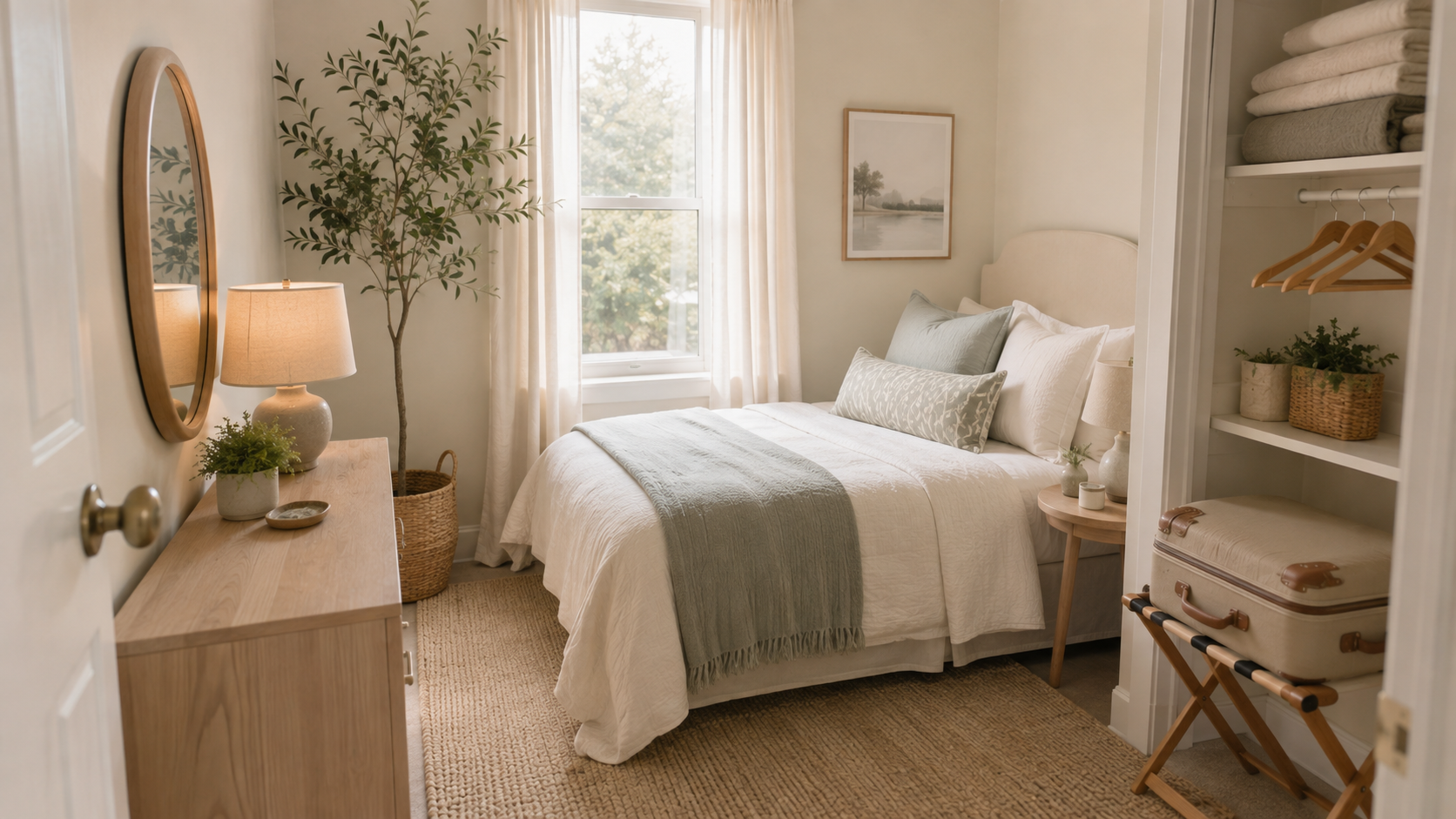
Small Guest Bedroom Ideas That Make Visitors Feel Genuinely Welcome
A small guest bedroom has a specific job that’s easy to underestimate: for a night or a weekend, it needs to feel like a real bedroom to someone who doesn’t live there and doesn’t know where anything is.
That’s a different challenge than furnishing a room for yourself. You already know where the outlet is, which side of the bed you prefer, and where the extra blanket lives. A guest doesn’t know any of that, and a room that works fine for a familiar occupant can feel confusing or uncomfortable for someone spending one or two nights in it.
Small guest bedrooms also tend to be the most neglected room in the house, precisely because they’re used so infrequently. It’s easy to let the room become storage overflow between visits, then scramble to make it presentable the week before someone arrives. A guest room designed with intention from the start avoids that scramble and consistently makes visitors feel genuinely taken care of, regardless of the room’s actual size.
This guide covers small guest bedroom ideas built around real hospitality — the details that make a compact room feel comfortable and considered for someone staying there temporarily — along with the practical furniture and storage solutions that let the room serve other purposes the rest of the time.
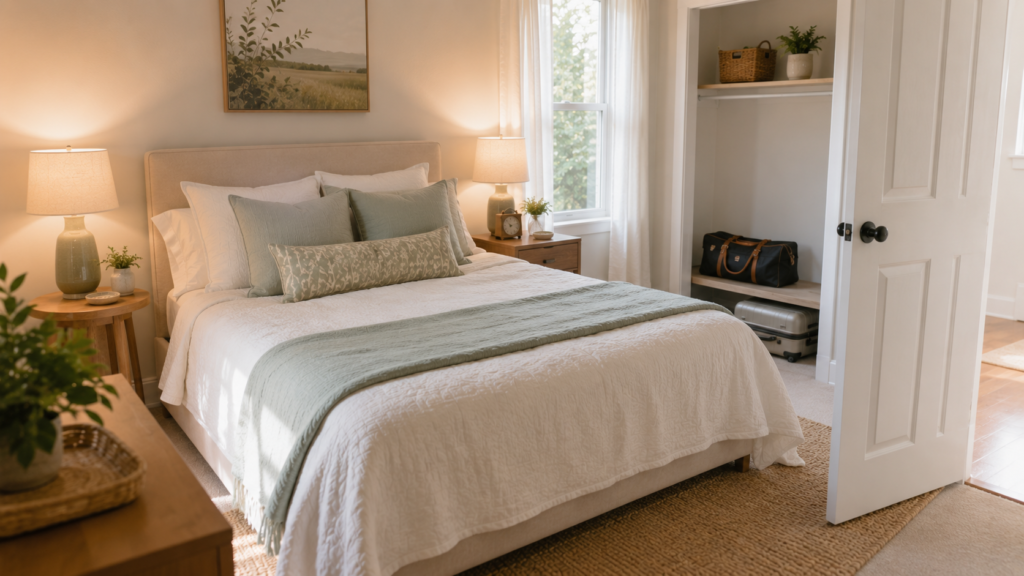
What Actually Makes a Guest Feel Comfortable
Before specific furniture and decor ideas, it’s worth understanding what genuinely matters to someone staying in an unfamiliar room, because this determines which small guest bedroom investments are worth prioritizing.
A comfortable, properly made bed matters more than almost anything else in the room. Guests notice mattress quality, pillow comfort, and whether the bedding feels clean and well cared for far more than they notice decorative details.
Somewhere to put their belongings, even briefly — an open suitcase, folded clothes, personal items. A guest room with nowhere to set down a bag beyond the floor creates a small but real discomfort that compounds over a multi-night stay.
Basic orientation cues — where the light switch is, whether there’s a clock, where an outlet is for charging a phone. These seem minor, but a guest fumbling for a light switch in an unfamiliar room at 2 a.m. is a genuinely common small frustration that a little planning avoids entirely.
Privacy and the ability to close a door. If the “guest room” is technically a shared or multi-purpose space without a door that closes, this affects comfort more than almost any decorating decision — worth acknowledging honestly if this is the situation, since it changes what “guest room” actually means in your specific home.
Small Guest Bedroom Ideas for the Bed Itself
Prioritize the Mattress Over Everything Else
If a genuinely dedicated guest bed isn’t part of the room (more on flexible sleeping solutions below), and the room does have a permanent bed, the mattress quality matters more than any other single decision in the room. A worn, sagging mattress — even styled beautifully with good bedding — undermines guest comfort in a way no amount of decorating compensates for.
For infrequently used guest rooms, a mid-range mattress genuinely performs well; there’s less need to invest in the highest tier when the mattress sees occasional rather than nightly use over years. But avoid the lowest-quality tier entirely — guests notice a poor mattress immediately, and it’s one of the fastest ways a well-decorated guest room still feels like an afterthought.
Layer Bedding the Way a Good Hotel Does
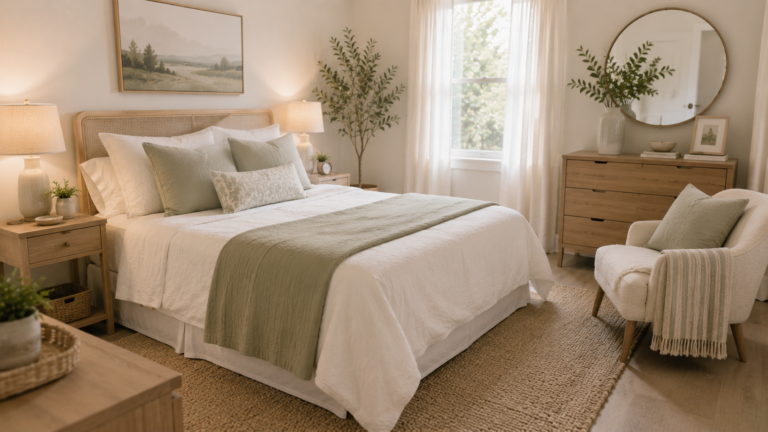
A simple, well-executed bedding layer reads as genuinely hospitable in a way that an elaborate but poorly assembled one doesn’t. The formula that consistently works: a fitted sheet, a flat sheet, a duvet or lightweight comforter, two pillows per guest (one firm, one softer, if you can manage the variety), and a folded throw at the foot of the bed for anyone who runs cold.
Solid, neutral bedding colors (white, warm gray, soft sage) are more universally comfortable than bold patterns or colors, since you’re furnishing for a variety of people with different tastes rather than yourself specifically. This is one area where “safe” genuinely outperforms “personal style” for guest-specific spaces.
Consider a Sofa Bed or Daybed for Dual-Function Rooms
If the guest room needs to serve another function most of the time — a home office, a craft room, a reading nook — a quality sofa bed or a daybed with a trundle handles both roles without the room feeling permanently dedicated to occasional guest use. Covered in more depth in dedicated guides on office-and-guest-room combinations, but worth noting here specifically from the guest comfort angle: invest in a sofa bed with a genuine, non-bar mattress (modern sleeper sofas have largely solved the old metal-bar-in-the-back problem, but it’s worth confirming with any specific model before purchasing) so the dual-function choice doesn’t compromise guest comfort noticeably compared to a dedicated bed.
Small Guest Bedroom Ideas for Storage
Give Guests Somewhere for Their Things
Even a small guest bedroom benefits from at least a partial closet section or a few empty drawers cleared specifically for guest use — not filled with your own off-season storage that happens to live there between visits. A drawer or two, plus a few empty hangers on a visible section of rod, communicates “this space is genuinely for you” more clearly than almost any decorative touch.
If a full closet section isn’t available, a slim luggage rack (a simple folding stand, $20–$40) gives guests a place to set an open suitcase off the floor, which matters more for comfort than its modest cost suggests — living out of a suitcase on the floor for several nights is a small but real discomfort most people don’t mention but definitely notice.
A Nightstand With at Least One Drawer
A guest nightstand with a drawer — even a single, small one — gives visitors somewhere to put a phone charger, glasses, medication, or anything else they’d rather not leave out on an open surface. This is a detail most hosts underestimate; an open surface with no concealed storage option means every personal item a guest brings stays visible for the duration of their stay, which some guests find genuinely uncomfortable.
Multi-Function Storage for the Room’s Other Uses
If the guest room doubles as storage, a craft space, or an office, use furniture that conceals its non-guest-related contents when the room needs to switch into hosting mode — a storage ottoman, a cabinet with doors rather than open shelving for anything that isn’t meant for guest use, or a closet section reserved and kept clear specifically for guest access regardless of what else the room stores.
Small Guest Bedroom Ideas: Furniture That Works Double Duty
The Room That’s Also an Office
Covered in more depth in dedicated office-and-spare-bedroom guides, but the core principle bears repeating here: a Murphy bed, daybed, or quality sofa bed lets the room function as a genuine workspace most of the time while still providing real guest comfort during visits — provided the sleeping solution itself doesn’t compromise on mattress quality just because it’s not a dedicated bed.
The Room That’s Also Storage or a Craft Space
If the guest room’s primary function the rest of the time is storage or a hobby space, prioritize furniture and systems that can be quickly reset for guest use — bins and supplies that tuck into closed cabinets rather than staying visible on shelves, and a clear surface (even if it’s normally a craft table) that can function as a nightstand-equivalent during a guest’s stay.
The Room That’s Also a Reading Nook or Sitting Room
A daybed styled with bolster cushions during non-guest periods reads as a lounge piece — a genuinely pleasant reading spot — while converting easily to a comfortable single-guest bed when needed. This dual identity works particularly well for guest rooms that would otherwise sit completely unused between visits, giving the room daily value rather than existing purely as occasional-use overflow space.
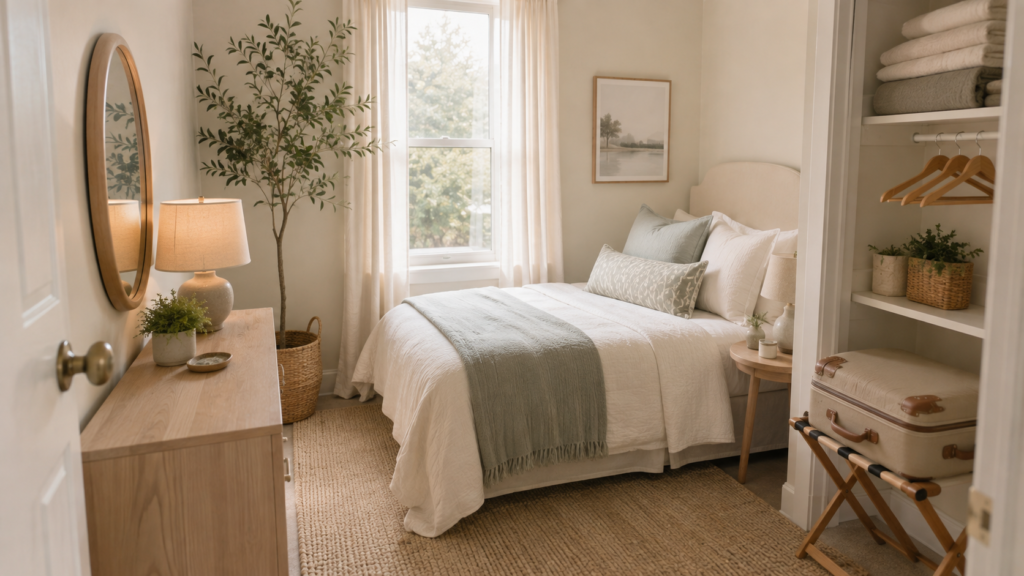
Small Guest Bedroom Ideas for Warmth and Personality
Keep the Palette Calm and Universally Comfortable
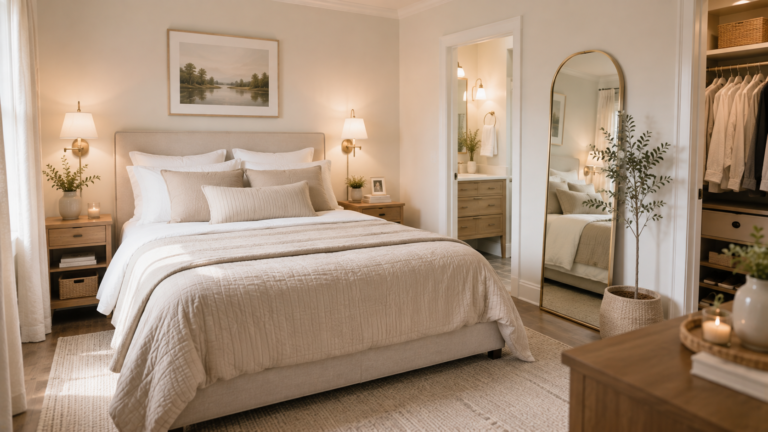
A small guest bedroom benefits from a more neutral, calming palette than a room decorated purely for your own taste — soft whites, warm grays, gentle sage or blue tones. This isn’t about the room lacking personality; it’s about creating a space that feels restful to a range of different people rather than reflecting one specific, strong aesthetic preference that might not suit every visitor.
Add Warmth Through Texture Rather Than Bold Color
Layered textiles — a textured throw, a soft area rug, cushions in varied but complementary textures — add richness and comfort without requiring bold color choices that might not suit every guest’s taste. This is the same texture-over-pattern principle that works well in small spaces generally, applied here specifically because it produces a calming, broadly appealing result.
A Few Genuinely Welcoming Touches
A small plant on the nightstand or dresser adds life to the room without requiring maintenance from the guest — choose something low-maintenance enough that it looks good throughout a typical visit length without needing water.
A carafe of water and a glass on the nightstand is a small, genuinely appreciated touch that solves the specific problem of a guest not wanting to navigate an unfamiliar kitchen at night for a glass of water.
A couple of books or magazines relevant to general interests (rather than deeply personal to your own taste) give guests something to do if they’re not ready to sleep immediately, without requiring them to bring their own reading material or rely on a phone screen before bed.
A small mirror, even if the room doesn’t have a full-length one, helps guests get ready without needing to use a shared bathroom mirror at an inconvenient time.
Small Guest Bedroom Ideas for Orientation and Comfort Details
A Bedside Lamp Is Close to Essential
A bedside lamp — even a simple, inexpensive one — matters more in a guest room than almost any other single item beyond the bed itself. It lets a guest read before sleep, provides a soft light source for navigating the unfamiliar room at night without turning on a harsh overhead light, and is genuinely one of the most noticed comfort details in any guest space.
Label or Clearly Indicate Where Things Are
For anything a guest might need to find without asking — an extra blanket, spare towels if they’re stored in the room, a phone charger — a small, clear label or a simple note left visibly (a sticky note on a drawer, or verbal orientation when they arrive) removes the awkwardness of a guest wondering whether it’s acceptable to open drawers and look for what they need.
Provide Charging Access Near the Bed
If there isn’t already an outlet within easy reach of the bed, a small extension cord or a power strip positioned near the nightstand solves one of the most common minor guest frustrations — needing to charge a phone overnight but the only outlet being across the room, behind furniture, or otherwise inconvenient to reach.
Consider Light-Blocking Window Treatments
Guests often keep different sleep schedules than the household, and a room that lets in early morning light can disrupt a guest’s rest in a way the regular occupants might not notice, since they’re used to the room’s natural light pattern. Blackout curtains or a simple blackout liner behind existing curtains solve this for a relatively modest cost and genuinely improve guest sleep quality.
Managing a Guest Room That Doubles as Something Else Between Visits
The Reset Routine
Before a guest arrives, a consistent reset routine — clearing any non-guest items back into their designated storage, making the bed properly, checking that the nightstand drawer and closet section are actually clear — prevents the last-minute scramble that happens when a guest room has quietly become a storage overflow zone between visits.
Keep this routine simple and repeatable: a checklist of five or six specific things (bed made with fresh linens, closet section cleared, nightstand drawer empty, water carafe filled, lamp working, charging access confirmed) turns “getting the guest room ready” from a stressful last-minute task into a fast, predictable process.
Prevent Storage Creep Between Visits
The biggest threat to a functional guest room is gradual accumulation — one box that “just needs a temporary home” becomes several boxes over a few months, and eventually the room needs a genuine decluttering effort before it’s guest-ready again. Designating specific, limited storage within the room (a particular shelf, one closet section) for non-guest items, and treating anything beyond that boundary as not belonging in the room, prevents this creep from happening gradually and unnoticed.
Quick Reference: Small Guest Bedroom Ideas by Category
The bed:
- Prioritize mattress quality over decorative bedding choices
- Layer bedding hotel-style: fitted sheet, flat sheet, duvet, two pillows, a throw
- Sofa bed or daybed with trundle for dual-function rooms, with genuine attention to mattress quality
Storage:
- Clear at least a partial closet section and one drawer specifically for guest use
- A slim luggage rack if floor space allows
- Concealed storage (cabinets, ottomans) for the room’s non-guest contents
Warmth and personality:
- Calm, neutral palette that suits a range of tastes
- Texture over bold color or pattern
- Small welcoming touches: plant, water carafe, a couple of books, a mirror
Orientation and comfort:
- A bedside lamp, close to essential
- Clear indication of where extra items (blankets, towels) are stored
- Charging access within reach of the bed
- Blackout curtains or a liner for guests on different sleep schedules
Maintenance:
- A simple, repeatable reset checklist before every guest arrival
- Designated, limited storage boundaries to prevent gradual clutter creep between visits
Conclusion
Small guest bedroom ideas that actually work come down to genuine hospitality rather than pure decorating — understanding what someone unfamiliar with your home actually needs during a short stay, and making sure the room delivers on those needs consistently, not just when there’s time to prepare.
The mattress and bedding matter more than almost any decorative choice, since comfort during sleep is what guests remember most clearly. Storage — even a modest, cleared section — signals genuine welcome in a way that’s easy to overlook but consistently appreciated. And the small orientation details (a bedside lamp, clear charging access, an indication of where extra blankets live) solve real, if minor, discomforts that guests rarely mention directly but definitely notice.
For guest rooms that double as an office, storage space, or hobby room the rest of the time, the dual-function furniture covered here — sofa beds, daybeds, concealed storage — lets the room earn its keep daily while still delivering real guest comfort during visits, provided the sleeping solution’s quality isn’t compromised for the sake of its secondary function.
Start with the bed and the bedding, since these matter most. Add the storage and orientation details next. Then build in a simple reset routine that keeps the room consistently guest-ready rather than requiring a scramble every time someone’s about to arrive. A small guest bedroom prepared this way makes visitors feel genuinely cared for — regardless of how many square feet the room actually has.
Frequently asked questions:
What’s the most important thing to prioritize in a small guest bedroom?
The mattress and bedding matter more than any other single decision in the room. A comfortable, properly maintained mattress with hotel-style layered bedding (fitted sheet, flat sheet, duvet, two pillows, and a throw) creates genuine comfort that guests notice and remember far more than decorative details. If budget or space is limited, prioritize this category first and add storage, lighting, and personality touches as the room develops — a beautifully decorated guest room with an uncomfortable bed still leaves guests with a poor overall impression of their stay.
How do I make a small guest bedroom that also serves another purpose the rest of the time?
A quality sofa bed, daybed, or Murphy bed lets the room function as a genuine office, reading nook, or hobby space most of the time while still providing real comfort during guest visits — provided the sleeping solution doesn’t compromise on mattress quality for the sake of its secondary function. Use concealed storage (cabinets with doors, storage ottomans) for the room’s non-guest contents so they can be tucked away quickly before a visit, and designate specific, limited storage boundaries within the room to prevent gradual clutter accumulation between guest stays from taking over the space entirely.
What small details make guests feel most comfortable in an unfamiliar bedroom?
A bedside lamp is one of the most consistently appreciated details, since it lets guests read or navigate the room at night without needing a harsh overhead light. A carafe of water and a glass on the nightstand solves the specific discomfort of not wanting to navigate an unfamiliar kitchen late at night. Charging access within easy reach of the bed, a clear indication of where extra blankets or towels are stored, and at least a partial closet section or drawer cleared specifically for guest use all address real, if minor, discomforts that guests rarely mention directly but consistently notice and appreciate when they’re handled well.
What colors work best for a small guest bedroom?
A calm, neutral palette — soft whites, warm grays, gentle sage or blue tones — generally works better for guest rooms than bold or highly personal color choices, since the goal is creating a restful space that suits a range of different people rather than reflecting one specific strong aesthetic. Adding warmth and richness through texture (a textured throw, a soft rug, varied cushion textures) rather than through bold color allows the room to feel considered and comfortable without risking a color scheme that doesn’t suit every guest’s taste. This is a case where a more universally appealing, slightly more neutral approach genuinely serves the room’s function better than decorating purely for personal preference.
How do I keep a guest room from becoming a storage dumping ground between visits?
Designate specific, limited storage boundaries within the room for non-guest items — a particular shelf, one section of the closet — and treat anything beyond that boundary as not belonging in the room. This prevents the gradual accumulation that happens when “just for now” storage slowly expands unnoticed over months. Before each guest visit, run a simple, repeatable reset checklist (bed made with fresh linens, closet section cleared, nightstand drawer empty, lamp working, charging access confirmed) rather than a full decluttering effort — a defined boundary combined with a quick, consistent reset routine keeps the room reliably guest-ready without requiring a major cleanup scramble every time someone’s about to arrive.