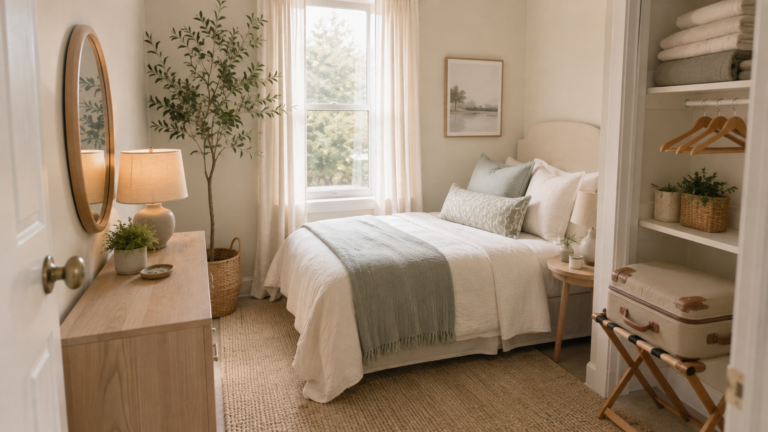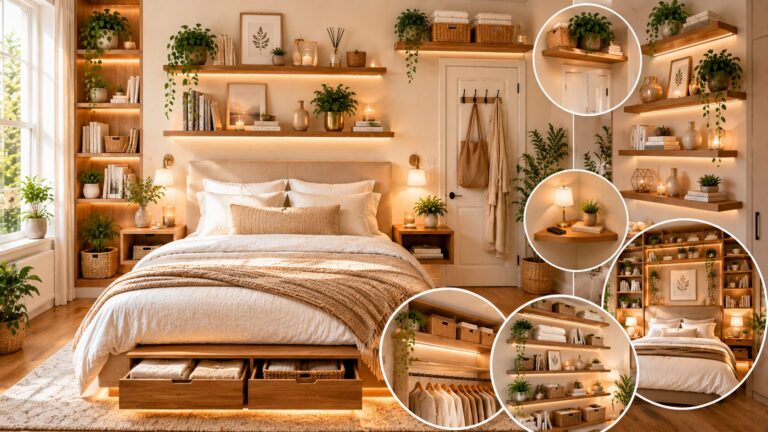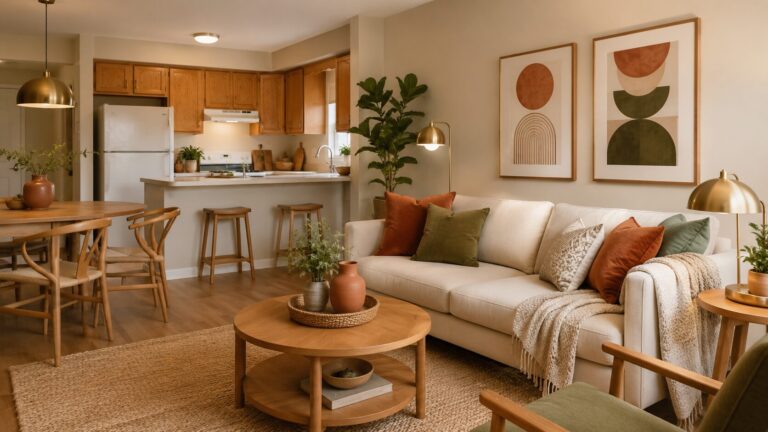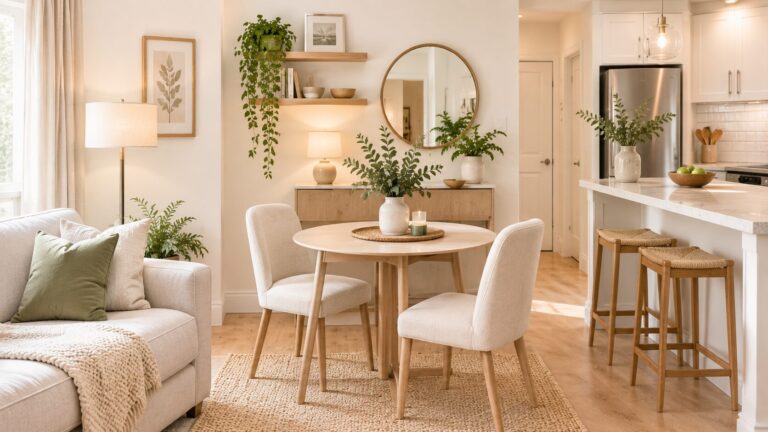
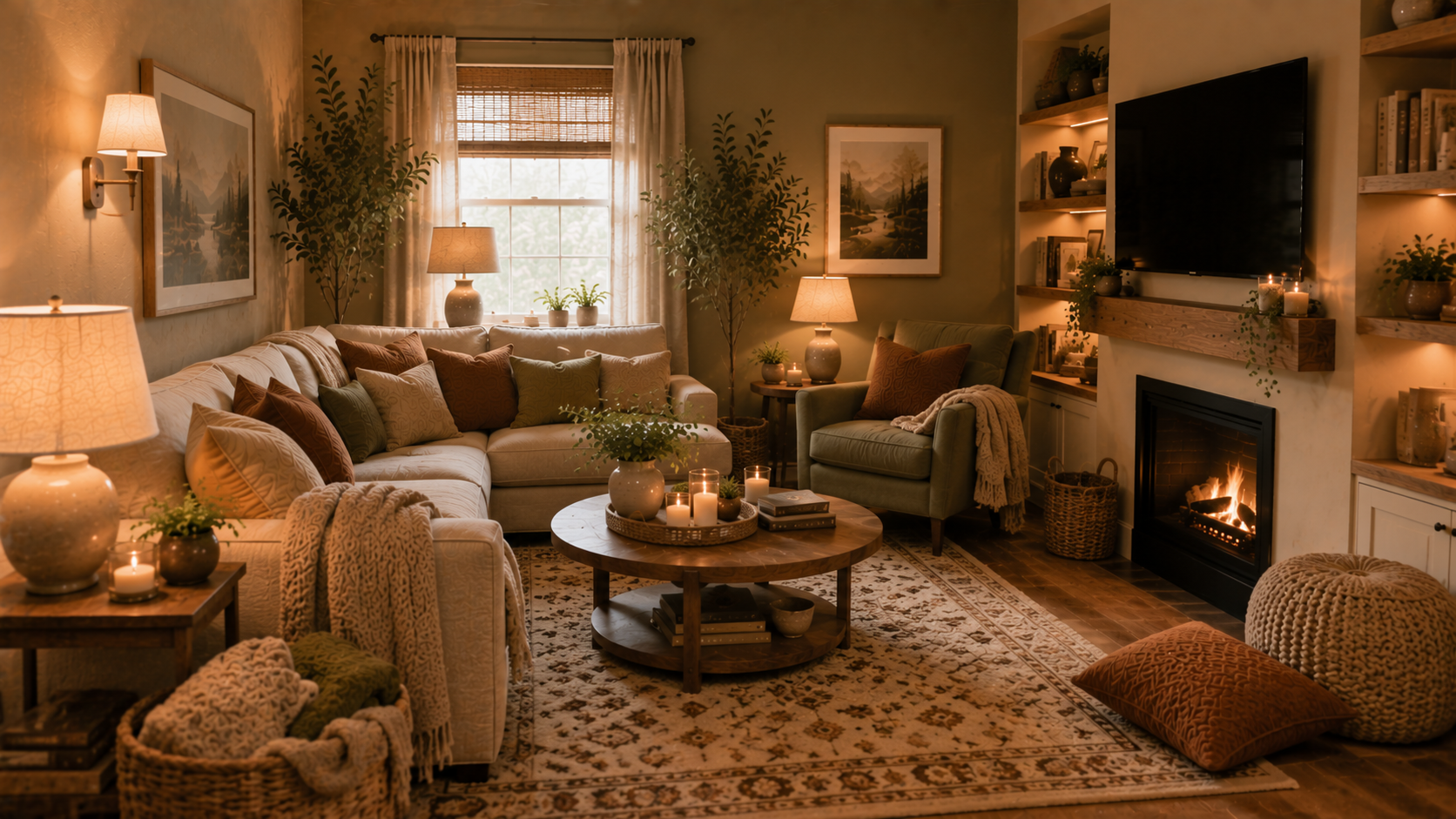
Small Warm and Cozy Living Room Ideas (When You’ve Stopped Trying to Make It Look Bigger)
Most small living room advice has one goal: make the room look bigger than it is. Light colours, mirrors, floating furniture, clear sightlines — all of it aimed at tricking the eye into perceiving more square footage than actually exists.
That’s genuinely useful advice for a lot of small living rooms. But it’s built around an assumption that’s worth questioning: that a small living room’s main problem is its size, and the solution is disguising it. For a room whose actual goal is coziness — a genuine sense of warmth, enclosure, and comfort — that assumption doesn’t hold. Some of the very techniques that make a room look larger (light colours, minimal texture, open floor space) work directly against the feeling of a warm, cocoon-like room that people actually want from a small, comfortable space.
This is the permission a lot of people furnishing a small living room don’t realize they have: you don’t have to spend your small living room fighting its own size. A compact room, embraced rather than disguised, can deliver a genuine sense of coziness that a larger, airier living room often can’t match — the scale itself becomes an asset rather than a problem to solve.
This guide covers small warm and cozy living room ideas built around that different goal — real comfort and warmth, not the illusion of more space — through colour, texture, lighting, and layout choices that lean into a small room’s natural intimacy instead of working against it.
The Real Difference Between “Bigger” and “Cozier” Design Choices
Before specific ideas, it’s worth understanding where cozy-focused design genuinely diverges from space-maximizing design, because a lot of small living room content blends the two without acknowledging the tension.
Colour: Space-maximizing design favours light, reflective colours. Cozy design favours warmer, sometimes deeper tones that absorb rather than bounce light, creating a softer, more enveloping quality.
Texture: Space-maximizing design tends toward smooth, minimal surfaces that don’t visually compete with each other. Cozy design embraces layered texture — a chunky knit throw, a plush rug, varied cushion fabrics — even though more texture technically adds visual complexity that can make a room feel busier.
Lighting: Both approaches value layered lighting over a single harsh overhead, but cozy design leans further into warm, lower, dimmer light sources specifically, sometimes prioritizing atmosphere over maximum brightness.
Furniture density: Space-maximizing design favours fewer, more open pieces with visible floor beneath them. Cozy design tolerates — and often benefits from — a slightly fuller room, more cushions, more layers, provided the room still functions.
None of this means cozy design abandons every small-space principle. Floating furniture, avoiding clutter, and using the room’s proportions intelligently all still matter. But the specific choices within those principles shift meaningfully once coziness, not apparent size, becomes the goal.
Small Warm and Cozy Living Room Ideas: Colour
Warm Neutrals Over Cool, Bright Ones
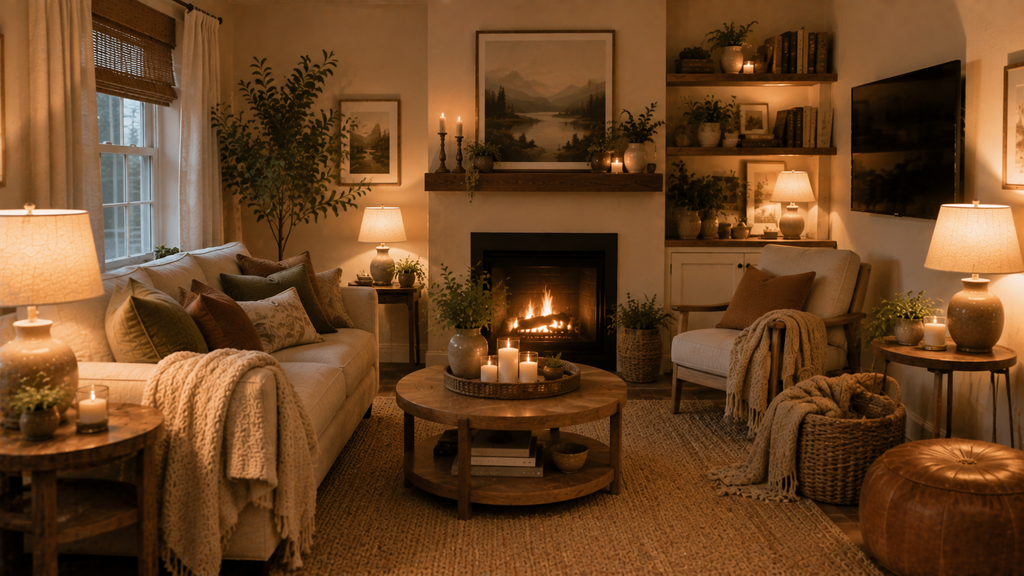
Rather than the cool-toned, maximally light-reflecting whites and greys favoured by space-maximizing advice, a warm and cozy small living room benefits from warmer neutrals — cream, warm oatmeal, soft camel, warm taupe. These still keep the room reasonably bright but carry an inherent warmth that a stark white or cool grey doesn’t.
Deeper, Richer Tones Without Fear
A small living room can absolutely carry a deeper colour — a warm terracotta, a rich rust, a deep, warm green, even a soft chocolate brown — and this is genuinely one of the biggest permission shifts between “make it bigger” and “make it cozy” advice. Applied thoughtfully (often across the full room rather than as a single jarring accent wall, similar to the all-over application principle covered in bedroom colour guides), a deeper colour scheme creates exactly the enveloping quality that coziness depends on.
The key condition, as with any dark or deep colour choice in a small room: generous, warm lighting to prevent the space from feeling gloomy rather than intentionally cocooning. A deep-coloured room with excellent layered lighting reads as luxurious and warm; the same colour with only a single overhead bulb reads as simply dark.
Warm Wood Tones as a Colour Anchor
Beyond wall colour, warm wood tones — in flooring, furniture, and trim — contribute significantly to a room’s overall sense of warmth. A small living room with cool-toned grey flooring and cool metal furniture accents will feel noticeably less cozy than the same room with warm oak floors and brass or warm wood details, even with an identical wall colour.
Small Warm and Cozy Living Room Ideas: Texture
Layer More Than the Space-Maximizing Rules Suggest
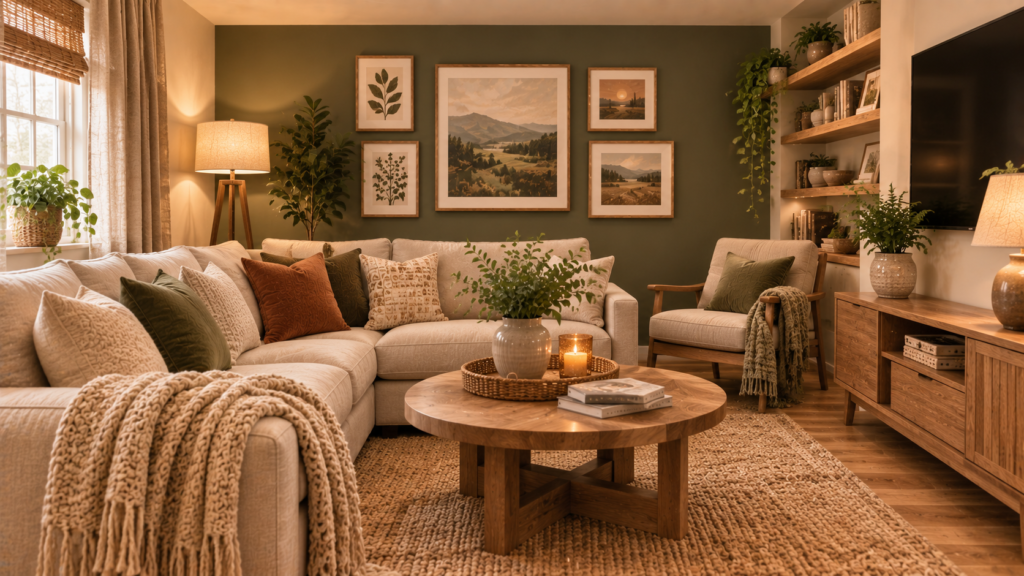
Where space-maximizing advice generally recommends restraint in the name of visual simplicity, a cozy small living room benefits from genuine textile layering — more cushions, more textures, a substantial throw, a rug with real depth and pile rather than a thin, flat weave.
The rug matters more here than almost anywhere else. A plush, high-pile rug (wool or a wool-blend) underfoot contributes directly to a room’s sense of warmth and comfort in a way a thin flatweave simply can’t, regardless of colour or pattern. This is one of the clearest departures from purely space-focused advice, which often favours a flatweave specifically because it reads as visually lighter.
Mix textures deliberately across the seating area. A linen sofa, a chunky knit throw, a velvet or bouclé cushion, a woven basket — the variety of textures does more to create a sense of richness and warmth than colour alone. Aim for at least three distinct textures within the main seating area for a genuinely layered feel.
Substantial Curtains, Not Just Light-Maximizing Sheers
While sheer curtains are often recommended in small-space guides specifically to maximize light, a cozy small living room can support heavier, more substantial curtain fabric — a linen-cotton blend, a velvet, or a wool-blend weave — which adds warmth, softens the room acoustically, and contributes a sense of enclosure that thin sheers don’t provide. If natural light is a genuine priority, a layered approach (a sheer panel plus a heavier drape that can be drawn at night) offers both benefits at different times.
Small Warm and Cozy Living Room Ideas: Lighting
Prioritize Warmth and Quantity Over Maximum Brightness
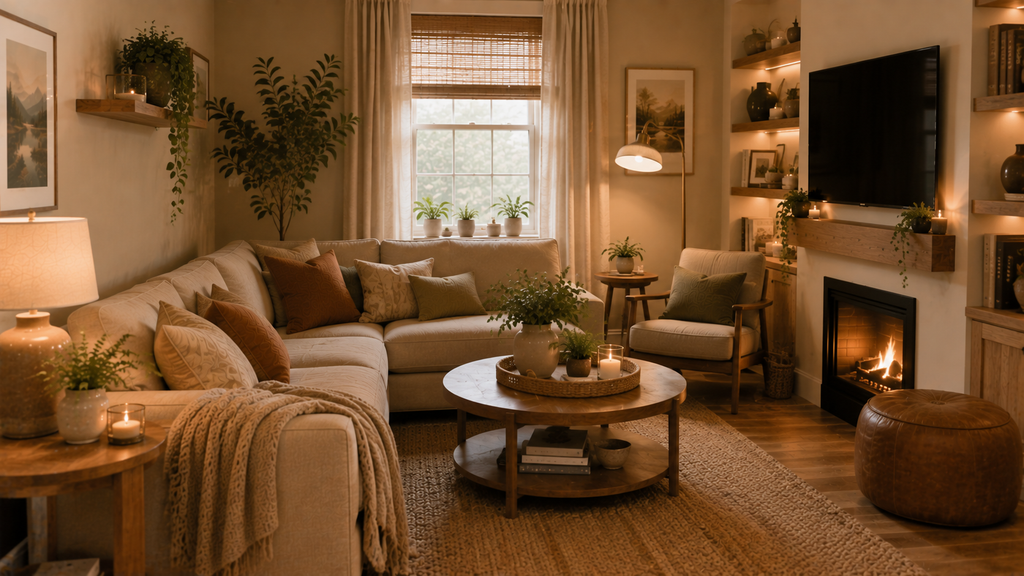
Every small-space lighting guide recommends layered lighting, but a cozy living room specifically leans toward warmer bulb temperatures (2700K, sometimes even the warmer end of that range) and a genuine abundance of smaller light sources rather than one or two brighter ones.
Table lamps do more cozy work than floor lamps alone. A floor lamp lights a room from a single point; multiple table lamps — on a side table, a console, even a low shelf — create pools of warm light throughout the room that read as more intimate and layered than a single tall lamp’s more directional light.
Candles and Low, Flickering Light Sources
Real or high-quality flameless candles add a specific quality of light — warm, low, slightly flickering — that no fixed lamp can replicate, and this genuinely contributes to a cozy atmosphere in a way that’s worth taking seriously rather than dismissing as purely decorative. A cluster of candles on a coffee table or mantel, used regularly rather than saved for special occasions, changes a room’s evening character significantly.
A Fireplace or Fireplace Alternative as the Room’s Anchor
If the room has a working or decorative fireplace, positioning the seating area to genuinely orient around it — rather than around the TV exclusively — supports the room’s cozy character more directly than almost any other single decision. For rooms without a fireplace, an electric fireplace insert or a simpler fireplace-style media console with a realistic flame effect can provide a similar visual and psychological anchor point at a considerably lower cost and complexity than a real fireplace installation.
Small Warm and Cozy Living Room Ideas: Furniture and Layout
A Slightly Fuller Room Is Genuinely Fine Here
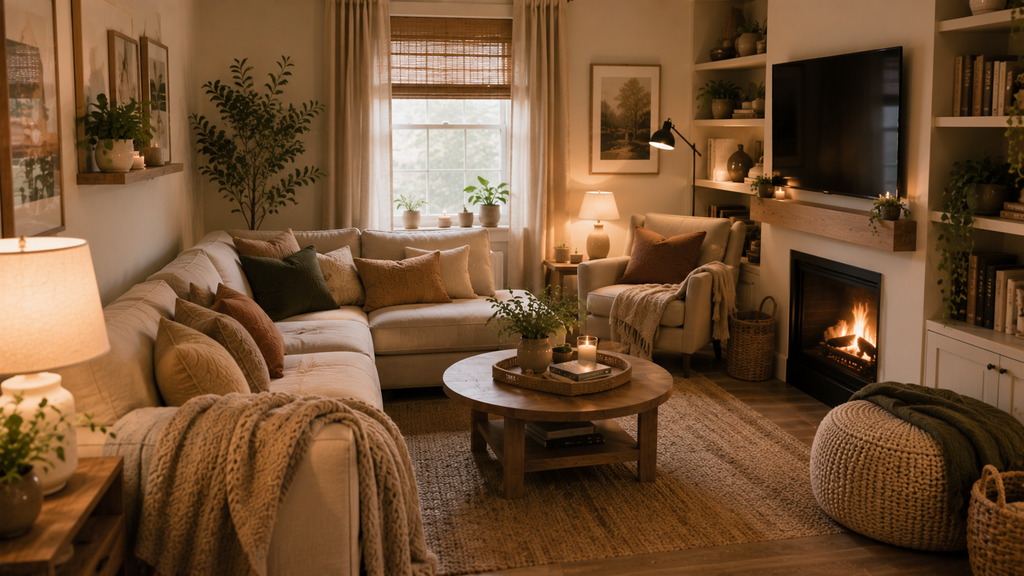
Space-maximizing advice consistently recommends fewer, more open pieces. Cozy design tolerates — and often benefits from — a bit more furniture density, provided the room still functions and traffic paths remain clear. An extra cushion-laden armchair, a low ottoman, a side table with a lamp and a small stack of books — these additions work against pure square-footage optics but work directly in favour of the enveloping, “everything within reach” quality that makes a small room feel like a genuine retreat.
Pull Seating Closer Together Than You Might Expect
Where space-focused layouts often recommend generous clearance between pieces for the sake of an open floor plan, a cozy small living room benefits from seating arranged slightly closer together than the absolute functional minimum — close enough that conversation feels intimate rather than requiring raised voices across an open floor plan. This works particularly well in a genuinely small room, since the room’s compact scale naturally supports this closer arrangement without feeling forced.
A Low Coffee Table Within Easy Reach
A coffee table positioned at a comfortable, close distance from the seating — rather than pushed to the far edge of what clearance allows — supports the low-key, everything-within-arm’s-reach quality of a cozy room. This is a case where the standard 15–18 inch clearance guideline still applies, but erring toward the closer end of that range (rather than maximizing the gap) suits a cozy room’s character better.
Blankets and Cushions Genuinely in Use, Not Just Displayed
A basket or low shelf holding several extra throw blankets, positioned within easy reach of the main seating, signals — and genuinely enables — the kind of curled-up, settled-in comfort a cozy living room is meant to support. This is a small, low-cost addition that does real functional and atmospheric work simultaneously.
Small Cozy Living Room Tricks for Balancing Warmth With Function
Keep at Least One Element Light to Prevent the Room From Feeling Heavy
Even in a deliberately cozy, warmer-toned room, one lighter element — a pale ceiling, a lighter rug binding, a few cream or white accent cushions among the richer tones — prevents the space from tipping into feeling oppressively dark or heavy. This isn’t about diluting the cozy effect; it’s a genuine technique that keeps a warm, textured room feeling rich rather than closed-in.
Maintain Genuine Traffic Clearance Despite the Fuller Furniture Approach
The permission to add more furniture and pull pieces closer together doesn’t override the basic functional requirement of a clear path through the room. A cozy room that’s genuinely difficult to move through has crossed from “intimate” into “cramped” — the difference matters, and it’s worth checking that the room’s main walkway still maintains at least 24 inches of clearance even as other choices lean toward fuller and closer.
Seasonal Layering for Year-Round Coziness
A cozy small living room can shift its intensity seasonally — heavier textiles, more candles, and a richer colour emphasis in cooler months; lighter throws and slightly more airflow-focused styling in warmer months — without changing the room’s fundamental palette or furniture arrangement. This is a low-cost way to keep the room feeling responsive and cared-for throughout the year rather than static.
Quick Reference: Small Warm and Cozy Living Room Ideas
Colour:
- Warm neutrals (cream, oatmeal, camel, warm taupe) over cool, stark ones
- Deeper, richer tones applied all-over rather than as a single jarring accent
- Warm wood tones throughout for a consistent sense of warmth
Texture:
- A plush, high-pile rug rather than a thin flatweave
- At least three distinct textures within the main seating area
- Substantial curtain fabric, or a layered sheer-plus-heavy-drape approach
Lighting:
- Warm bulb temperature (2700K or warmer) throughout
- Multiple table lamps for layered, intimate pools of light
- Candles or flameless candle alternatives used regularly
- A fireplace or fireplace-style focal point, if feasible
Furniture and layout:
- A slightly fuller room is genuinely acceptable here
- Seating pulled closer together than the space-maximizing minimum
- Coffee table within easy, close reach
- Blankets and cushions genuinely accessible, not just displayed
Balance:
- One lighter element to prevent the room from feeling heavy
- Genuine 24-inch minimum traffic clearance maintained regardless of fuller furniture
- Seasonal textile and lighting adjustments for year-round warmth
Conclusion
Small warm and cozy living room ideas work best once you let go of the assumption that a small room’s primary job is to disguise its own size. A compact living room, designed around genuine warmth and comfort rather than the illusion of more space, can deliver something a larger, airier room often struggles to match — real intimacy, a sense of enclosure that feels protective rather than restrictive, and the kind of settled-in comfort that makes a room genuinely good to spend an evening in.
The specific choices that create this — warmer, sometimes deeper colours; genuine texture layering; abundant warm lighting; furniture pulled a little closer together than pure space-optimization would suggest — diverge meaningfully from standard small-space advice in places, and that divergence is worth embracing rather than second-guessing if coziness is actually the goal.
None of this means abandoning function. Traffic clearance still matters, and a genuinely oppressive, dark room isn’t cozy — it’s just dark. But within those real constraints, a small living room has considerably more room to lean into warmth than most generic small-space advice acknowledges.
Start with colour and lighting, since these have the broadest impact on the room’s overall atmosphere. Layer in texture through the rug, textiles, and cushions. Then arrange the furniture with intimacy, not maximum clearance, as the goal. A small living room designed this way stops apologizing for its size and starts using it.
Frequently asked questions:
Should a small living room use light colours or dark colours to feel cozy?
For genuine coziness specifically, warmer tones — whether light warm neutrals like cream and oatmeal, or deeper colours like terracotta, rust, or warm chocolate brown — generally create more warmth than the cool, stark, maximally light-reflecting colours typically recommended purely for making a room look larger. A deeper colour scheme can work particularly well for coziness when applied all over the room (rather than as a single contrasting accent wall) and paired with generous warm lighting to prevent the space from feeling gloomy. The key distinction is between colour chosen to maximize apparent square footage versus colour chosen to create genuine warmth — these two goals don’t always point toward the same palette.
Does more furniture make a small living room feel cozier or more cramped?
It depends on execution. A cozy small living room genuinely tolerates — and often benefits from — a bit more furniture density than pure space-maximizing advice would recommend: an extra cushioned chair, a low ottoman, a side table with a lamp. This supports the enveloping, everything-within-reach quality that coziness depends on. The difference between “cozy” and “cramped” comes down to maintaining genuine traffic clearance (at least 24 inches along the main walkway) even as furniture becomes denser and seating gets pulled closer together — a fuller room that’s still easy to move through reads as intimate, while one that genuinely blocks movement has crossed into uncomfortable rather than cozy.
What lighting creates the coziest atmosphere in a small living room?
Warm bulb temperature (2700K or warmer) is the foundation, paired with multiple smaller light sources — several table lamps rather than one or two brighter fixtures — since this creates layered pools of warm light throughout the room rather than one directional source. Candles or high-quality flameless candle alternatives add a distinctive low, flickering warmth that fixed lighting can’t fully replicate, and using them regularly rather than saving them for occasions genuinely changes a room’s evening character. A fireplace or fireplace-style focal point, whether a working fireplace, an electric insert, or a media console with a realistic flame effect, provides a strong psychological anchor point that supports the room’s cozy character more directly than almost any other single addition.
What kind of rug works best for a cozy small living room?
A plush, high-pile rug — wool or a wool blend specifically — contributes directly to a room’s sense of warmth and comfort underfoot in a way a thin, flat-weave rug can’t, regardless of its colour or pattern. This is one of the clearest places where cozy-focused advice diverges from purely space-maximizing guidance, which often favours a flatweave because it reads as visually lighter and less bulky. For a genuinely cozy small living room, prioritizing pile depth and softness over the flatter, more minimal profile typically recommended for small spaces makes a meaningful difference to how the room actually feels to sit and walk on, even if it’s a slightly bolder visual choice.
Can a small living room be both cozy and still feel open, or do I have to choose one?
You don’t have to choose entirely, but there is a genuine trade-off to balance thoughtfully. Keep at least one lighter element in an otherwise warm, richly coloured and textured room — a pale ceiling, lighter rug binding, or a few cream accent cushions among richer tones — to prevent the space from tipping into feeling oppressively dark or heavy. Maintain genuine traffic clearance even as furniture becomes fuller and seating is pulled closer together, since a blocked walkway reads as cramped rather than intimate regardless of how warm the colour palette is. With these two guardrails in place, a small living room can lean meaningfully into coziness — deeper colour, more texture, closer furniture arrangement — while still functioning well and avoiding the genuinely claustrophobic feeling that comes from ignoring basic clearance and light balance altogether.