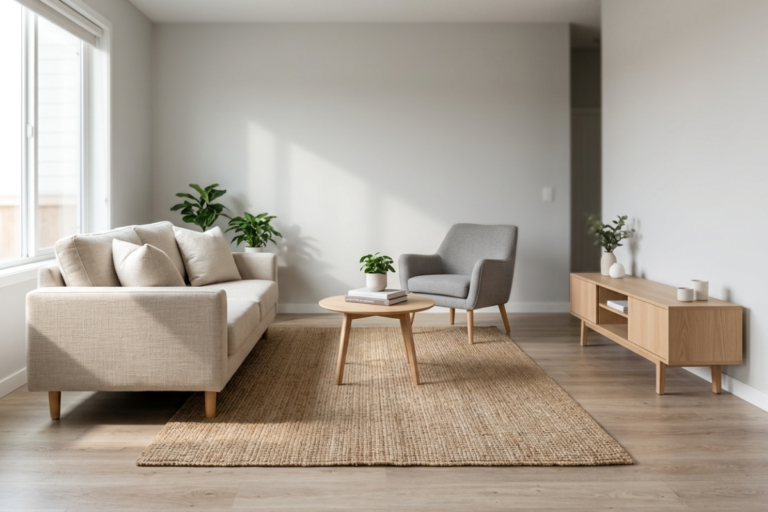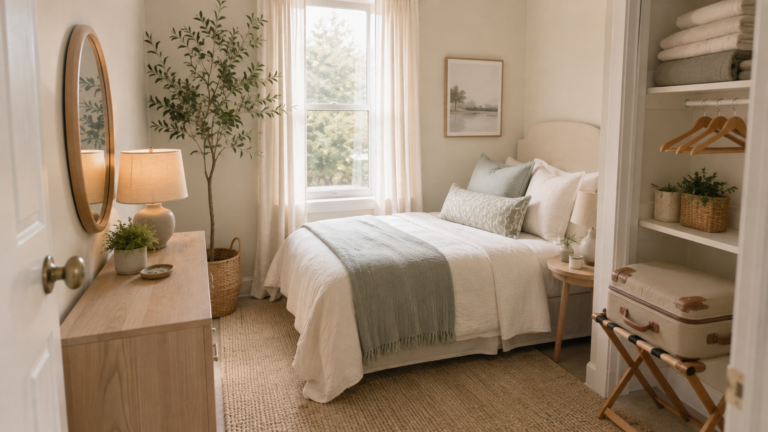
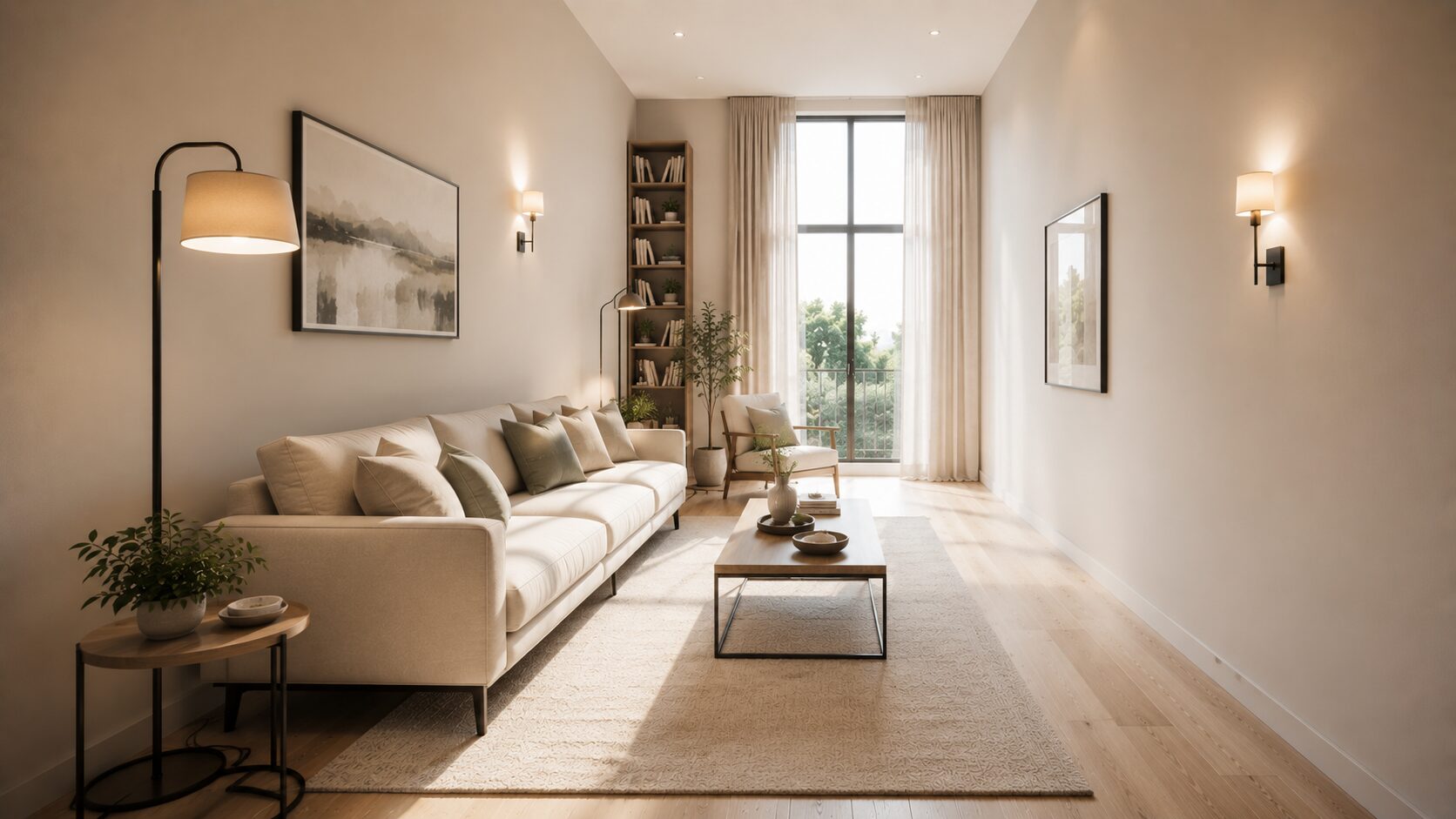
How to Arrange Furniture in a Narrow Living Room
You walk into your living room and it feels like a hallway that someone accidentally dropped a sofa into. Sound familiar?
Narrow living rooms are genuinely tricky. The proportions work against you. Too much furniture and it feels like an obstacle course. Too little and it feels cold and unfinished. Getting the balance right takes more than just shoving the couch against the wall and hoping for the best.
Here’s the thing though — a narrow living room isn’t a design problem. It’s a layout challenge. And layout challenges have solutions.
This guide walks you through exactly how to arrange furniture in a narrow living room in a way that creates flow, maximizes every inch, and actually looks intentional. Whether you’re working with a 10-foot-wide room or a long, tunnel-like space, these strategies will help you design a room that feels bigger, functions better, and stops stressing you out.
Let’s get into it.
Understand Your Room Before You Move a Single Piece of Furniture
Before anything gets shifted around, you need a clear picture of what you’re working with.
Measure everything. Width, length, ceiling height, doorways, windows, and any architectural quirks like radiators, alcoves, or support columns. Write it down or sketch a rough floor plan — even a simple one on paper helps more than you’d think.
Ask yourself three questions:
- Where does natural light come from? Windows define where the “good” spots in the room are. Placing seating near natural light makes the space feel more pleasant and open.
- Where do people walk through? Traffic flow is the silent killer of small living rooms. If your furniture interrupts the natural path through the space, the room will always feel messy even when it’s not.
- What does this room need to do? Watching TV, hosting guests, reading, working from home — your answer shapes everything about how you should arrange the space.
Knowing your room’s bones before you start means fewer mistakes and less heavy lifting later.
The #1 Rule: Create a Clear Visual Axis
In a narrow living room, the biggest mistake people make is fighting the room’s shape instead of working with it.
Long and narrow rooms have a natural visual axis — the long direction. Lean into it.
Arrange your main seating so it runs along the length of the room rather than across it. This keeps the visual flow moving forward, which makes the room feel longer (in a good way) rather than squeezed from the sides.
Think of it like a train car. The seats face forward. Nobody would put seats facing the walls — it would feel suffocating. Your narrow living room works the same way.
How to Arrange Furniture in a Narrow Living Room: 7 Proven Strategies
1. Float Furniture Away From the Walls
This one surprises most people because the instinct is to push everything to the edges to “create more space.” But in a narrow room, that just lines up furniture along the walls like a waiting room.
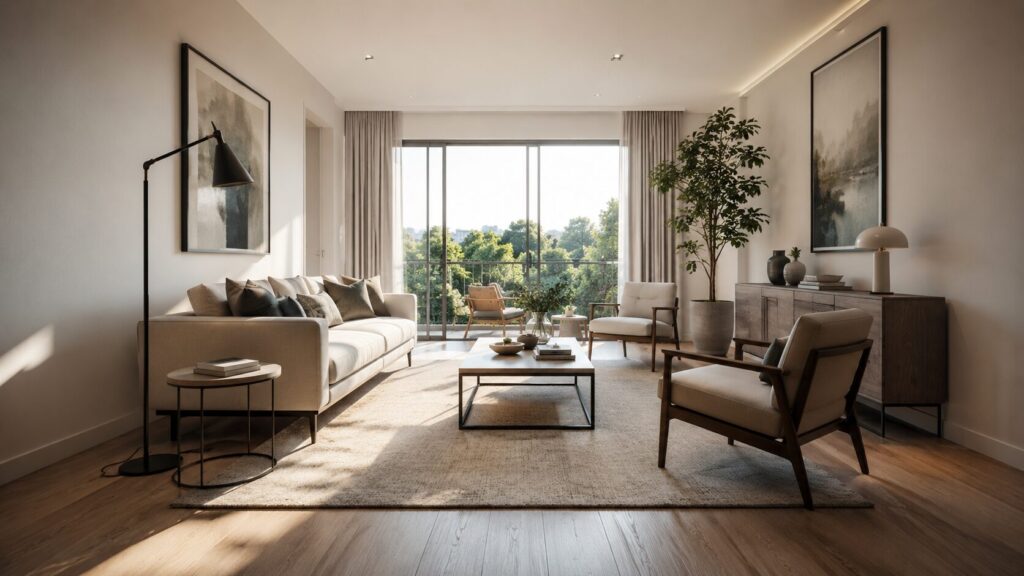
Floating furniture slightly away from walls — even just 3 to 6 inches — creates a sense of depth and makes the arrangement look purposeful rather than shoved aside. It also makes the walls feel farther apart than they actually are.
Try pulling your sofa a few inches from the back wall. The difference is immediate.
2. Use a Long, Low Sofa Instead of a Bulky One
Sofa choice matters enormously in narrow spaces. A deep, high-backed sofa eats into limited floor space visually and physically.
Look for sofas that are:
- Low-profile (seat height around 16–18 inches, back height around 30–32 inches)
- Narrower in depth (around 32–36 inches rather than 40+ inches)
- Longer in width rather than deep
A sofa with exposed legs also works well — the visible floor underneath makes the room breathe. Solid-base sofas that go all the way to the floor tend to look heavier and make the space feel more confined.
3. Choose One Anchor Piece and Build Around It
In a narrow living room, you don’t have room for multiple statement pieces competing for attention. Pick one — usually the sofa — and treat everything else as supporting players.
This means keeping accent chairs, ottomans, and side tables lighter and less visually dominant. Pieces with slim profiles, open frames, or transparent materials (like acrylic or glass) do the job without adding visual weight.
A simple, clean-lined coffee table in front of your sofa works much better than a large, chunky one. And in really tight spaces, consider replacing the coffee table entirely with a pair of small side tables — they’re easier to move around and take up less visual real estate.
4. Keep One Side of the Room Open
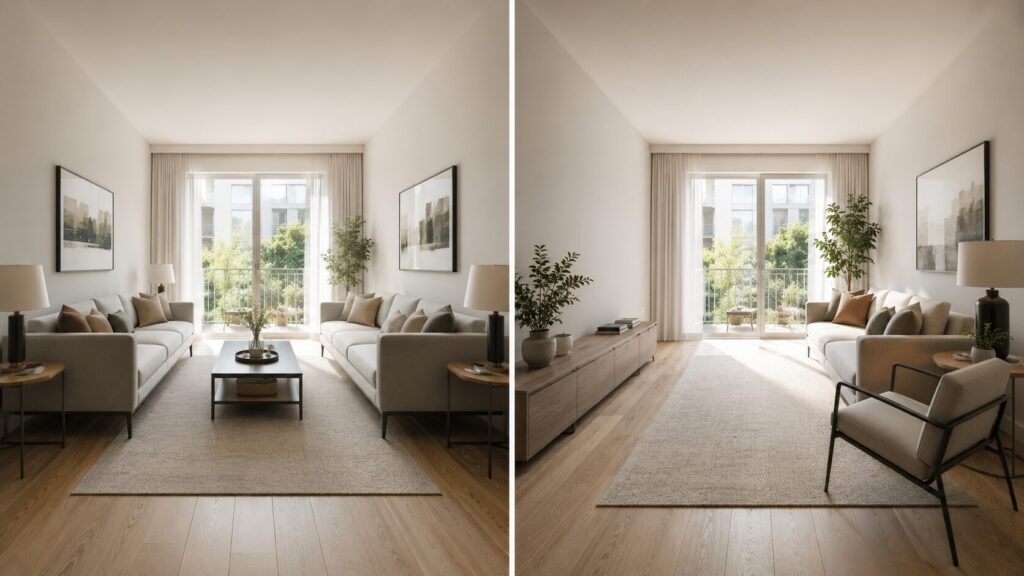
This is one of the most effective tricks for narrow layouts. Designate one side of the room as the “open” side — no furniture hugging that wall.
This creates an asymmetrical layout, which might feel a little odd on paper but works beautifully in practice. The open wall gives your eye room to rest. It creates the impression of width that doesn’t actually exist in the room’s dimensions.
Place your sofa and main seating on one side. Keep the opposite wall free, or use only low, flat pieces like a low media console or a few floor cushions that don’t block sightlines.
5. Use a Rug to Define the Seating Zone
Rugs are powerful in narrow rooms because they create a visual boundary that tells the eye “this is the living area.” Without that definition, a narrow room just looks like a corridor with furniture in it.
Choose a rug that’s large enough to anchor the seating group — ideally with all front legs (or all legs) of your seating on it. A too-small rug floats awkwardly and can actually make the room feel more chopped up.
For narrow rooms specifically, rectangular rugs that run along the length of the room reinforce that helpful visual axis we talked about earlier.
6. Make the TV Wall Work Harder
In most living rooms, the TV is mounted or placed on one of the short walls, with seating facing it. In a narrow room, this is often the best arrangement — it means your sofa runs along the length of the room, which is exactly what you want.
A wall-mounted TV frees up floor space that a TV stand would otherwise occupy. If you do use a media console, go for something low and slim — ideally no more than 24 inches deep. Some people use floating shelves instead of a console altogether, which keeps the floor completely clear.
Keep TV wall decor simple. A narrow room doesn’t need a gallery wall of competing frames on the same side as the TV. One or two pieces, well-placed, are enough.
7. Think Vertical to Draw the Eye Upward
When floor space is limited, vertical space is your friend.
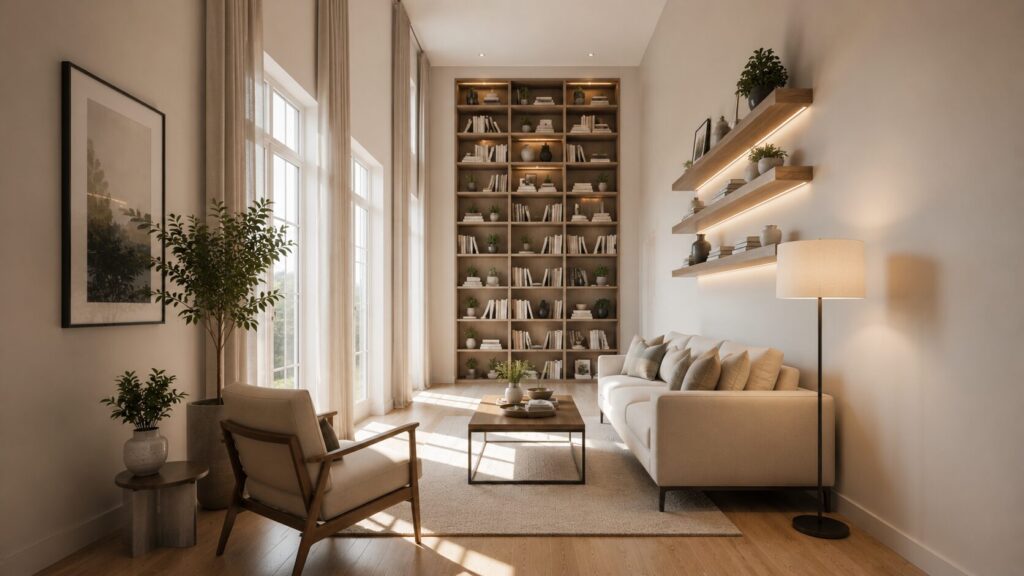
Tall, slim bookshelves or wall-mounted shelving draw the eye upward, which makes the room feel taller and, by association, less narrow. A floor-to-ceiling shelving unit on one end of the room can actually be a great choice — it gives the room a sense of scale and proportion without taking up precious floor area.
The same principle applies to curtains. Hang them as close to the ceiling as possible and let them fall to the floor. This stretches the visual height of the room considerably.
What Furniture to Avoid in a Narrow Living Room
Knowing what not to buy is just as important as knowing what to choose.
Skip these:
- Sectional sofas — unless your room is more square than narrow, a sectional will dominate and cut off the flow entirely. The L-shape is almost impossible to work with in a true narrow layout.
- Matching oversized sets — three-piece suites with a sofa plus two large armchairs often overwhelm narrow spaces. A sofa plus one accent chair is usually plenty.
- Bulky storage ottomans as coffee tables — they seem like a smart double-duty solution but add visual bulk in the center of the room.
- Heavy, dark furniture throughout — one or two darker pieces are fine, but a room full of heavy wood or dark upholstery in a narrow space feels dense and closed in.
Small Living Room Layouts That Actually Work
The Parallel Layout
Two sofas or a sofa and loveseat facing each other across a coffee table, running along the length of the room. This is classic for narrow spaces — it creates a clear conversation zone and keeps traffic flowing along the sides.
Best for: Rooms that primarily host guests or family gatherings.
The One-Wall Layout
Sofa against one long wall, accent chair and side table at an angle near the window or opposite corner, TV on the short wall at the end. Simple, clean, and effective.
Best for: Solo dwellers or couples who mainly use the room for relaxing and watching TV.
The Diagonal Accent Chair
Main sofa along one side, accent chair placed at a 45-degree angle in the corner opposite. The diagonal cuts across the room’s length visually and breaks the “corridor” feeling.
Best for: Rooms that feel too tunnel-like even with standard arrangements.
Lighting and Color Tips That Reinforce Your Furniture Layout
Layout alone doesn’t make a narrow room feel spacious. Lighting and color do a lot of heavy lifting.
For color:
- Light, warm neutrals on the walls (soft whites, warm greiges, pale sage greens) reflect light and push walls back visually.
- Paint the two short walls (the ends of the room) in a slightly deeper shade than the long walls. This makes the room appear less elongated and more balanced.
- Avoid dark accent walls on the long sides — they make the room narrower.
For lighting:
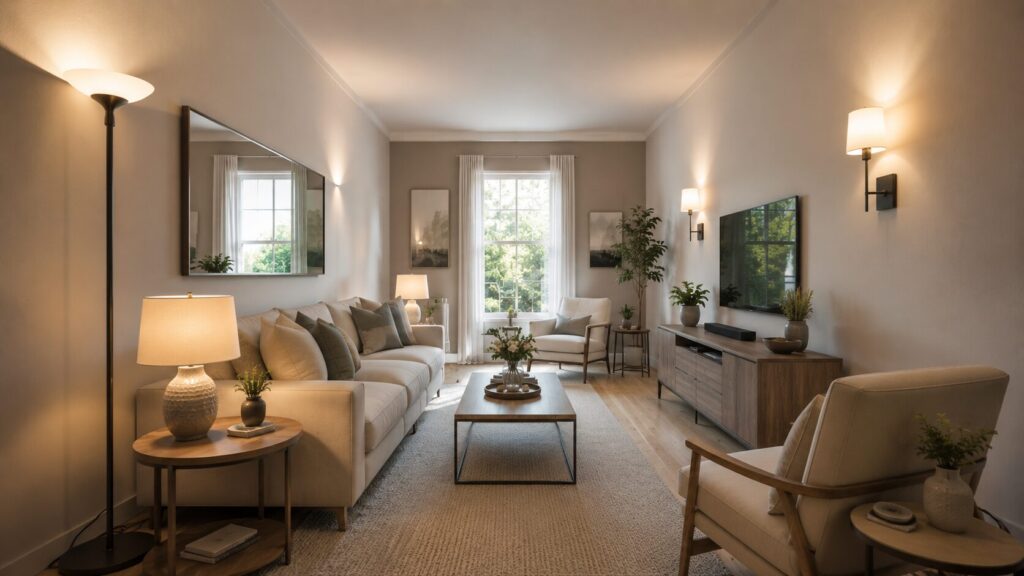
- Use multiple light sources rather than one overhead light. Floor lamps, table lamps, and wall sconces at different heights create depth and warmth.
- Uplighting (floor lamps that direct light toward the ceiling) reinforces that vertical stretch effect.
- Mirrors on the long walls reflect light back into the room and create the impression of a wider space — especially effective opposite a window.
Common Mistakes to Avoid
Even with the best intentions, a few layout habits consistently backfire in narrow living rooms.
Pushing everything against the walls. We covered this above, but it’s worth repeating because it’s the single most common mistake. Wall-hugger furniture arrangements look like a waiting room.
Using too many small pieces. A cluster of small chairs, tiny tables, and accent pieces creates visual noise. Fewer, better-chosen pieces look cleaner and feel less cramped.
Blocking natural light. Tall, heavy furniture placed near windows blocks the very thing that makes a small room feel open. Keep window areas as clear as possible.
Ignoring the entryway. If your narrow living room is also the first thing people see when they enter your home, the traffic path from the door matters. Don’t arrange furniture so that someone has to navigate an obstacle course just to sit down.
Practical Takeaways: Quick Reference
Before you start rearranging:
- Measure your room and sketch a rough floor plan
- Identify your traffic flow paths
- Decide your room’s main function (relaxing, entertaining, working, all three)
When choosing furniture:
- Low-profile sofa, slim legs, light upholstery
- One anchor piece + lighter supporting pieces
- Transparent or open-frame accent tables
- A rug that’s large enough to define the seating zone
When arranging:
- Float furniture slightly from walls
- Orient main seating along the room’s length
- Keep one side of the room open or lightly furnished
- Mount the TV to free up floor space
- Use verticals (tall shelves, floor-to-ceiling curtains) to stretch the room upward
Conclusion
Arranging furniture in a narrow living room well comes down to understanding and working with the room’s proportions — not fighting them.
The key ideas to hold onto are simple: float your furniture, keep one wall open, choose pieces that are low and light rather than tall and heavy, define your seating zone with a properly sized rug, and use vertical elements to balance out the room’s narrowness.
None of this requires a complete furniture overhaul or a massive budget. Some of the most effective changes — floating the sofa a few inches from the wall, swapping a bulky coffee table for two smaller side tables, hanging curtains closer to the ceiling — cost nothing at all.
Start with the layout. Get the bones right first. Then layer in the colour, lighting, and decor once the furniture is working for the space instead of against it.
A narrow living room, done well, doesn’t feel narrow at all. It feels considered, intentional, and genuinely comfortable. That’s the goal — and now you have the roadmap to get there.
What is the best sofa size for a narrow living room?
For most narrow living rooms, a sofa between 72 and 84 inches wide (6 to 7 feet) works best. Look for a depth of no more than 34–36 inches and a low-profile back. Avoid sectionals unless your room is wider than 12 feet. A sofa with exposed legs rather than a solid base will look lighter and less space-consuming.
Should I put my sofa against the wall in a narrow room?
Counterintuitively, no — or at least not flush against it. Pulling your sofa 3–6 inches away from the wall creates visual depth, makes the room look more intentional, and actually makes the space feel wider. Full wall-hugger arrangements tend to make narrow rooms feel more like corridors.
How do I make a narrow living room look wider?
Use light wall colors on the long sides and slightly deeper tones on the short walls (the ends). Hang curtains close to the ceiling to draw the eye up. Place a mirror on one long wall to reflect light. Keep one long wall open or use only low furniture on it. And arrange seating along the room’s length so the natural visual axis runs forward, not side to side.
Can I use a sectional in a narrow living room?
Generally, no. A sectional’s L-shape works against a narrow room’s proportions — the return section almost always blocks traffic flow or makes one end of the room unusable. The exception is a very small chaise-end sectional in a room that’s at least 11–12 feet wide. If you love the look, a sofa plus an armchair positioned at a slight angle gives a similar feel without the layout problems.
What size rug works best in a narrow living room?
A rug that extends under the front legs (at minimum) of all your seating pieces. For a typical narrow living room, a 5×8 or 6×9 rug often works well, oriented lengthwise (running along the room’s length). Avoid small rugs — they float awkwardly and fragment the room visually. When in doubt, size up rather than down.